







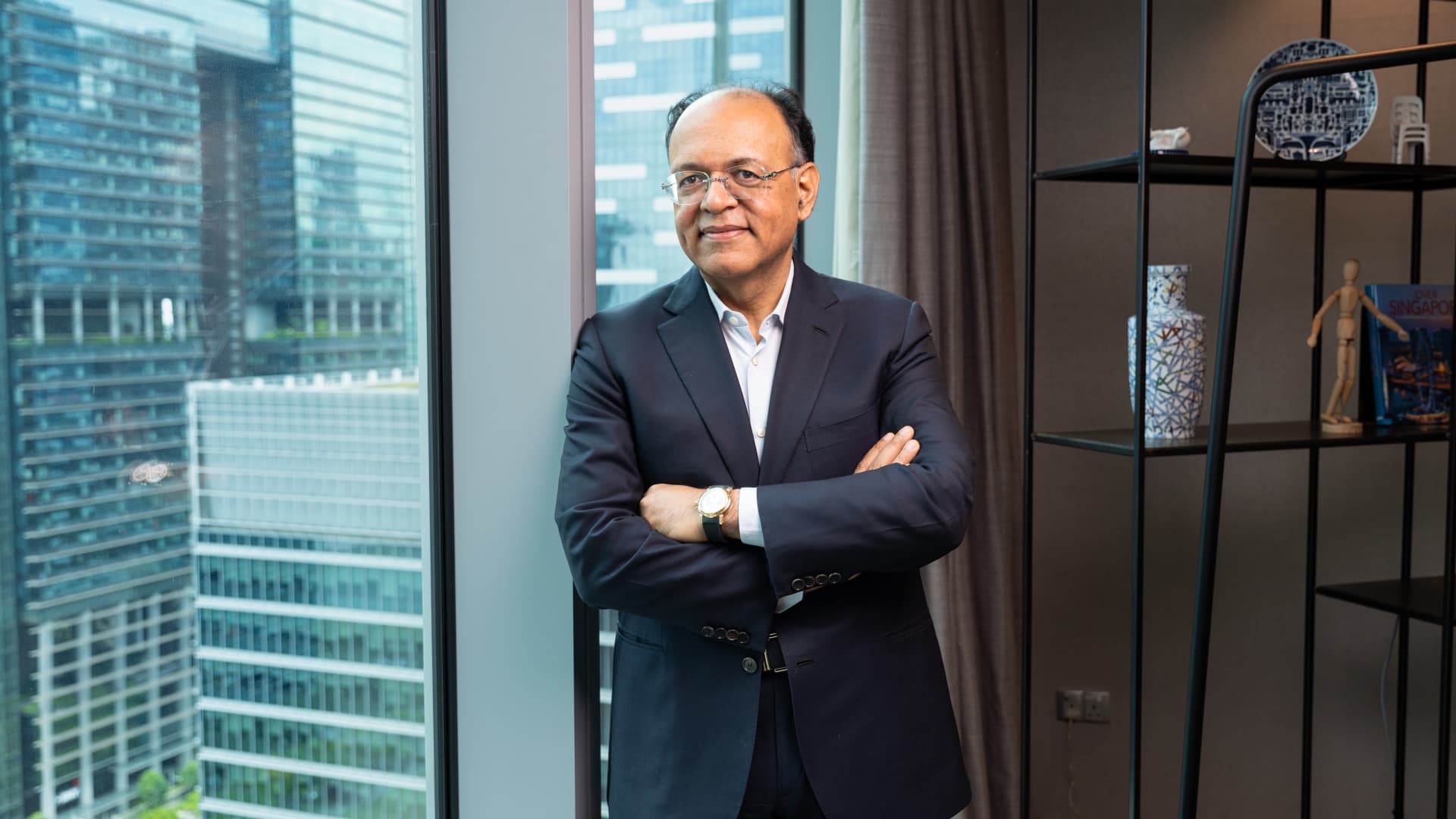
Gautam Kumra, Asia Chairman at McKinsey (McKinsey).
What distinguishes truly great and effective leaders from everyone else?
Gautam Kumra, Asia chairman at consultancy McKinsey & Co., talked to CNBC in an interview about what sets the top executives apart from the crowd, helping filter out the key factors that determine successful leadership.
The ability to deal with contradicting thoughts: to think both long-term and short-term, to go big-picture but also look at things under a microscope, is one of the top characteristics of an effective leader, said Kumra, the lead author of the book “Shapers and Founders: The Untold Stories of Asia’s Extraordinary Owner-CEOs,” published last month.
The skill of getting “extraordinary performance out of ordinary people” and a mission-oriented approach are other characteristics of the most successful people, Kumra said.
The most effective owner-CEOs have been responsible for a significant portion of value creation in Asia, which made them worth singling out for further study, according to Kumra, who interviewed about 30 such top executives in Asia for the book, from India’s Mukesh Ambani and Falguni Nayar to Thailand’s Sarath Ratanavadi.
“Owner CEOs, as a category, as compared to professional CEOs, as compared to state-owned enterprises, are the ones that are creating the most value and the best performance,” he said. “Their return to shareholders is the highest. Their return on invested capital is the highest. They’ve collectively, as a category, created a lion’s share of the value.”
He relayed how Anand Mahindra, chairman of the Mahindra Group, said he made an executive assistant the head of the company’s South African business.
Anand Mahindra, chairman of Mahindra & Mahindra Ltd.
CNBC
Mahindra thought the person had the character – “not some bookish knowledge or not somebody who, on paper, sounded very good – but somebody who had been through such life experiences” that gave him confidence, Kumra said. “So he took a risk on him.”
Stretch opportunities
These CEOs offer “stretch opportunities, build new businesses, take risks on people,” Kumra said, noting that McKinsey has a similar approach.
“We are actually giving a series of stretch opportunities to our people, so that they are constantly at the learning edge. That’s one,” he said. “Second is, we really reward self-propelled initiative taking. So it’s not about just me telling you what to do. What can you do that will surprise me?”
One of the hardest things with the owner-CEO is a transition to the next leader, Kumra said. In the move from a founder to a professional, typically five years after the transition happened, companies have done poorly on average, he added.
It’s “very difficult for them to delegate and let go. They are still too involved, even when they know their time is running out,” he said. Also, they can lose relevance if they get out of touch with market realities, and may not set up clear mandates when they hire successors.
Also, it can be hard for professionals to come in and learn how to run the company “because they have run it in a very idiosyncratic way that suited them,” Kumra said. “But it hasn’t been yet institutionalized in a way that someone from the outside can come in and take the reins.”


