


Some firms face productivity losses, but others could benefit from higher demand for air purifiers, masks
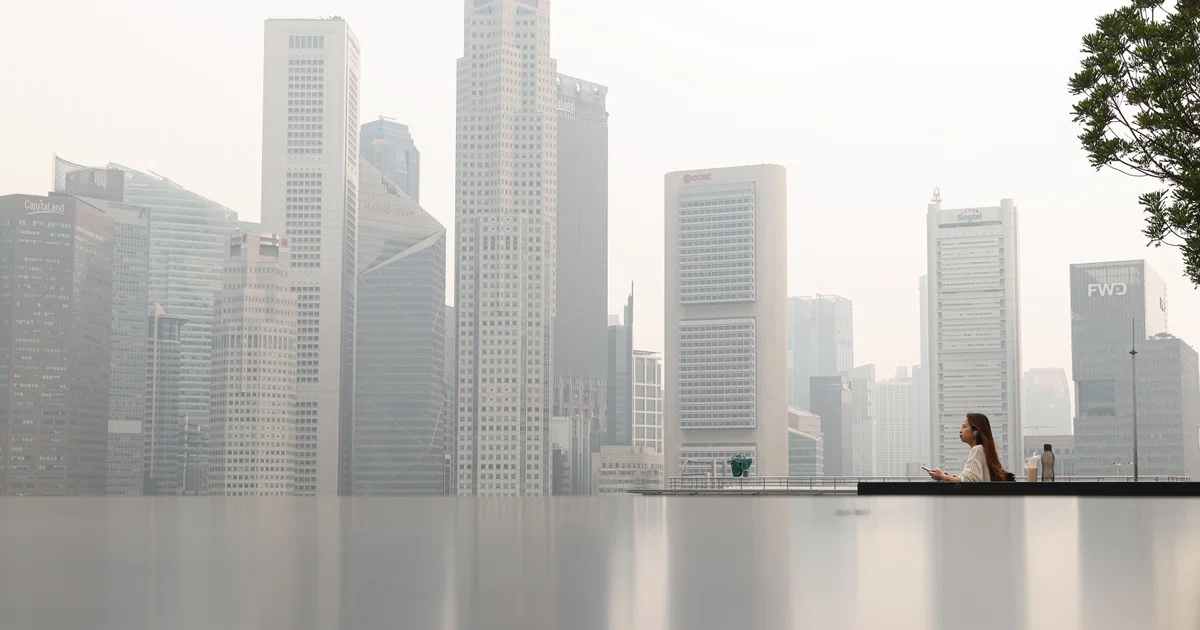
[SINGAPORE] The worsening haze blanketing Singapore could dampen consumer spending and disrupt business operations if it persists.
However, the impact on the city-state’s overall economic growth would be limited, according to economists.
The economic fallout is likely to be uneven. While some businesses face weaker foot traffic and productivity losses, others could benefit from a shift towards indoor activities and increased demand for products such as air purifiers and masks.
The impact of the haze on the economy should not be “overstated” and will likely be small, Maybank economist Brian Lee told The Business Times. Contact-sensitive sectors account for only a modest single-digit share of Singapore’s gross domestic product, he noted.
Barnabas Gan, RHB group chief economist, said that the overall impact on the economy is likely to remain modest – if the haze episode is short-lived – but prolonged conditions could weigh on services activity, labour productivity and business operating costs.
Singapore has registered “unhealthy” Pollutant Standards Index (PSI) readings for 12 days in a row – the longest continuous stretch of poor air quality in the country since a 14-day streak in 2015.
The Business Times turns 50
Five decades of milestones and moments that shaped Singapore’s success story – told through our headlines.
Explore BT50
The 24-hour PSI reading in the central region hit the “very unhealthy” level at midnight on Friday (Oct 16) and remained in that category as it reached 227 at 9 am – a new high for the year.
Productivity concerns
Prolonged haze could constrain production in labour-intensive sectors, particularly construction and transport, as companies adjust working arrangements to limit employees’ exposure to poor air quality.
Construction company Lum Chang Holding’s listed spinoff, Lum Chang Creations, has already begun adjusting work arrangements at its project sites.
SEE ALSO
These include reducing the duration and intensity of prolonged or strenuous outdoor work, and providing additional rest breaks in sheltered areas.
Certain activities may also be rescheduled where practicable, depending on site conditions and the nature of the work being carried out, the subsidiary said on Thursday.
However, it added that it does not apply a blanket percentage-reduction in outdoor work across all sites, given the differences in operating conditions across projects.
“At this stage, we have not identified any material financial impact arising from the haze,” said Lum Chang Creations in a written response to BT.
Should the haze persist or worsen, the company will assess the impact on individual projects and make adjustments to work programmes where necessary, it noted.
UOB head of research Suan Teck Kin said that in the event of a prolonged haze episode, the construction sector would be among the most directly affected due to the open nature of the work.
“Consumer-facing sectors such as retail trade, hotels and F&B could also come under pressure due to weaker tourist arrivals,” he added. “Visitors may divert their holiday plans to alternative destinations in Asia, such as South Korea, Taiwan, Japan and China, that are unaffected by the haze.”
Establishments with outdoor-exposed business, like restaurants with outdoor dining, would be more affected than those that are predominantly indoors, he said.
Some businesses benefit
While prolonged haze threatens to disrupt outdoor activities and dampen spending in certain sectors, businesses supplying products that protect consumers against poor air quality have experienced stronger demand.
Over the past few weeks, air-purifier sales have surged more than 600 per cent compared with the same period last year, Best Denki told BT. Sales volume from Oct 5 to 11 have also trebled compared with that in previous weeks and helped boost overall revenue and footfall.
“We expect the demand for air purifiers to remain strong should the haze conditions persist over the coming weeks,” said the electronics retail chain, stating that it was comparable with that during the previous haze episode in 2015.
ST Engineering also noted that it has seen “increased consumer demand” for its Air+ masks amid the recent haze conditions, while Dyson said visits to the air-purifier pages on its Singapore website grew more than 10 times in the first two weeks of October compared with the same period last year.
“Sectors that have been driving the economy’s high growth are less directly exposed to the haze, including electronics manufacturing and finance,” said Maybank’s Lee.
“Productivity impact will be limited given that much of industrial activity takes place indoors and remote work for white-collar industries has become a lot more common.”
UOB’s Suan added that some of the broader negative economic impact could be partially cushioned by stronger demand for food-delivery services and online retail.
“While it is difficult to quantify at this point, the net drag on GDP growth is likely to be limited,” he said.
Suan noted that the sectors most directly affected by any haze-related drop in demand account for about 6 to 7 per cent of GDP, which he calls “only a modest share”.
