


Even amid uncertainty, some home-grown firms are looking to capture new growth opportunities
[SINGAPORE] The Middle East has long been a key market for many Asian companies, which have sought to tap the region’s vast oil and natural gas reserves, as well as its growing consumer demand.
Amid the geopolitical uncertainties stemming from the ongoing war in Iran, however, some businesses have begun to slow their roll in the region.
Still, some Singaporean companies are determined to weather the storm by capturing growth opportunities from the Middle East and adapting as best as they can.
Singatac: Shallower waters to access global markets
While many Singapore-based businesses may first focus on establishing a regional presence in South-east Asia before venturing further, marine and offshore engineering company Singatac has set its sights firmly on the Middle East.
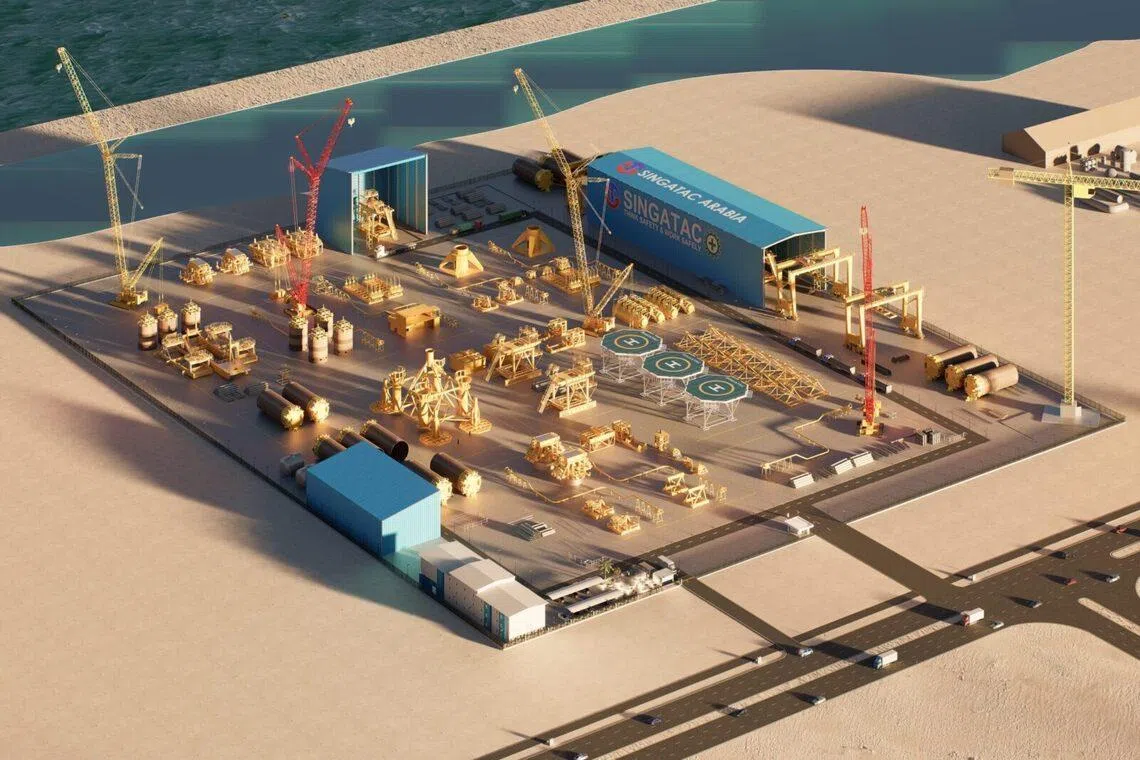
The home-grown company, which specialises in manufacturing equipment for oil and gas extraction at surface and subsea levels, is set to build a new 100,000 square metre facility at the Ras Al-Khair port in Saudi Arabia.
This will serve as a manufacturing centre for offshore structures and platforms, with a targeted investment of up to 139 million riyals (US$37 million).
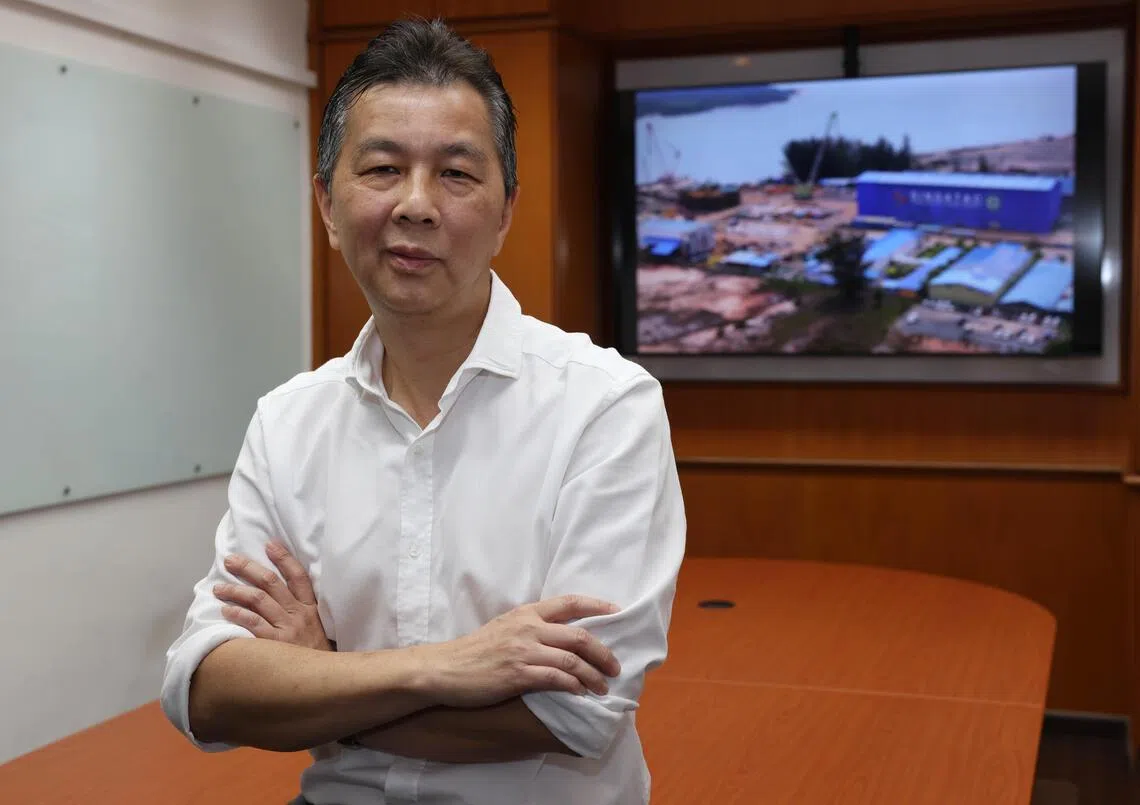
In January, the company’s Saudi Arabia subsidiary, Singatac Arabia, entered into an agreement with the Saudi Ports Authority to develop the facility.
Singatac intends to supply its Saudi-manufactured offshore structures and energy components to regional and international markets such as the Gulf Cooperation Council (GCC), Africa and Europe.
Executive director Tan Soon Keong told The Business Times in a recent interview that the decision to expand into the Middle East was driven by Saudi Arabia being the “biggest spender” in offshore infrastructure, and the kingdom having a “severe lack of service providers”.
SEE ALSO

Before this, Singatac established an offshore marine centre in Bintan, Indonesia.
While Indonesia allows the company to capitalise on the South-east Asian market, Tan noted that Saudi Arabia is different as it offers a “diversity of project sources” that will provide “better stability of work coming in”.
At the Ras Al-Khair port waters, subsea oil extraction occurs 40 m or less from the surface, versus a range of 600 to 1,000 m at Bintan.
Due to the deeper waters around Indonesia, equipment made of high anti-corrosive materials is needed to control the flow of hot oil through cold waters to the surface.
Machinery for shallower waters at Saudi Arabia, however, does not need to fulfil these standards.
This makes the manufacturing of equipment more affordable and less complicated, said Tan.
Looking ahead, he expects complex structures to be added to accommodate offshore wind projects, catering to client demands to capture renewable energy opportunities.
“We are not just talking about conventional oil and gas,” said Tan. “Our clients, as much as they are (interested in) oil and gas, they are also into renewables, especially on the offshore wind side.”
Should plans to capture renewable energy advance, Singatac aims to become its clients’ contract manufacturers for the offshore wind component from Saudi Arabia, shipping globally to markets such as Europe.
Masterscan: A tale of two cities in its Gulf expansion
Masterscan Engineering – a provider of non-destructive testing (NDT) services – is also finding a silver lining amid uncertainty in the Middle East.
The firm has operated in Oman and Qatar since 2023, serving the oil, gas and marine sectors. Last year, it secured its first multi-year direct contract with a member of the GCC to provide specialised NDT services.
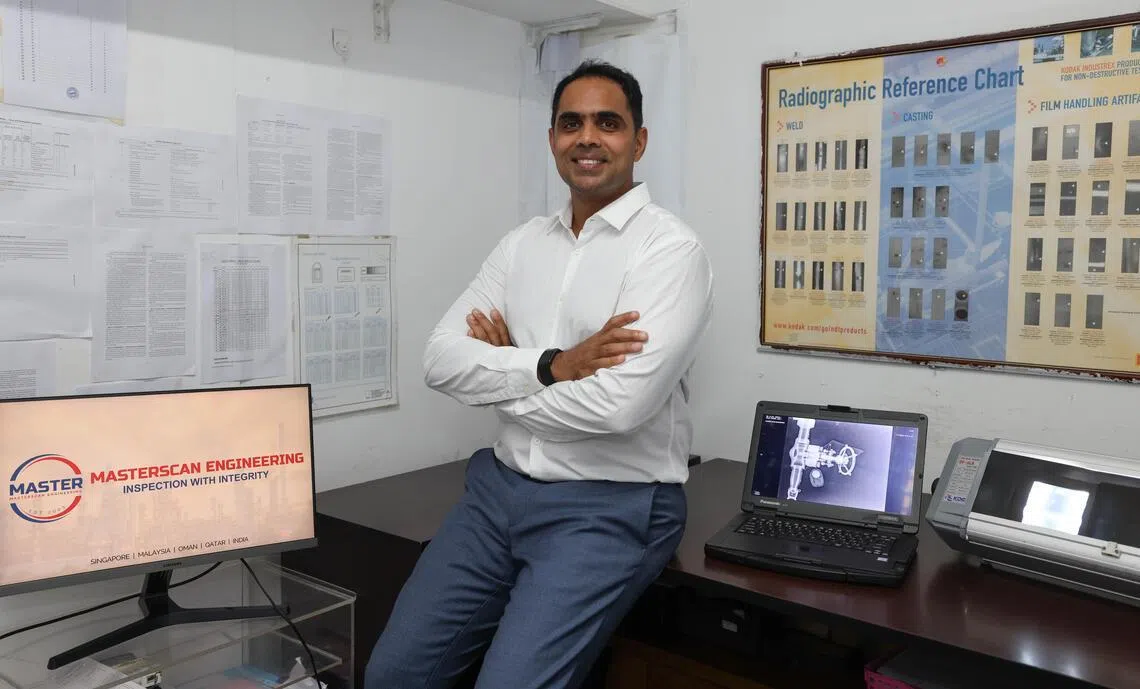
Despite the ongoing conflict, Masterscan expects its revenue growth from the Middle East to remain resilient. The company projects its regional operations will drive a 40 per cent increase in overall revenue, with the bulk of that growth coming from its Oman operations.
That said, its growth within the region varies by territory.
Vigneshwar Prabu, managing director of Masterscan, told BT that exports in Qatar are bottlenecked, putting productivity at stake and halting new initiatives for the firm.
Oman, however, remains a key market. “Oman is a safe haven in the conflict, so our operations there continue to do well with no interruptions at all,” he said.
To capitalise on this, the engineering solutions provider is shifting its high-end technical team from Qatar to Oman to support ongoing projects.
Prabu sees Oman emerging as a major economic contender for coastal stockpile operations, particularly as more companies reinvest in infrastructure expansion.
“That brings us to the table where there’s a lot of project opportunities. There’s an overall optimistic, bullish approach for companies like us, (or) any company that rely heavily on oil and gas,” he said.
The overall cost benefit to demand for Masterscan’s services, he added, is “going to be on a positive scale”.
The firm has projected a 30 to 40 per cent increase in total revenue from FY2025 to FY2026; Prabu said that this target remains, given the robust growth in Oman.
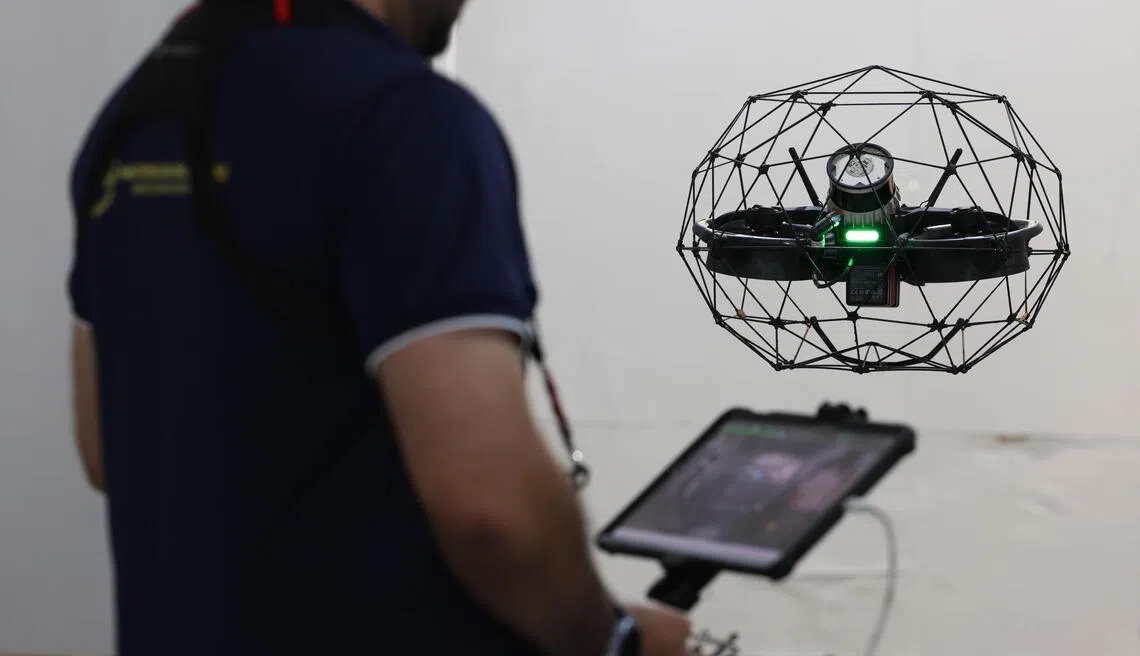
Currently, 66 per cent of Masterscan’s revenue is generated in Singapore, with the remainder coming from overseas. The company expects a 60-40 split between the local and international markets by the end of its current financial year.
While its growth projections remain intact, regional instability has necessitated a pivot in Masterscan’s short-term road map.
“We want to reposition our priorities and work on these markets where the scope is already visible, rather than setting up a new office and expanding into the United Arab Emirates,” said Prabu.
Consequently, the company’s planned expansion into the UAE – originally slated for the first half of 2026 – has been deferred until year-end or until the geopolitical situation improves.
Against this backdrop, Masterscan has had to elevate its service offerings to factor in extra costs.
While standard contracts typically include inflation-related adjustments of 2 to 3 per cent, Masterscan now includes an additional 4 to 5 per cent buffer to manage unforeseen costs.
At the same time, the company is investing to strengthen its longer-term growth prospects and support this shift up the value chain. It has already committed about S$4 million across its assets, with a focus on micro-technology and artificial intelligence.
Central to this push is MasterAir, the company’s AI arm, which specialises in robotics and automated inspection services.
Since its launch in 2005, the firm has completed more than 600 inspections, from unmanned aerial vehicle inspections to digital twin solutions.
EtonHouse: Keeping the Middle East a key hub
International education provider EtonHouse has adjusted its operating strategy for its two private schools in the Middle East that were established before the conflict.
Both schools are in the Saudi capital Riyadh, which has been relatively safe from Iranian missile strikes and disruptions caused by the closure of the Strait of Hormuz.
“We take a measured view of growth and remain confident in the market’s long-term trajectory,” said EtonHouse International Education Group CEO Ng Yi-Xian. “Riyadh remains a key hub in our Middle East strategy.”
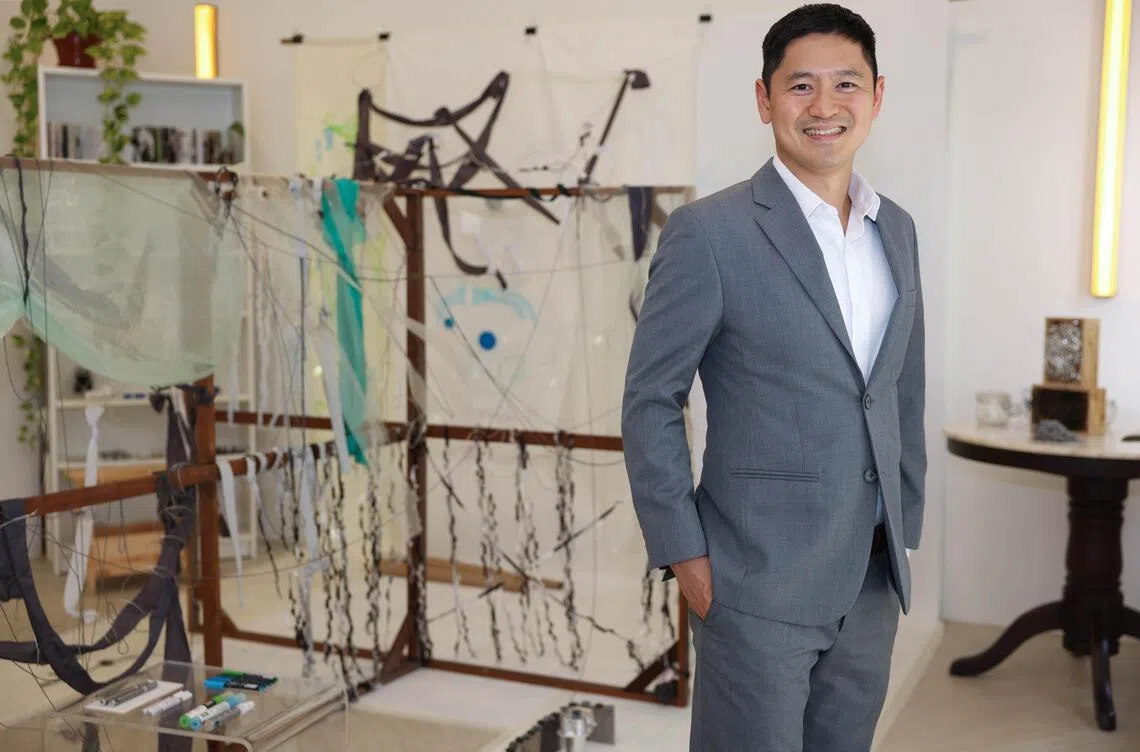
Both schools were established in September 2025. One provides preschool education, being the first international preschool in Riyadh to do so; the other offers kindergarten to 12th grade (K-12) education.
Together, their student populations consist of 70 per cent expatriates and 30 per cent local students.
The multi-level K-12 campus spans 35,000 square metres and is equipped with learning facilities such as classrooms, science labs, outdoor spaces and a swimming pool.
EtonHouse operates 100 private international schools, catering to children from infancy to 18 years old. Its expansion into the region taps the momentum of Saudi Vision 2030, a national reform to reduce the kingdom’s reliance on crude oil by diversifying the economy and developing its public services.
With the private education sector constituting less than 20 per cent of the education market in Saudi Arabia, EtonHouse was supported by Enterprise Singapore’s regional office in the kingdom.
The agency provided connections to partners and government stakeholders, to help the company set up operations there.
For their first year of operations in 2026, the Middle East schools are expected to contribute 5 per cent to the group’s revenue. The aim is to generate double-digit year-on-year growth over the next three years.
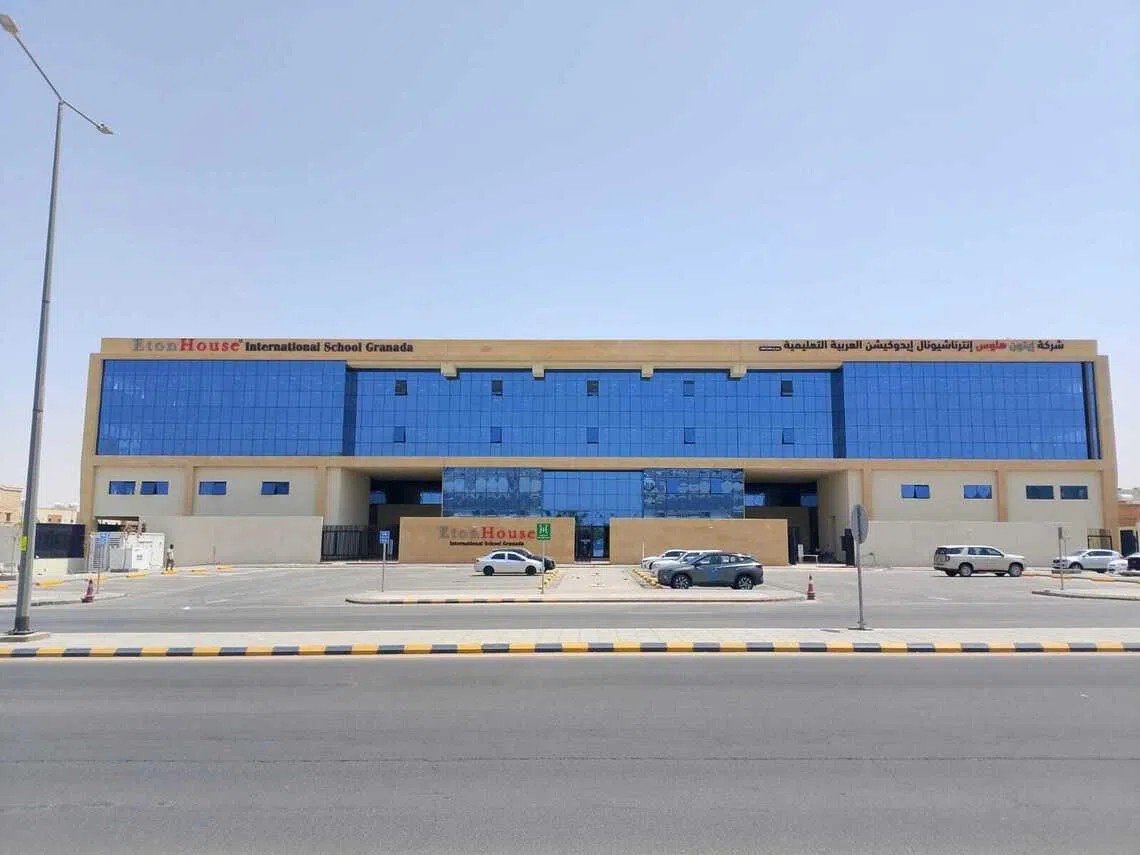
Ng said that EtonHouse’s operations in Riyadh are “largely unaffected on a day-to-day basis”, with both schools remaining fully open.
This can be attributed to how the company’s Middle East operations are structured, he added. EtonHouse established a regional headquarters with an in-country leadership team to ensure decision-making is responsive to local conditions.
“Our approach is less about reactive measures and more about building resilience into how we operate from the outset,” he said.
In adapting to uncertain circumstances and aligning with Saudi Arabia’s Ministry of Education and other relevant authorities, the school is also prepared to transition between in-person and virtual learning.
Ng added that the company remains focused on maintaining trust with client families, sustaining education quality while aligning with the kingdom’s national priorities.
“These are more critical to sustaining our operations than short-term adjustments to revenue streams or service offerings.”
Given EtonHouse’s presence in eight countries across Asia, which include China, Thailand and Japan, the company is experienced in adapting to diverse cultures and their education requirements, Ng said.
In accordance with local regulations, the two schools in Riyadh co-opt the mandatory 11 hours of Islamic studies per week into their curriculum. They also teach in both English and Arabic.
