


[SINGAPORE] The Republic’s core and headline inflation both rose in June, but came in below expected levels, data from the Monetary Authority of Singapore (MAS) and the Ministry of Trade and Industry (MTI) showed on Thursday (Jul 23).
This was just days before the release of the July monetary policy statement.
Core inflation, which excludes accommodation and private transport, rose to 1.6 per cent in June, from May’s 1.4 per cent. It was lower than the median 1.7 per cent predicted in Bloomberg’s poll of private sector economists.
This was largely due to an increase in food, services and retail and other goods inflation, the authorities said.
Meanwhile, headline inflation accelerated to 1.9 per cent in June, from the preceding month’s 1.8 per cent. The reading came in under the Bloomberg poll median economists’ estimate of 2 per cent.
This was driven by higher accommodation inflation, in addition to the pickup in core inflation.
On a month-on-month basis, the core consumer price index (CPI) was 0.1 per cent, while the all-items CPI was unchanged.
Inflation outlook
MAS and MTI maintained their 2026 full-year forecast range for both core and headline inflation at 1.5 to 2.5 per cent.
While their outlook remained largely similar to that in the previous CPI release, one change was the omitted reference to recent easing in global energy prices.
SEE ALSO

The authorities maintained that global energy prices remain elevated relative to 2025 levels, and still expect raised production and transport costs for imported goods and services.
They also still see slower increases in services unit labour costs domestically this year, and potentially more cautious consumer spending.
“At this juncture, the risks to the inflation outlook remain tilted to the upside. A slower-than-expected resumption in global energy supplies or continued shortages in key intermediate inputs to regional supply chains could further raise imported costs for Singapore,” MAS and MTI said.
“However, downside risks are also present. A stronger-than-expected tightening in global financial conditions could lead to a slowdown in economic activity and thus lower inflation.”
Key CPI categories
In June, most CPI categories recorded marginally higher inflation.
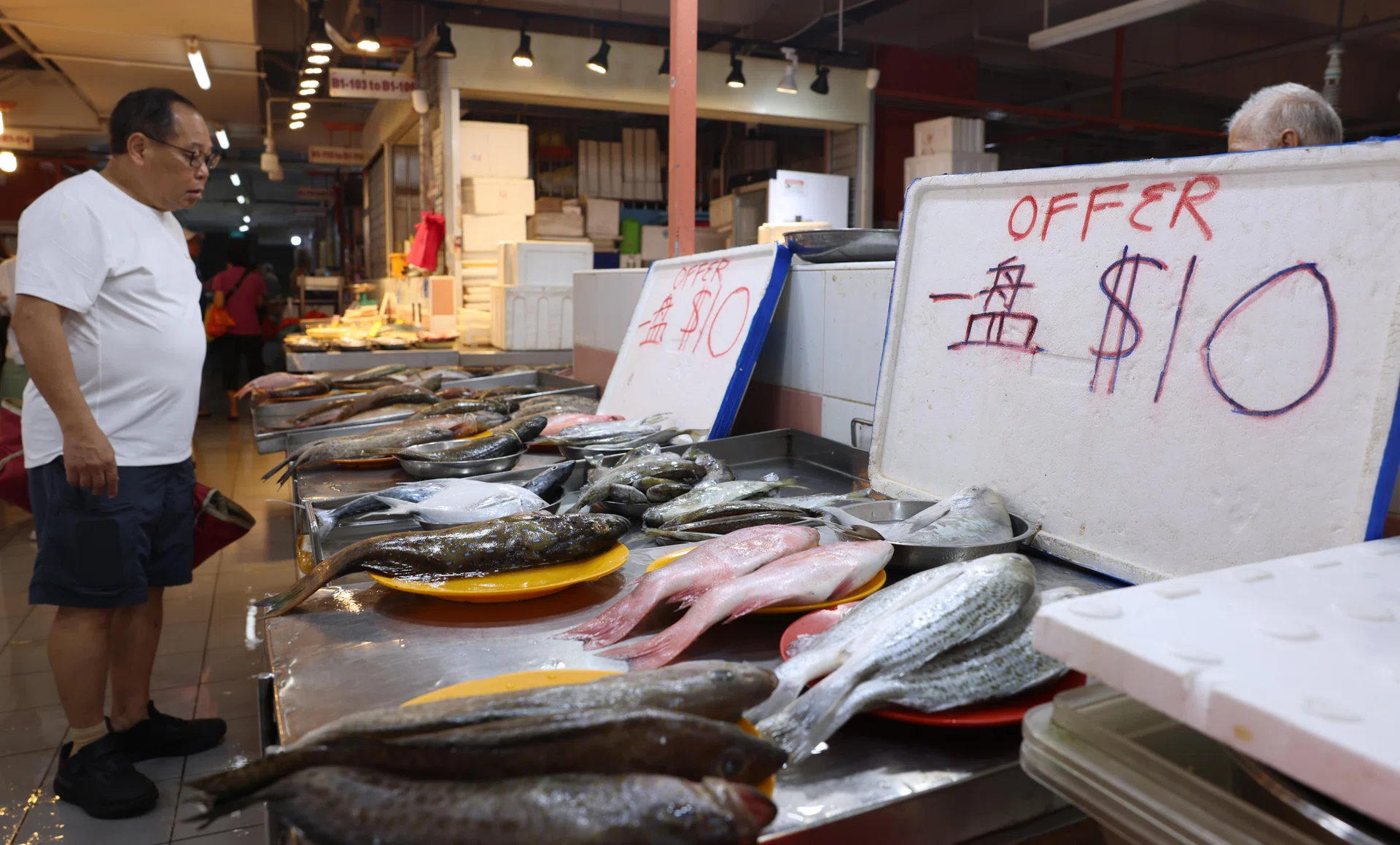
Food inflation, at 2.1 per cent, was higher than May’s 1.8 per cent. This came as the prices of both non-cooked food and food services increased at a faster pace.
Services inflation came in at 1.5 per cent in June, up from May’s 1.3 per cent, on account of larger increases in airfares and holiday expenses.
Accommodation inflation increased to 0.6 per cent, from 0.5 per cent, due to a faster pickup in housing rents.
Retail and other goods inflation edged up to 1.7 per cent, from 1.6 per cent in May, on the back of larger increases in the prices of both furniture and other recreational goods.
Electricity and gas prices declined 2.9 per cent on year, a slower pace than May’s 3 per cent, due to a smaller decline in energy prices.
