


The trend reflects a growing ability to define nuclear-related investments as sustainable
[SINGAPORE] Green bonds and other sustainable debt issuances for nuclear energy have accelerated since 2024 – reflecting how the power source is being increasingly valued for energy security and cutting carbon emissions.
In 2024, sustainable debt issuances for activities linked to nuclear energy surged to US$10.5 billion, from US$2.7 billion in the preceding year, an Aug 13 report by Sustainable Fitch shows.
The total issuances moderated to US$9.5 billion in 2025, and stood at US$4.1 billion for the first half of 2026.
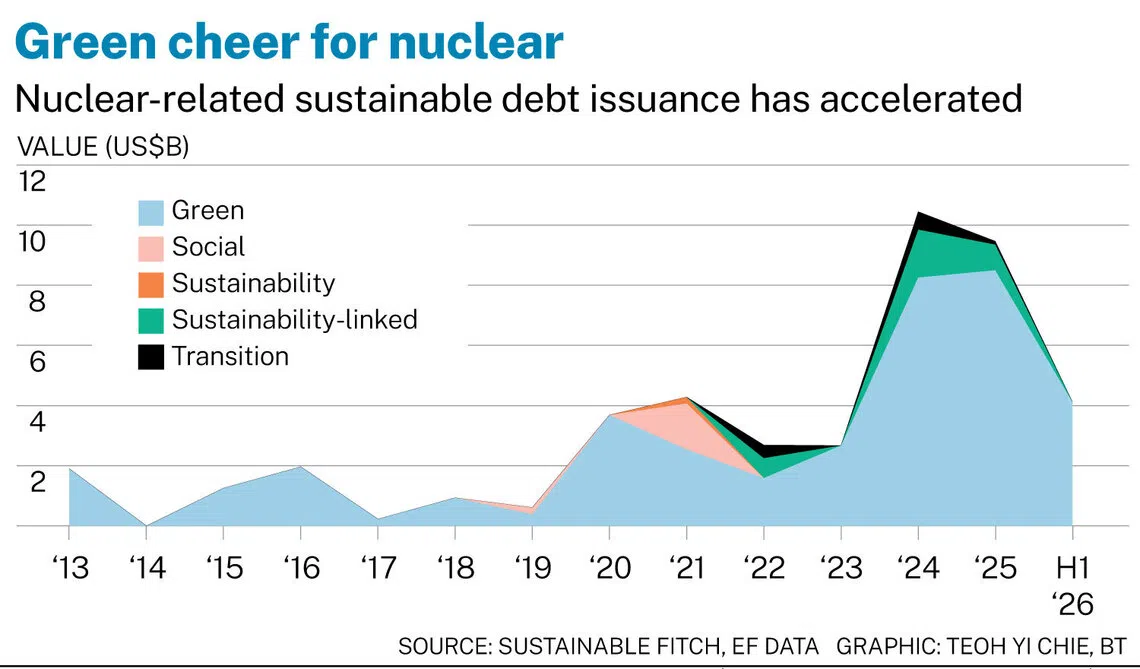
The momentum since 2024 reflects how nuclear energy has come to be regarded “as a forward-looking investment category linked to energy security, technology development and long-term decarbonisation strategies”, the report said.
Issuers are showing an increased ability to define nuclear-related investments as expenditure that is “green” or related to the climate transition.
“The shift has been reinforced by net-zero and energy-security priorities, which have made nuclear (energy) more acceptable within parts of the sustainable finance market, even as investor views remain divided,” the report said.
The momentum also comes amid stronger policy support for nuclear energy and greater clarity in taxonomies and frameworks around sustainable financing for the power source.
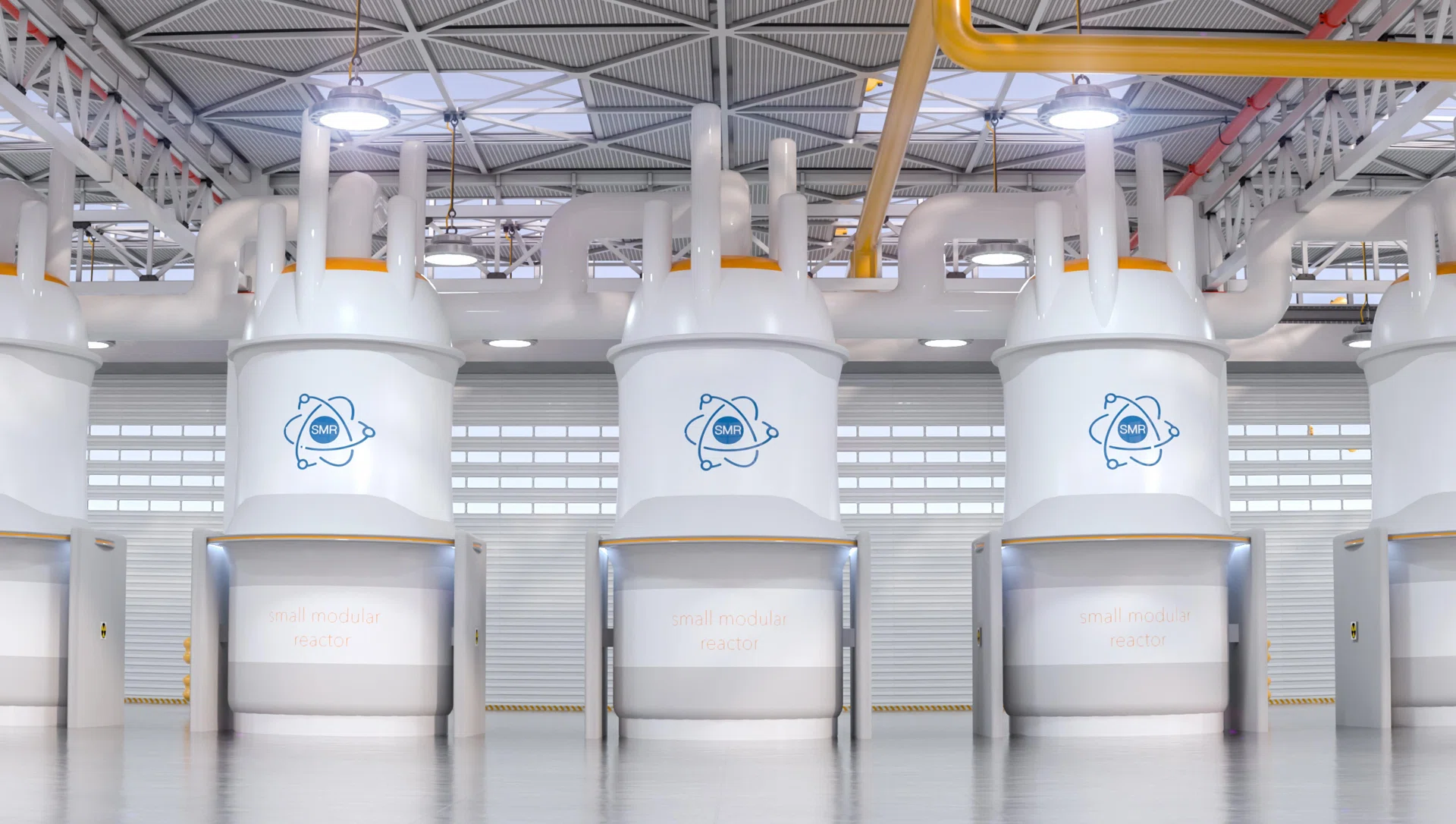
For instance, some frameworks are now broadening to include small modular reactors – a new class of advanced reactors that many countries are exploring – and supply-chain investments.
Green bonds are the dominant form of financing, representing 86 per cent of instruments and accounting for US$38 billion in issuances since 2013.
SEE ALSO
Other types of sustainable debt remain niche: Eight transition bonds worth US$1.1 billion have been issued since 2013, as were four sustainability-linked bonds worth over US$3 billion.
Transition bonds have been used mainly by Japanese utilities, such as Hokkaido Electric Power and Kyushu Electric Power, while sustainability-linked issuance is linked to the Czech Republic’s CEZ Group.
Changing attitudes towards nuclear
France accounts for two-thirds of issuance value in Sustainable Fitch’s sample, due to the dominant role of utility player EDF.
The country’s earlier sovereign green bond framework had excluded nuclear energy, but its updated 2025 framework allows certain nuclear-related expenditure to be financed by future green bonds, subject to the European Union’s taxonomy criteria.
Canada and the Czech Republic are the next largest markets, with issuers including CEZ Group, Ontario Power Generation and Bruce Power.
Like France, Canada has also evolved in its approach: Nuclear-related expenditures were excluded from earlier sovereign green bond use of proceeds, but were included in the updated framework.
The framework now covers areas such as nuclear power generation, new reactors, refurbishment and some supply-chain investments.
China explicitly includes nuclear energy in its green finance catalogue, while Brazil has officially incorporated nuclear energy into its sustainable taxonomy.
Challenges remain
That said, some jurisdictions continue to exclude nuclear energy from taxonomies and frameworks, or address it only through transition finance.
Concerns include radioactive waste, nuclear safety, costs, construction timelines and social acceptance. Newbuild and early-stage projects remain harder to finance.
Sustainable debt investors thus have to assess “whether the issuer’s framework clearly explains how nuclear-related expenditures align with environmental objectives and risk-management expectations”, the report said.
Sustainable Fitch also highlighted a “significant structural tension” between financing tenure and asset duration – based on an analysis of 90 bonds issued by nuclear-related entities.
Specifically, 71 per cent of the issuances by value are concentrated in the four-to-15-year tenure range. This is despite the fact that nuclear assets typically operate for 40 to 60 years.
This means that “a single nuclear facility may require four to six refinancing cycles over its operational life, exposing issuers to repeated market access risk, evolving regulatory standards and shifting investor sentiment towards the nuclear sector”, the report said.
Such a mismatch creates a “structural refinancing dependency”.
The silver lining, however, is that refinancing also offers an opportunity to update sustainability frameworks and secure more favourable terms.
