


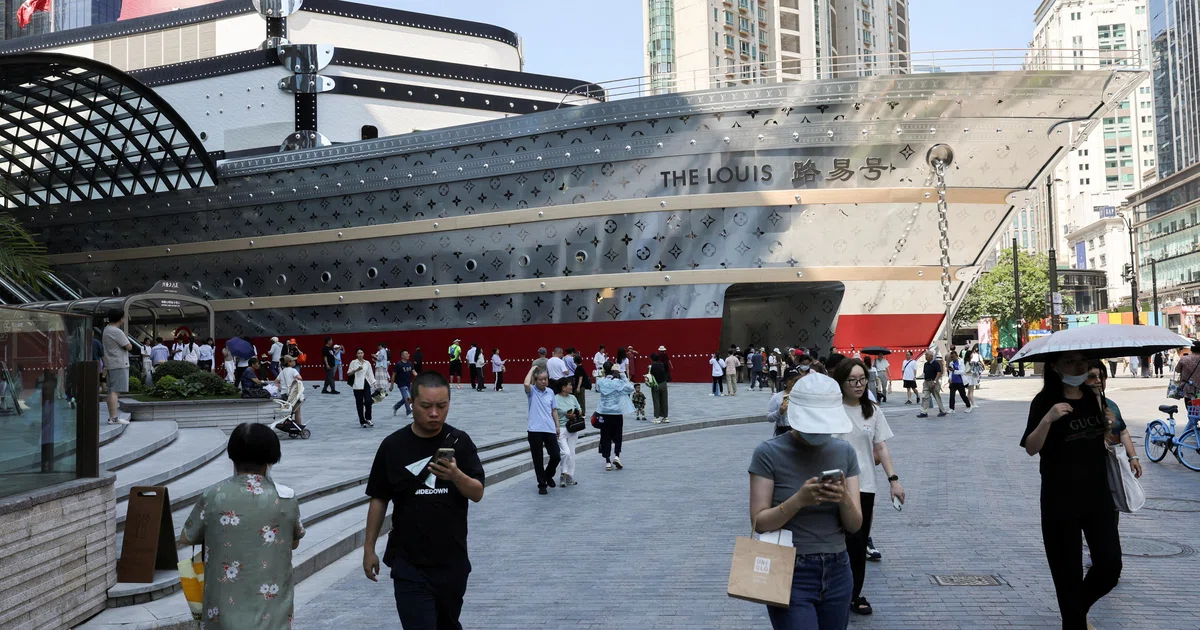
Summer shopping mall data in mainland China point to “a sharp deceleration in growth”, according to analysts
Published Fri, Oct 9, 2026 · 03:01 PM
[PARIS/BEIJING] China’s tax crackdown on wealthy individuals has become the latest headache for luxury brands, already grappling with the fallout from the Iran war and signs of slowing consumer spending in the United States.
The combination of challenges is likely to weigh on third-quarter results due from next week, reinforcing fears that the US$350 billion luxury sector, mired in a three-year slowdown, may struggle to regain its former momentum.
Shares in LVMH and Birkin bag maker Hermes are both down about 40 per cent this year and trading near multi-year lows, while Gucci owner Kering has fallen 29 per cent, reflecting growing investor pessimism about the sector.
Under Beijing’s new tax rules, wealthy Chinese who used offshore trusts to shelter assets have until Oct 22 to declare and pay years of back taxes, a move that threatens to curb spending in one of the industry’s most important markets.
Chinese consumers, who account for roughly a fifth of global luxury purchases, were long the driving force behind the sector’s growth. Demand has weakened sharply, however, since the Covid pandemic.
The 20 per cent levy is hitting spending by ultra-high-net-worth individuals, a group that had until recently proved more resilient than middle-class consumers hurt by China’s prolonged property downturn, said Alexis Bonhomme, head of Shanghai-based luxury consultancy Trinity Asia.
The Business Times turns 50
Five decades of milestones and moments that shaped Singapore’s success story – told through our headlines.
Explore BT50
“Until the deadline to pay the tax, some people may face liquidity issues”, Bonhomme said. “This doesn’t mean they won’t start buying again, but right now, the mood just isn’t there,” he added.
Summer shopping mall data in mainland China pointed to “a sharp deceleration in growth”, Bernstein analysts said in a note.
Two industry sources familiar with third-quarter mall trading in mainland China said overall conditions remained weak, although performance varied widely between brands. Smaller “quiet luxury” labels such as cashmere specialist Brunello Cuccinelli and LVMH’s Loro Piana were outperforming more conspicuous brands such as Louis Vuitton and Gucci, they said.
The concerns in China come as demand also shows signs of softening in the US, the luxury industry’s largest market and, until recently, one of its brightest spots thanks to a tech-driven stock market rally.
‘Undermine confidence for everyone’
US credit card spending on luxury goods, tracked by Citi, fell for a third consecutive month in August as broader consumer confidence weakened. The data followed surveys showing growing unease about the US economy ahead of the midterm elections.
Kering has already warned analysts to expect a further contraction at Gucci, prompting a string of brokerages to cut their stock price targets.
One of the few bright spots has been high-end jewellery. Brands such as Richemont’s Cartier have benefited as wealthy consumers increasingly favour gold and other precious materials, which are viewed as offering more enduring value.
In downtown Beijing, Deng Qi, a 51-year-old exporter of ceramic building components, forecast 20 per cent less spending on luxury goods than in previous years. The offshore tax measure, he said, had sent a clear message.
“I don’t think wealthy people who are subject to taxes on offshore trusts would stop buying luxury, they are not short of that few tens of thousands of yuan,” he said. “The real issue is the broader impact, measures like that undermine confidence for everyone. Sooner or later they will set their eyes on the relatively rich.”
Investors will get their first read on the sector next week when LVMH reports results on Monday. Analysts expect quarterly sales of 18.5 billion euros (US$20.7 billion), up 1 per cent from a year earlier. Kering and Hermes report on Oct 22. REUTERS
