


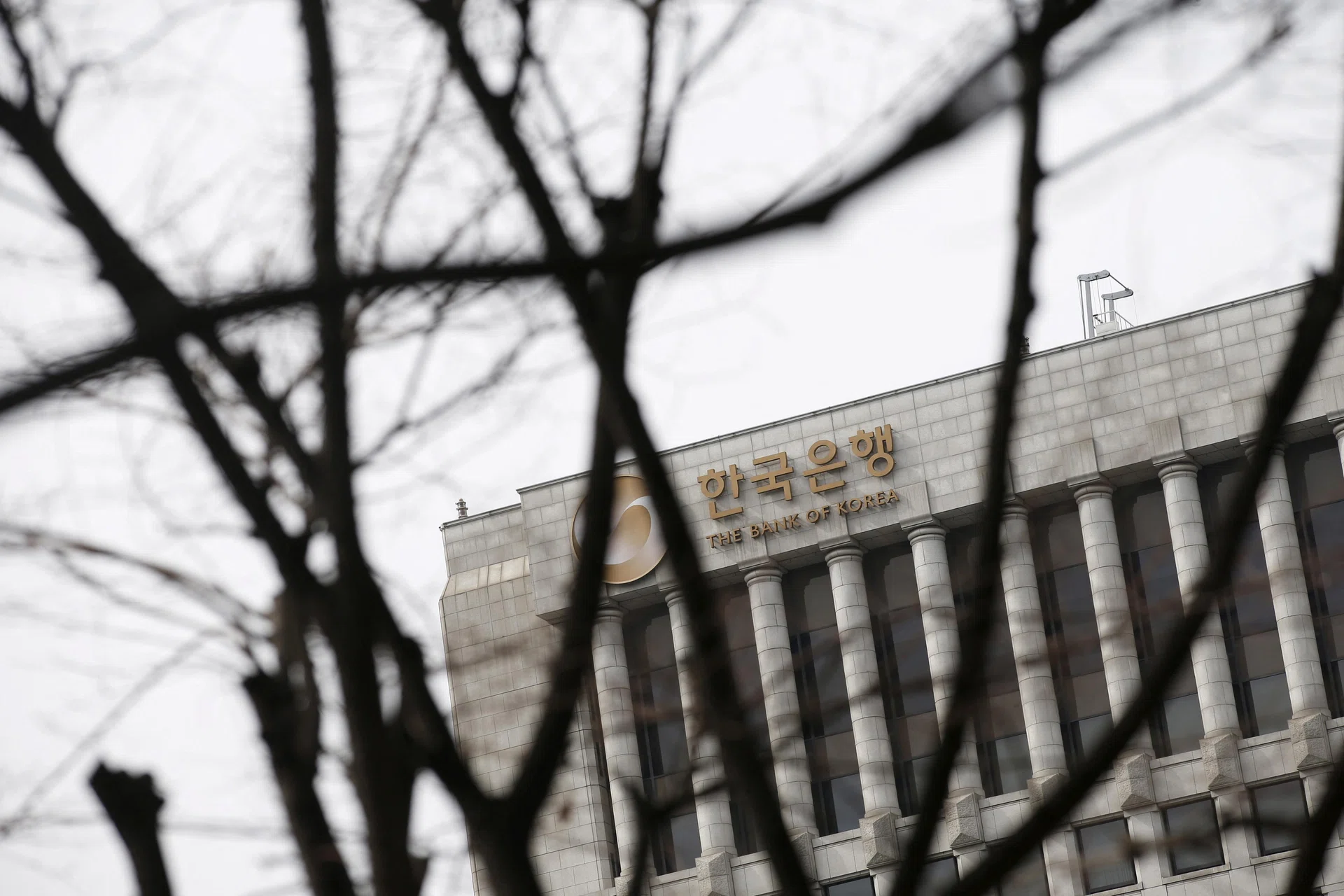
The timing and pace of these should depend on incoming data, says the lender’s outgoing senior deputy governor
Published Tue, Aug 11, 2026 · 03:07 PM
[SEOUL] The Bank of Korea (BOK) will likely need to raise interest rates further as strong growth feeds into underlying inflation, its outgoing senior deputy governor said, while adding that the stronger currency and recent stock market moves give policymakers some flexibility in setting policy.
The won’s recent stabilisation coupled with a decline in the country’s benchmark Kospi index “give monetary policy board members some leeway, but I don’t see that as such a critical factor”, Ryoo Sangdai told reporters in a briefing on Tuesday (Aug 11).
“Much more weight will be placed on whether core inflation remains elevated going forward, whether the economy can sustain its growth momentum, and on financial stability issues.”
Ryoo, whose term as one of the BOK’s seven board members ends on Aug 20, said the timing and pace of further rate increases should depend on incoming data, adding the revised outlook will ultimately determine the BOK’s monetary policy decision in August.
Ryoo’s comments reinforce the BOK’s tightening bias ahead of its Aug 27 policy meeting, with the economy expanding faster than expected and underlying price pressures remaining persistent.
The central bank raised its benchmark rate by a quarter percentage point to 2.75 per cent in July, its first increase since early 2023.
South Korea’s headline inflation cooled to 2.8 per cent in July but remained above the central bank’s target, while core inflation edged up to 2.6 per cent.
Some economists continue to pencil in another increase in August, following July’s hike.
Ryoo said he does not expect inflation to rise as sharply as it did following Russia’s invasion of Ukraine, but could remain above the BOK’s 2 per cent target for longer as the semiconductor boom lifts wages and domestic consumption.
SEE ALSO

“The scale of the increase may not be large, but it could be persistent,” he said about inflation, adding the durability of those pressures will require continued monetary policy attention.
At the July meeting, BOK governor Shin Hyun Song said the next several policy meetings would be “live”, with all options on the table.
Since then, the case for further tightening has also been supported by strong data, with the economy growing a stronger-than-expected 0.6 per cent in the second quarter, while working-day adjusted exports jumped almost 70 per cent from a year earlier in July.
On the currency, Ryoo said the won remains generally weak despite its recent recovery and continues to pose an upside risk to inflation by raising import costs.
Still, he expects the won to strengthen over time against the US dollar over time as fundamentals including record trade and current account surpluses and expectations for a narrower interest rate gap with the US, exert greater influence.
Ryoo, who joined the bank in 1986, said if he were still on the board later in August, he would examine the BOK’s updated growth and inflation forecasts as well as higher-frequency indicators, including trade and credit card spending.
“Because monetary policy needs to be preemptive, I expect there’ll be further rate hikes as policymakers assess the outlook for growth and the path of inflation.” BLOOMBERG
