


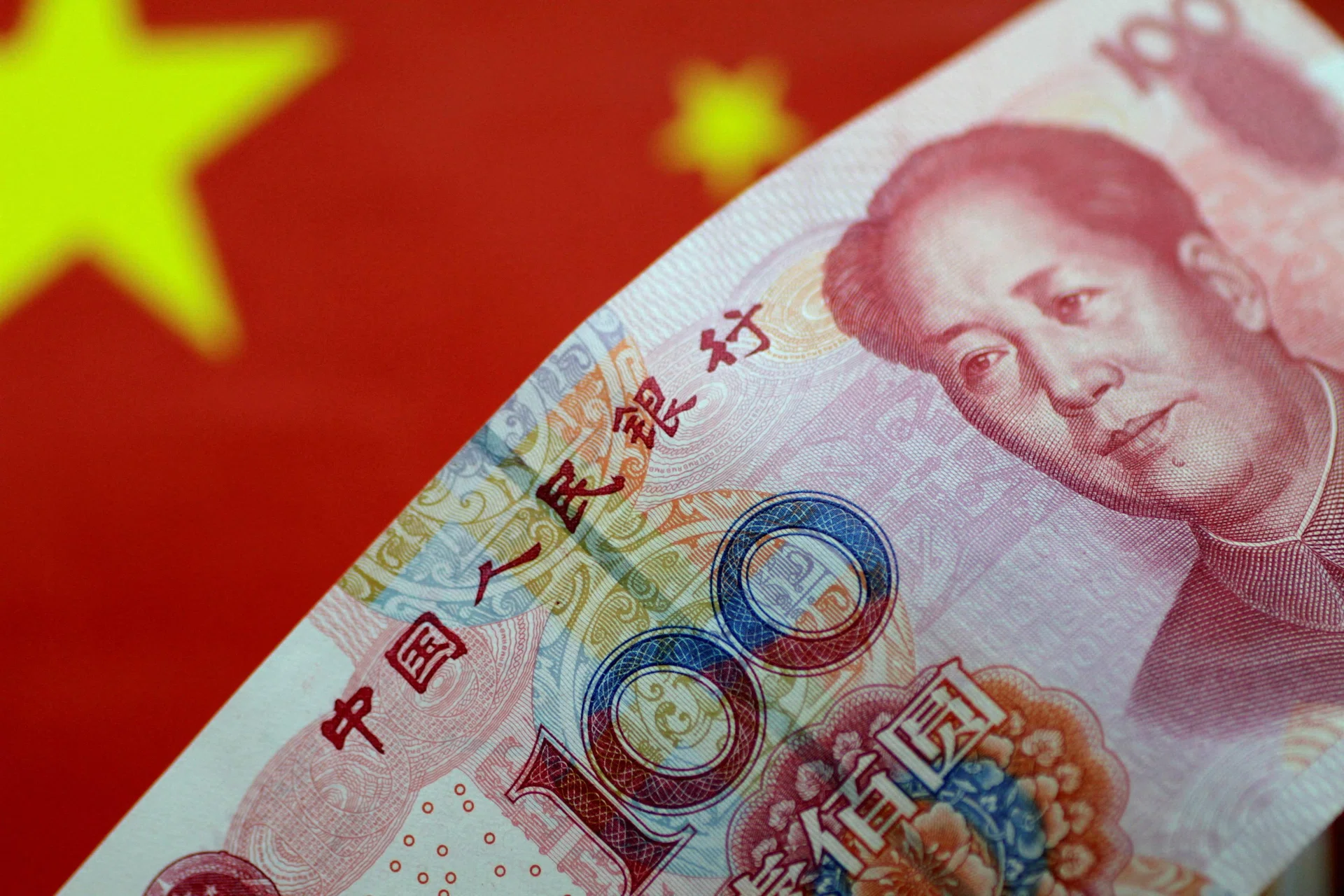
CHINA’S new-found tolerance for steady yuan appreciation looks set to re-accelerate a rally in emerging-market (EM) currencies, as investors brace themselves for lower US interest rates.
Supporting such expectations is EM currencies’ sensitivity to changes in the yuan. A Bloomberg analysis shows that over the past year, for every 1 per cent yuan move, the Thai baht, Malaysian ringgit, Chilean peso, Mexican peso and Brazilian real have moved closely in tandem.
Meanwhile, the 30-day correlation between the US dollar-yuan reference rate and the MSCI EM Currency Index rose to 0.59 at the end of August, the highest since May 2024, Bloomberg-compiled data show.
As the primary currency for many Asian economies’ main trading partner, the yuan acts as an anchor in the region with Beijing’s foreign-exchange policy closely watched by peers. But its influence spreads beyond Asia to countries impacted by China’s trade and commodity flows.
The MSCI EM Currency Index has dropped about 0.3 per cent this quarter, following two quarters of gains, largely dictated by the US dollar’s swings as the Federal Reserve’s policy outlook shifted. The gauge is up around 6.8 per cent this year.
Market watchers say there is room for EM currencies to resume their advance, as the People’s Bank of China (PBOC) has signalled a departure from its previous policy focus on maintaining yuan stability amid trade tensions.
BT in your inbox

Start and end each day with the latest news stories and analyses delivered straight to your inbox.
“China’s yuan is the key currency cross for most EMs; they trade more with China than they do with the US,” said Eric Fine, a New York-based portfolio manager at VanEck Associates. “The winners are all EMs.”
In a notable shift, the PBOC set the yuan’s reference exchange rate against the US dollar at its strongest level since November on Sep 9, after having consistently guided the currency above market expectations since July. This was in contrast to its campaign earlier in the year to rein in US dollar-induced volatility.
The onshore yuan, which is confined to a 2 per cent daily trading band that uses the reference rate as the centre, has gained over 2 per cent versus the greenback this year. It has weakened against the US currency for three consecutive years.
In a sign of growing investor confidence, hedge funds recently raised bullish options bets on the yuan, targeting it to reach around or below 7 per US dollar by year-end. The currency pair was about 7.12 on Friday (Sep 12).
The PBOC’s pivot to a bullish yuan bias defies market speculation that was rampant earlier this year that Beijing could devalue its currency to cope with higher US tariffs, VanEck’s Fine said, adding that his firm has since increased exposure to EM local-currency bonds over US dollar-denominated notes.
Allowing the yuan to gradually appreciate could be “part of US-China trade talks and international pressure to let the renminbi strengthen”, said Brad Bechtel, global head of FX at Jefferies. “This will allow Asian currencies to appreciate in lock-step, which allows for easier central bank policy.”
Such benefits will likely spill over to the broader EM space, Bechtel added.
China was the second-largest trading partner of Asia’s developing economies last year, accounting for 9 per cent of the latter’s total trade, according to data from the International Monetary Fund.
Meanwhile, China is launching a sweeping campaign to promote the global role of its currency, taking advantage of growing doubts about US exceptionalism that increasingly weakens the US dollar’s appeal. A stronger yuan is seen as aiding such efforts.
