


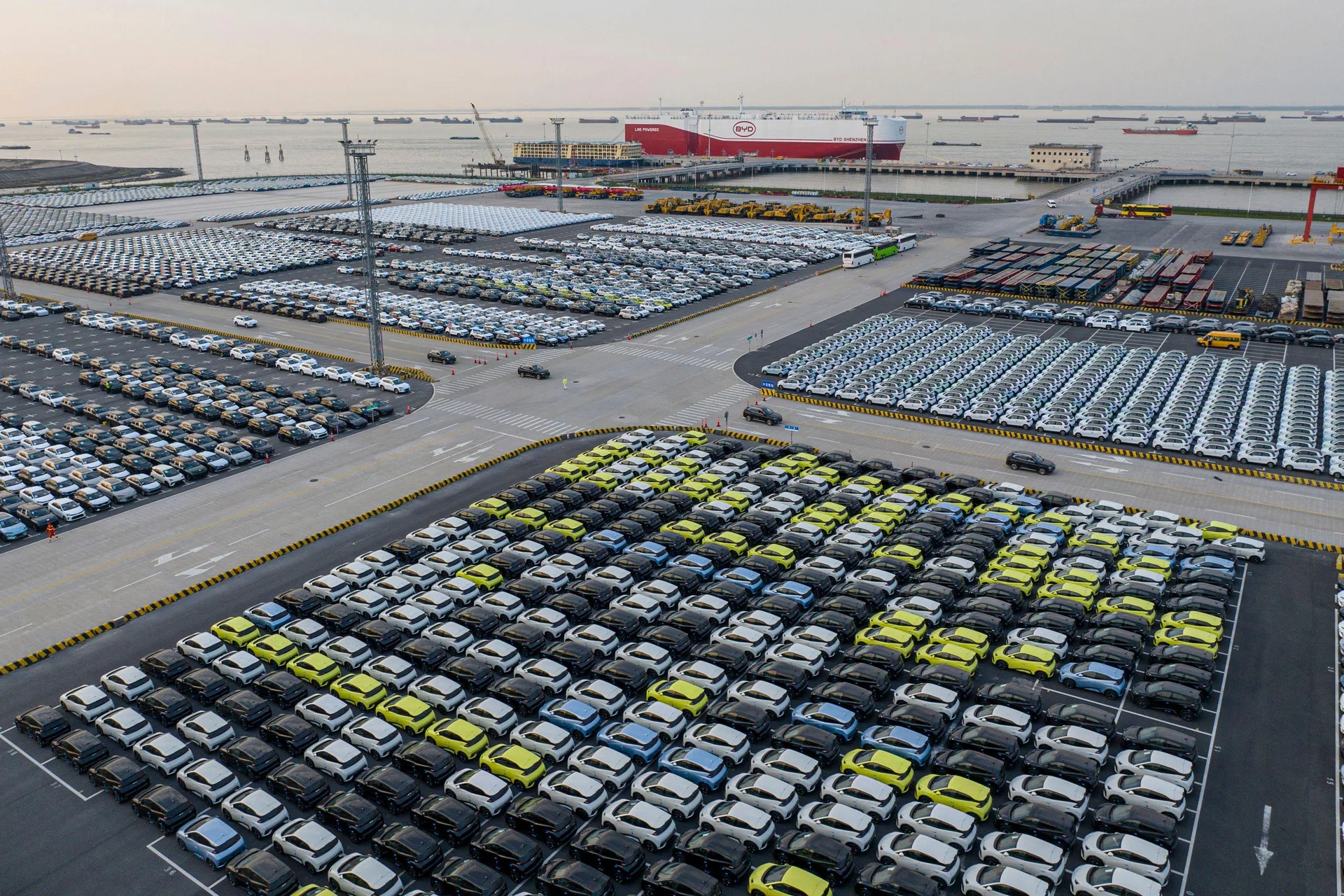
Since authorities earlier this year stepped up scrutiny of the bruising price war in China that helped fuel the group’s rise, its sales momentum has stalled
BYD has spent the last five years racing ahead. In 2024, with the help of government support, aggressive pricing and overseas expansion, the Chinese carmaker surpassed Tesla to become the world’s top seller of electric vehicles.
Now, China’s biggest automaker faces a reality check. Since authorities earlier this year stepped up scrutiny of the bruising price war in China that helped fuel BYD’s rise, the company’s sales momentum has stalled. What was expected to be another blockbuster year has instead become the company’s toughest stretch since 2020.
What are BYD’s current woes?
Outside of China, BYD is faring well. An aggressive and expensive global push has helped the automaker win fresh customers with its affordable, high-performing EVs. In the UK, for example, sales in September surged by 880 per cent year on year, becoming BYD’s largest international market for the first time.
However, in China – its biggest market by far – BYD has struggled to deepen discounts and attract new buyers. In the three months to the end of September, the company experienced its first year-on-year fall in total sales since 2020. Seasonal weakness played a role, but competitors such as Geely Automobile Holdings, Zhejiang Leapmotor Technology and Xiaomi have also been gaining market share.
The slowdown in deliveries has forced BYD to scale back its ambitious targets. Instead of an original goal of 5.5 million cars for 2025, it now expects to sell 4.6 million vehicles, according to Li Yunfei, a senior company executive.
The higher prices that BYD can charge abroad are helping to absorb some, but not all, of the pressures on the business. In August, BYD reported its first quarterly decline in profit in more than three years with a 30 per cent slump in net income.
BT in your inbox

Start and end each day with the latest news stories and analyses delivered straight to your inbox.
What’s behind BYD’s problems?
Since May, BYD has been facing the full force of regulatory intervention in its home market. Chinese officials have cracked down on the domestic price war that kicked off in early 2023. Restrictions on price discounting have blunted a crucial tool in its playbook. At least BYD, with its vertically integrated supply chain – it makes most of its own batteries and chips – has been able to largely sidestep supply chain snarls.
A regulatory clampdown on supply chain financing, however, has also forced BYD to rein in its practice of delaying payments to suppliers beyond industry norms. Authorities have mandated that carmakers settle supplier payments within 60 days; a drastic change from the 275 days on average that it took BYD to pay its vendors in 2023.
There are also challenges that lie ahead. A number of overseas markets, such as Europe and Mexico, are now seeking to limit the rapid expansion of cheaper Chinese EV imports. That is already on top of Chinese carmakers being effectively shut out of the US market by high tariffs, as well as restrictions on Chinese-made technology in cars that are due to come into effect in 2027.
SEE ALSO


Are BYD investors worried?
Since BYD’s market capitalisation peaked at US$175 billion in late May, its shares have tumbled on the back of regulatory curbs and the summer sales slowdown.
In September, BYD’s drop in quarterly profit sent shares falling by 8 per cent and wiped off more than US$6 billion from its market value. Then weeks later, news that Warren Buffett’s investment company, Berkshire Hathaway, had offloaded its entire holding of the company – worth about US$9 billion just before the divestment started in 2022 – caused the automaker’s stock price to drop 7 per cent over three days. A BYD spokesperson said the buying and selling of stocks was normal and thanked Charlie Munger and Warren Buffett for their long-time investment and support. The stock price mostly recovered, but as at Oct 10 was still lower than just before the sell-off was reported.
While investor sentiment remains subdued, market watchers say BYD’s line-up of new cars in 2026 should be a positive catalyst. HSBC Holdings analyst Yuqian Ding said that a potentially major tech upgrade could accelerate sales growth next year.
How are BYD’s rivals performing?
BYD’s Hong Kong-listed shares have underperformed most domestic peers since March. While it remains the runaway leader in sales, rivals including Leapmotor, Geely and Xiaomi are enjoying rapid growth from a lower base.
Its stock is, however, faring better than Tesla’s. The US EV maker’s securities have taken a hit this year, in part after chief executive officer Elon Musk waded into politics, alienating both existing and prospective customers.
When and how did BYD become such a big brand?
BYD began life in 1995 as a battery manufacturer primarily for mobile phones. It entered the car industry in 2003 when it acquired a failing state-owned automaker.
A turning point came in 2016 when it started to hire top foreign talent, including long-serving design chief Wolfgang Egger, a former veteran of Audi and Lamborghini. Egger overhauled the bland design of BYD’s vehicles in favour of a more stylish lineup that, at the same time, cost 25 per cent less than comparable models from Western rivals.
BYD’s ambition to lead the new-energy vehicle market also aligned with the Chinese government’s strategy to embrace EVs as part of its push towards clean technology. Billions of dollars in government subsidies fuelled EV adoption, helping to bolster BYD’s finances, among others. BLOOMBERG
