


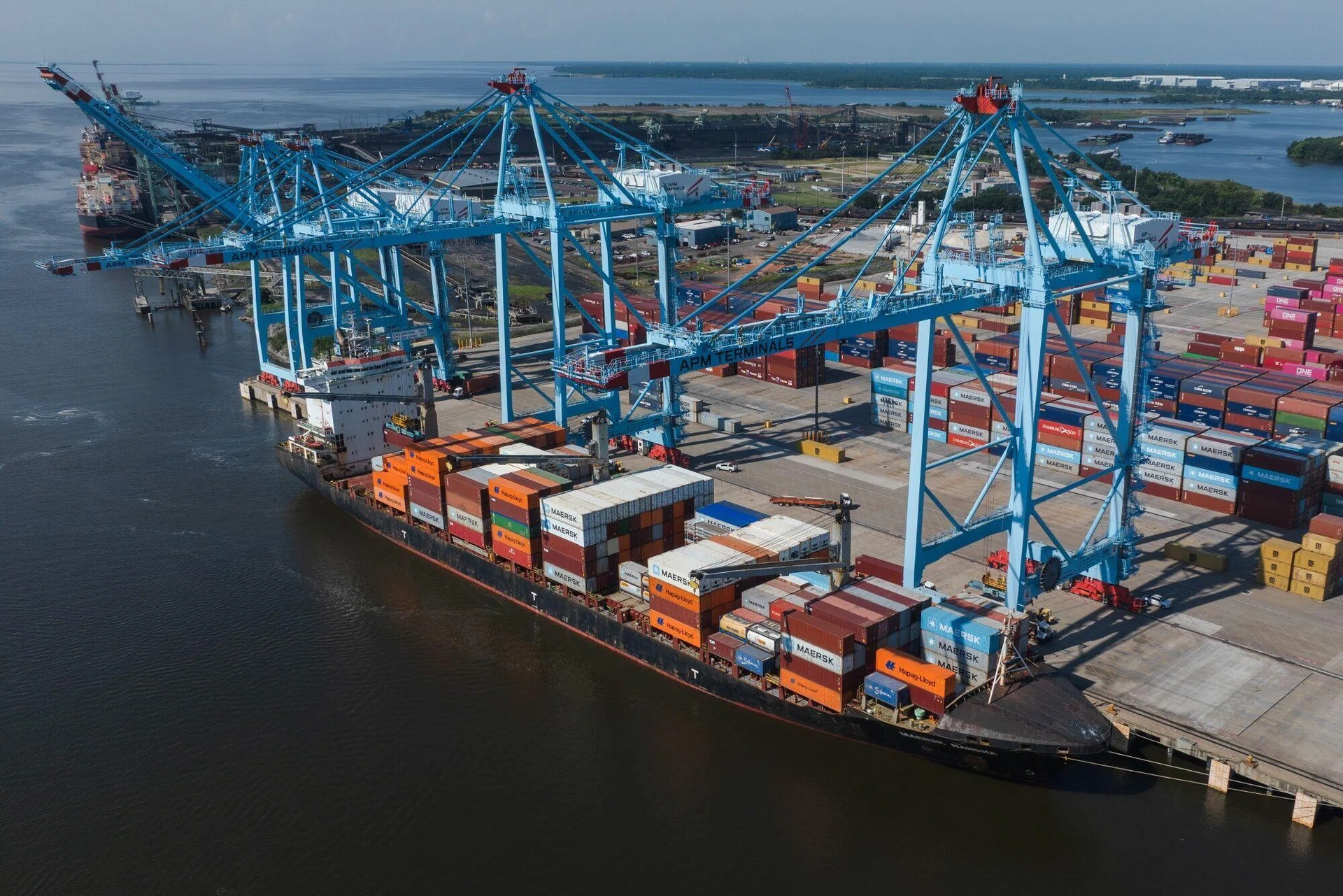
The new duties take effect on Friday at 12.01 am New York time (12.01 pm in Singapore)
Published Fri, Jul 24, 2026 · 05:55 AM — Updated Fri, Jul 24, 2026 · 09:53 AM
THE US will collect duties of between 10 per cent and 12.5 per cent on imports from most major trading partners, its biggest move yet to reconstruct US President Donald Trump’s tariff wall that was pierced by the US Supreme Court.
The new levies follow an investigation into the alleged failure of around 60 economies to prevent forced labour in their supply chains to the detriment of American workers.
Goods from some 10 trading partners deemed to have adopted forced-labour restrictions will be subject to 10 per cent tariffs, including Mexico, the UK, Canada and India.
Duties on items from the European Union and Taiwan will be at least 10 per cent and products from Japan, Switzerland and South Korea will be taxed at at least 12.5 per cent in a way that complies with the trade agreements they reached with the US, according to a US Federal Register notice published on Thursday (Jul 23).
Singapore, which was listed as one of the investigated economies, is subject to the 12.5 per cent tariff.
The new duties take effect on Friday at 12.01 am New York time (12.01 pm in Singapore), according to the notice. The levies will not apply to certain goods already loaded onto vessels before that time.
The forced-labour duties are Trump’s broadest move toward restoring his protectionist tariff regime since his earlier levies were struck down by the high court. After that setback he instituted a 10 per cent global import tax, which expires on Friday. The timing of the new charges ensure there will be no gap between the two.
“The United States has had a forced labour import ban for nearly a century, and rigorously enforces it,” US Trade Representative Jamieson Greer said in a statement. “It’s well past time for our trading partners to do the same.”
One senior administration official rejected the idea that Trump was imposing the new tariffs purely as a replacement to the earlier duties that were struck down, but also said the president would use all the tools at his disposal and will not allow his trade policy to be undermined by a court decision.
SEE ALSO

The official suggested the administration had planned to impose the forced-labour tariffs in any case and was rolling them out now to avoid upheaval for US businesses.
The administration telegraphed the move in June, when it released the outcome of its forced-labour investigation. There will be some changes from the original proposal, according to a senior administration official who briefed reporters before the announcement was made. That includes India securing a 10 per cent levy instead of the original, threatened 12.5 per cent level.
Imports such as fuel, foods and fertilisers will be exempt from the new tariffs, as well as products such as automobiles, metals and drugs that are covered by separate, industry-specific levies. Items covered by the North American trade agreement with Mexico and Canada will also be excluded.
Exemption requests
The Trump administration has received numerous requests for thousands further exemptions, that official said. The plan will include global and country-specific exemptions based on commitments from existing deals Trump struck with foreign governments, according to the official.
Greer is spearheading Trump’s redesigned trade policy, targeting unfair practices abroad using more legally tested statutes that require months of procedures and public engagement. The more deliberative approach stands in contrast to the immediacy and unpredictability of Trump’s tariff barrages through much of 2025.
Still, that may not stop some importers from challenging the new duties in court.
Saddling American importers with costs carries risks politically for Trump and his fellow Republicans, less than four months from midterm elections where the focus for Democrats is the elevated cost of living. That pressure is intensifying as the Iran war makes energy, food and other commodities more expensive.
Much ‘uncertainty’
Blake Harden, a trade expert with the consultancy Ernst & Young, said Trump is not finished with tariffs or disrupting the status quo.
“There is still a lot of uncertainty hanging out there. We still have the opportunity for a lot of tariffs this year,” she said. “Prior to this week there was sort of just a bit of a lull and maybe it felt like there was more certainty than there is. There’s this thing I keep telling folks: There’s a lot to come still as we get into this year.”
USTR proposed the latest duties following a probe under Section 301 of the Trade Act of 1974. That report recommended a 12.5 per cent duty for countries deemed to lack laws that ban imports produced with forced labour. A 10 per cent import tax was recommended for products from economies that have such bans in place but do not sufficiently enforce them, or have committed to doing so.
Countries from India and to Norway have pushed back against the allegations. In Canada, a Bill introduced in June is designed to strengthen government’s “ability to identify, intercept and prohibit goods linked to forced labour at the border, while providing certainty and transparency for businesses operating in or trading with Canada,” according to a public filing in the case.
The White House’s decision comes on the heels of a Jul 15 announcement that the US, also invoking Section 301, will begin charging importers a 25 per cent tariff on imports of certain goods from Brazil following an investigation alleging that the country engaged in unfair trade practices.
The raft of 301 investigations includes a review of US trading partners’ excess manufacturing capacity, though it is unclear when the findings of that probe will be released, or whether any future duties from that investigation would be stacked on top of those proposed under the forced labour investigation.
Greer said recently that the excess capacity probe is taking longer than the investigation into forced labour. “We’re trying to make sure that we’re actually living up to the letter of the law,” he said in an interview with Bloomberg Television on Jul 15.
This week, Trump proposed tariffs on Canadian goods under a never-before-used trade authority – Section 338 – though those would only affect about 5 per cent of US imports from its northern neighbour and would take effect on Aug 19 depending on how negotiations go.
Complicating the rollout are several deals the Trump administration negotiated with economies including Japan, South Korea, the UK and the European Union. Greer has said Washington would abide by commitments made in those agreements.
Earlier on Thursday, Greer lashed out at the EU in a statement, saying a European Commission announcement of a fine against Alphabet’s Google and a recent “state-backed” loan to Toulouse, France-based Airbus risk undermining transatlantic trade stability.
Meanwhile, US Customs and Border Protection is currently issuing refunds on Trump’s so-called reciprocal tariffs that the high court ruled illegal in February. The recipients are thousands of American importers including Nike, which said in June that it expects to recoup almost US$1 billion.
Still, “tariffs remain a dynamic cost headwind that we expect to continue looking forward,” said Matthew Friend, Nike’s chief financial officer, said during a conference call in late-June. BLOOMBERG
