






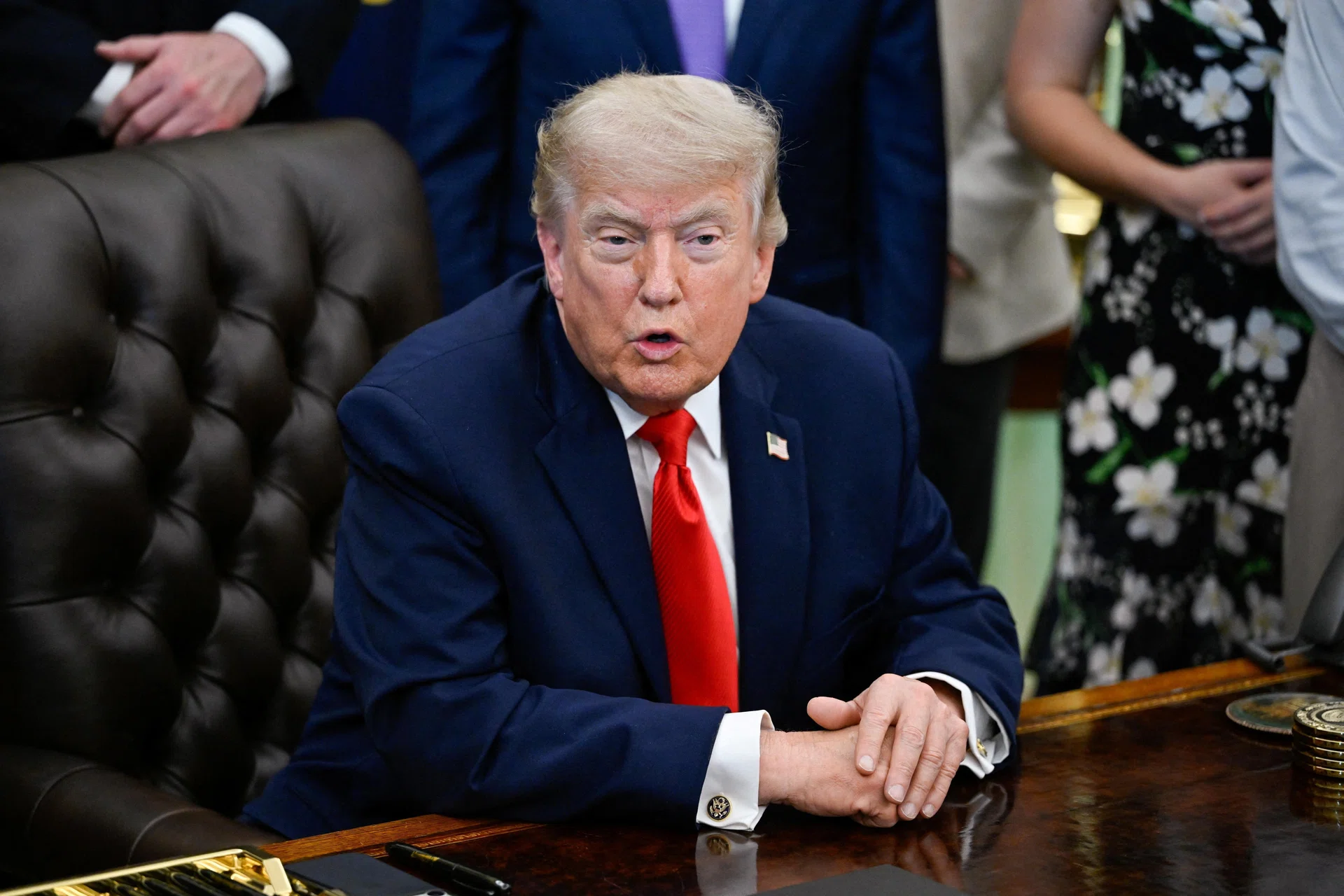
The US President has vowed to respond if Iran-backed Houthi militants disrupt the waterway, without specifying how
Published Wed, Jul 22, 2026 · 06:38 AM
[WASHINGTON] US President Donald Trump minimised the prospect of immediate talks with Iran as the two sides exchanged strikes and Houthi militants in Yemen threatened shipping in the Red Sea.
Trump vowed on Tuesday (Jul 21) to respond if the Iran-backed group disrupted that waterway, but did not specify how.
His comments came after the 10th day of US and Iranian attacks and as mediators continued efforts to restart negotiations. Oil prices ticked higher amid the threats to key routes for global energy supplies.
“They want to desperately meet and until they’re ready to meet in a meaningful way we have no interest,” Trump said at a White House meeting with Lebanon’s president, vowing to continue the fight.
Teheran has dismissed US claims that it is seeking more talks. Mediators are working to revive a Jun 17 interim peace agreement. Iran’s Interior Minister Eskandar Momeni was in Pakistan on Tuesday but there was no immediate word of progress.
Oil prices have surged by about 20 per cent in July after hostilities resumed in the nearly five-month war, which began when the US and Israel launched airstrikes against Iran on Feb 28.
Brent crude traded slightly higher on Tuesday at around US$90 a barrel.
US Central Command said it targeted Iranian military command centres, launch sites and air defences overnight, and Iran attacked facilities in Kuwait and Jordan, with Kuwait saying power and desalination plants were among those hit.
The UK navy reported strikes on two vessels around the Strait of Hormuz. Commercial traffic through the waterway was the lowest in three weeks.
The Iran-backed Houthis on Monday said they would impose a maritime blockade on Saudi Arabia, putting at risk the flow of millions of barrels that the kingdom exports via the Red Sea.
A message from the Yemen-based group to shipowners warned all vessels against calling at Saudi ports, according to an email seen by Bloomberg, shedding light on the scope of a threat.
Asked about the threat of Houthi attacks on shipping, Trump said, “If something like that happens, we take care of it”, without elaborating.
The US conducted a two-month bombing campaign against the Houthis in 2025 but Red Sea traffic did not recover to prior levels.
On Tuesday, the Saudi-led coalition in Yemen said it is taking steps to protect ships in the area while the Saudi Foreign Ministry said the kingdom would take all necessary measures to protect vessels in accordance with international law.
US retail petrol prices have climbed back over US$4 a gallon, potentially hurting Trump and his Republican Party before midterm elections in November.
Trump said on Tuesday in response to a question that Iran “probably” is trying to influence the vote with its attacks in the strait. He also signalled more military action is likely.
“If we left tomorrow, we had a big, we had a big success,” Trump said. “But we’re not leaving tomorrow.”
He also reiterated threats to strike soon at Pickaxe Mountain, an Iranian facility the US and Israel have said they suspect is a nuclear site.
Iran vowed to respond with a “powerful strike” to any attack on its nuclear sites or other sensitive facilities, joint military command said in a statement reported by state-run IRIB News.
Defense Secretary Pete Hegseth told legislators on Tuesday that the war had cost the US US$37.5 billion so far.
In late May, officials had put that figure at US$29 billion, which some experts criticised as an understatement. Hegseth was on Capitol Hill pushing for a US$67 billion supplemental defence spending bill.
Pakistan and Qatar, the main intermediaries in the conflict, see a return to US-Iran positions before Jul 9 as a first step in easing hostilities, according to the semi-official Iranian Students’ News Agency.
The latest round of fighting over control of the Strait of Hormuz began that day.
Asked about a Reuters report that mediators proposed a 10-day ceasefire, a US official said Trump is currently focused on punishing Iran for attacking ships in the strait. The strikes will continue until the president chooses a different course of action, the official said, but diplomatic efforts to end the war were continuing.
Abbas Araghchi, Iran’s foreign minister, said his country would not abandon diplomacy but also will not be forced back to the negotiating table while under military attack.
“Iran’s actions in the Strait of Hormuz and Persian Gulf had global consequences and we became a global player,” he said in an interview published on his Telegram channel, underscoring how Teheran sees control of the strait as a source of leverage over the US and as vital to its security.
Teheran, insisting it has a right to manage traffic through Hormuz, has attacked US bases across Kuwait, Jordan, Bahrain and Iraq.
The Kaifan, an oil products tanker owned by Kuwait Oil Tanker, became the latest major vessel to be attacked in the strait as the outbreak in fighting empties the waterway.
The US military has announced the death of three service members in northern Iraq and Jordan since Friday, with another service member still missing.
Iran says US attacks have struck bridges, killed more than 50 people and wounded more than 500 since the most recent flare-up began.
Trump warned Iran last week he would escalate airstrikes and widen the scope of targets until it backed down. BLOOMBERG


