


Wary of continuing an unpopular war, US president taps economic sanctions and a naval blockade to stifle Islamic Republic’s oil exports
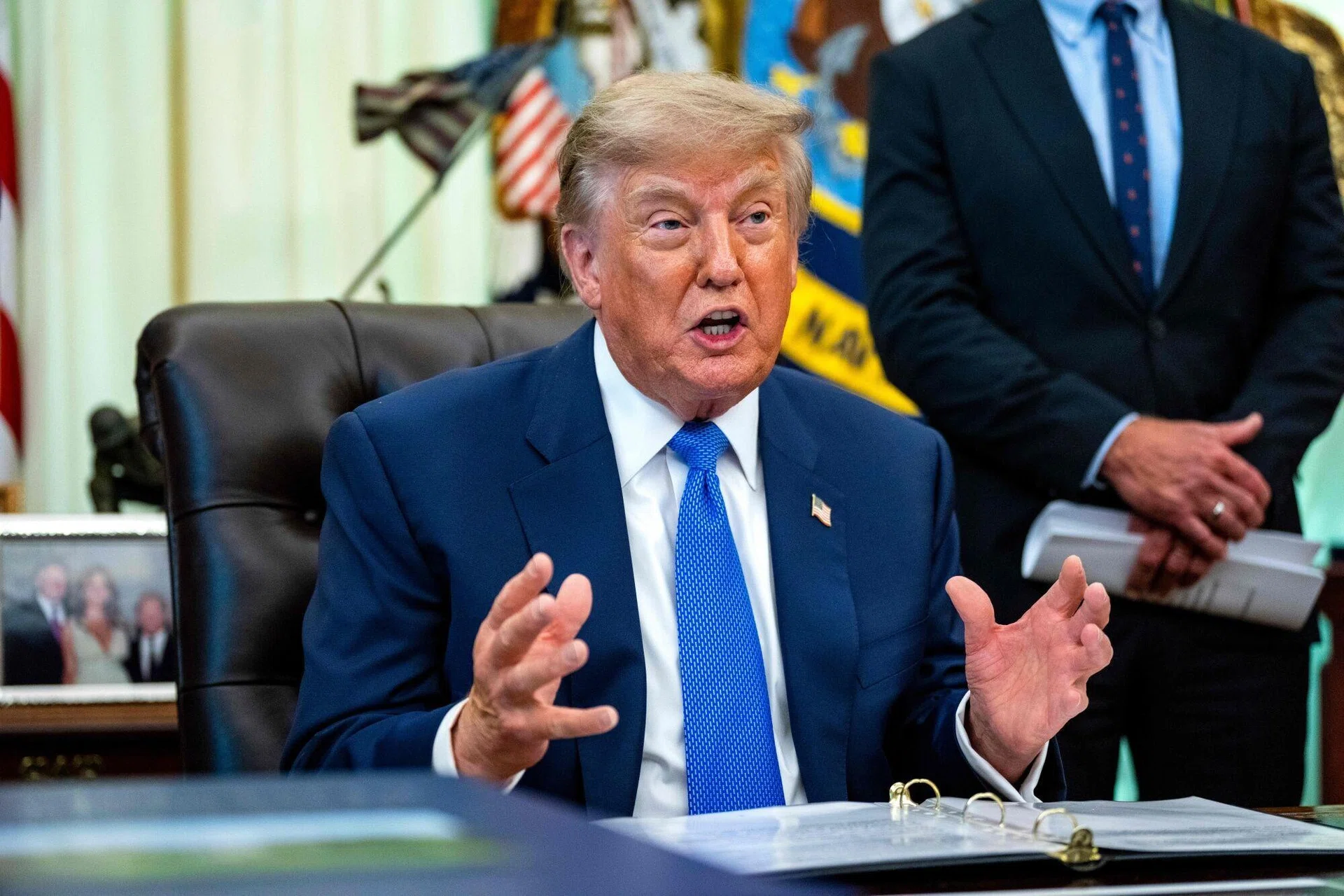
[NEW YORK] The US military campaign against Iran has so far failed to force the regime to capitulate. The Trump administration is betting once again that suffocating economic pressure will do the job.
Facing a shortfall of necessary munitions and wary of continuing an unpopular war, President Donald Trump and his top officials are returning to a familiar playbook – relying on a steady increase in economic sanctions and a naval blockade to stifle Iran’s oil exports.
The renewed emphasis on economic pain – it was dubbed “Maximum Pressure” in Trump’s first term – is a marked pivot for an administration that has repeatedly threatened a stepped-up military campaign after nearly six months of war against Teheran.
While the approach failed to bring about the result Trump wanted before 2020, he and his team argue it will this time around.
“They have a losing strategy at the end that will lead to the collapse of this regime in Iran as their economy gets strangled,” US Energy Secretary Chris Wright told Fox News on Thursday (Aug 13).
Wright touted the US’ “growing” ability to escort products through the Strait of Hormuz, while claiming Iran’s leverage was declining. “They have sort of one card, and it’s shrinking in size,” he said.
His comments echoed rhetoric earlier this week from US Ambassador to the United Nations Mike Waltz, who told Fox News that Iranians were more afraid of Treasury Secretary Scott Bessent than Secretary of War Pete Hegseth.
Trump made a similar comment on Sunday to Axios, saying he was “low-keying it” with Iran.
“We are just watching Iran with its huge inflation and the fact they have no money,” he said. Bessent hit a similar theme weeks before on Fox, saying “the government is causing the people to suffer, and we’re going to keep pressing”.
SEE ALSO
That echoes an argument put forward by some analysts who argue that the regime is teetering towards economic collapse, while having fewer options to evade sanctions via other countries such as the United Arab Emirates.
“As jurisdictions once exploited for sanctions evasion, including the UAE, become way less hospitable to Iranian illicit finance and trade, and global markets reduce their dependence on Iranian commodities, existing US sanctions become far more potent,” said Miad Maleki, a former US Treasury sanctions official who is now a senior fellow at the Foundation for Defense of Democracies.
Iran’s economy has already taken a significant hit from the war, with much of its industrial capacity destroyed and crude exports severely curtailed by the US blockade. Central bank data shows year-on-year inflation recently reached 77 per cent.
The currency, meanwhile, has fallen more than 10 per cent from its pre-war level, adding to the economic pressure on Iranians.
A depreciation of the rial sparked violent nationwide protests at the start of 2026, leading to a crackdown by authorities that killed thousands of people. There have been no signs of the anti-government demonstrations resuming.
One counterargument to the policy of applying economic pressure is that the US has been sanctioning Iran, like a handful of other nations, for decades without sparking meaningful political change.
Other examples include North Korea and Cuba – another one of Trump’s recent targets.
The US has added some 2,200 sanctions on Teheran since Trump began piling on new designations in 2018, according to Jeremy Paner, a partner at Hughes Hubbard & Reed, who tracks designations on Iran’s oil and petrochemical sectors.
Around 350 of those have been part of Bessent’s “Economic Fury” push.
That has so far failed to force Teheran to bend on its nuclear programme or release its chokehold on the Strait of Hormuz, or much else.
“If 47 years of sanctions haven’t broken Teheran’s will, more of the same is unlikely to produce any changes,” according to a Bloomberg Economics report led by Jennifer Welch.
“Especially if that pressure is accompanied by continued threats from Trump, which support Teheran’s domestic narrative and keep dissent at bay.”
The most likely scenario, Welch explained, is that Trump stays on the same path as before, maintaining sanctions and the blockade, alongside limited strikes and diplomatic efforts.
“The regime is entrenched,” said David Tannenbaum, a director at Blackstone Compliance Services, a consulting firm focused on sanctions.
Even though sanctions are worthwhile because they choke off resources to the regime, he added, “I don’t think that it’s going to change the regime. I don’t think it’s going to convince them to give up their nuclear programme.”
Asked for comment on the new approach, a White House official said the sanctions and naval blockade have left Iran completely broke, and that Trump has many levers he can pull in the coming months.
The official did not give more detail of what Trump may have in mind.
The US can still make it harder for Teheran to sell its oil or get the proceeds home. But each step up the sanctions ladder brings greater diplomatic costs – and diminishing certainty that additional economic damage will translate into political concessions.
One option to tighten the screws could be to hit China and India, the two biggest buyers of Iranian oil – with China being responsible for over 90 per cent of oil exports from Teheran.
Penalties on entities that facilitate these purchases would directly reduce Iran’s oil income.
The US has already sanctioned some Chinese teapot refineries and firms since the conflict with Iran, but has so far stopped short of targeting the major Chinese banks that finance the trade.
Sanctions on large Chinese financial institutions could reduce Iran’s oil income, but they would also risk opening another front with Beijing ahead of a planned September meeting between Trump and Chinese President Xi Jinping.
“If we look to deploy a more aggressive strategy, the considerations won’t be just bilateral – they will become multilateral,” said Jess Hoversen, a former Office of Foreign Assets Control official who is now chief economist at Column, a digital platform bank.
Other possible targets include exchange houses in countries like the UAE that help Iran repatriate funds.
Once Iran makes its oil sales, it still needs exchange houses and intermediaries to convert payments – often received in Chinese renminbi – into currencies Teheran can actually use.
Still, that move alone is unlikely to make a significant difference.
“Will that get Iran to capitulate?” Paner said. “Likely not, on its own.” BLOOMBERG
