


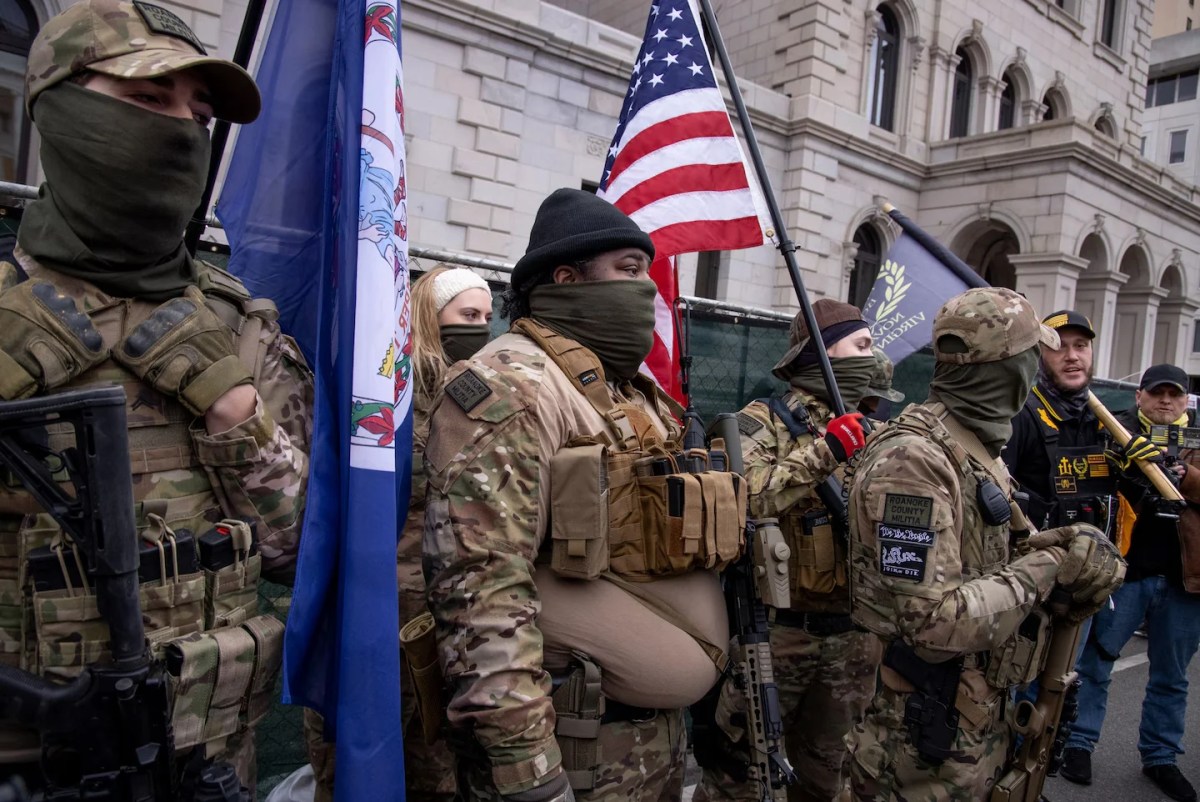

In America, the attempt to prosecute domestic terrorism is not merely a national security or law enforcement matter—it’s a crisis of legitimacy at the heart of our democracy. The January 6, 2021, storming of the U.S. Capitol pushed this crisis into national awareness as thousands of insurrectionists stormed the Capitol in an attempt to thwart a legitimate election. Despite widespread agreement on the part of politicians and pundits that it constituted an act of domestic terrorism, no one who carried out the act was indicted on a federal crime so designated. It is not an anomalous failure but an epiphenomenon of a larger collapse of law and politics.

There simply is no standalone federal crime of domestic terrorism. Although the USA PATRIOT Act is the first federal law to define domestic terrorism, it imposes no concomitant criminal penalty on the term. Prosecutors are forced to rely on an ad hoc combination of legislation at their disposal—hate crimes, firearms offenses, or state offenses—that do not have the same expressive content and specificity of a straightforward charge of terrorism. As the Harvard Law Review sums it up, “there is no federal charge of domestic terrorism,” and the gap in the law has direct consequences for the way that the government prosecutes politically motivated violence.

This lacuna in the law has heated a contentious debate. Reformers in a single camp call for an independent new law under which prosecutors would charge domestic terrorists in a simple, straightforward way, providing the law with practical as well as symbolic power. They contend that the current system is creating disparities—international terrorism is prosecuted and labeled as such, but domestic attacks, incessantly perpetrated by white supremacists or anti-government extremists, are not. This, they believe, undermines the moral credibility of America as well as people’s trust in the system of justice.

On the other hand, skeptics warn against a slide toward more government power. They believe the instruments are there; it is merely a matter of a lack of political will to use them. Much foreign terrorism law can, with some creativity, be applied to domestic cases. But this would depend on stretching the law, and it runs the risk of leading to allegations of overreaching and selective prosecution—especially in an atmosphere of polarized politics.

At the center of this argument is a legitimacy issue. Terrorism is a political act, and the violence and the government’s reaction are always open to question regarding legitimacy. In today’s climate, institutions are untrusted and political polarities are heightened, and whatever the government does is scrutinized for proof of prejudice or abuse. Lack of an explicit, congressionally passed law of domestic terrorism forces judges and prosecutors to do it by ear, further fueling the public’s suspicion.

Ambiguity in the law allows both apparent and actual problems of legitimacy. Prosecutors will never try cases that they will lose to judges and jurors prejudiced by their own sense of legitimacy. Even in the plea-bargained instances, ensuing doubt about the strength of the law can guide outcomes. Although the possibility of abuse is no abstraction, experience shows that additional authority can be employed to persecute political opponents, right or left, when constraints imposed by Congress are relaxed.

One device that has been utilized to fill the gap is the terrorism sentencing enhancement. This is an enhancement of the penalty for terroristic offenses, but it’s a heavy-handed tool. It gives prosecutors a great deal of discretion, requires only a preponderance of evidence, and doesn’t require a jury verdict. Judges subsequently determine whether to use the enhancement or not, typically based on more general policy considerations and the potential for sentencing disparity. The result is unfairness and sometimes the illusion of justice as random.

The Harvard Law Review adds further that “the current strategy is deficient in responding to this threat.” The answer is less to give prosecutors more tools than to clarify and legitimize those they already have. Congress must act and require the approval of the use of existing law in domestic terror cases, require positive findings of terroristic intent, and insist that the law be applied equally and openly. This would not just strengthen the hand of the government in the fight against domestic terrorism, but also restore public confidence in the fairness and legitimacy of the system of justice.

The political task of prosecuting domestic terrorism in America is as much a test of the health of our democracy as it is of security. Without clearly defined, legitimate, and democratically legitimized laws, the war against domestic terrorism would be yet another victim of political polarization and institutional distrust.
