



Have you ever asked yourself what’s hidden beneath the streets of your city? For millions of people in Europe and Japan, the response is usually disturbing: undetonated World War II bombs lying in wait for decades to surface. These war artifacts still influence public safety, urban planning, and emergency services in ways you might not expect.

Over the last few years, cities such as Poland’s Lublin, Germany’s Dresden, England’s Plymouth, and Japan’s Nagoya have all experienced serious disruptions following the discovery of lethal historical reminders by construction workers. When a 250kg aerial bomb was uncovered in Lublin, almost 14,000 citizens were ordered to evacuate as military sappers struggled to dispose of the device safely. The site, previously an airport and wartime aircraft factory, was now a thriving housing estate, demonstrating how history could come back to literally haunt us in the middle of modern existence. According to Jakub Orzechowski / Agencja Wyborcza.pl, “Army sappers have now safely removed the device and residents can return to their homes.”

The situation is the same in Dresden, where thousands of people were evacuated following the discovery of a 550-pound bomb produced by Britain near the Carola Bridge. A 1,000-meter exclusion zone was established by the police, and they proceeded carefully to deactivate the bomb before taking it to a deactivation site. In Cologne, three unexploded bombs were discovered, which saw 20,000 people evacuated, the largest evacuation of this nature ever recorded in the city since the end of the war. According to Polizei Sachsen, “It is connected to a detonator and requires on-site defusing.”

In England, these operations can be huge. When the German 500kg bomb was discovered in Plymouth, over 10,000 residents were evacuated, and a procession of military and emergency vehicles carried the bomb through the city to be destroyed at sea. The exercise involved more than 100 British Army and Royal Navy personnel, with bomb disposal technicians working day and night to evaluate and transport the device. As reported by Defence Secretary Grant Shapps, “The success of this operation is testament to the level of skill and expertise across our Armed Forces, as well as the bravery and fortitude of our personnel when faced with high-risk situations and working under extreme pressure.”

Japan has its own legacy with bombs popping up in cities such as Nagoya. A recent uncovering of a 250-kilogram U.S.-produced incendiary bomb at a demolition site prompted the Ground Self-Defense Force to intervene, and it marked one of many continuing hazards in those regions that suffered from intense bombing during the war. The danger is not merely hypothetical—bombs have detonated prematurely, as happened beneath the taxiway at Miyazaki Airport, causing flights to be suspended for a whole day. As reported by Nagoya city officials, “The bomb is estimated to be a 250-kilogram United States-made incendiary bomb, with a diameter of 36 cm and length of 123 cm.”

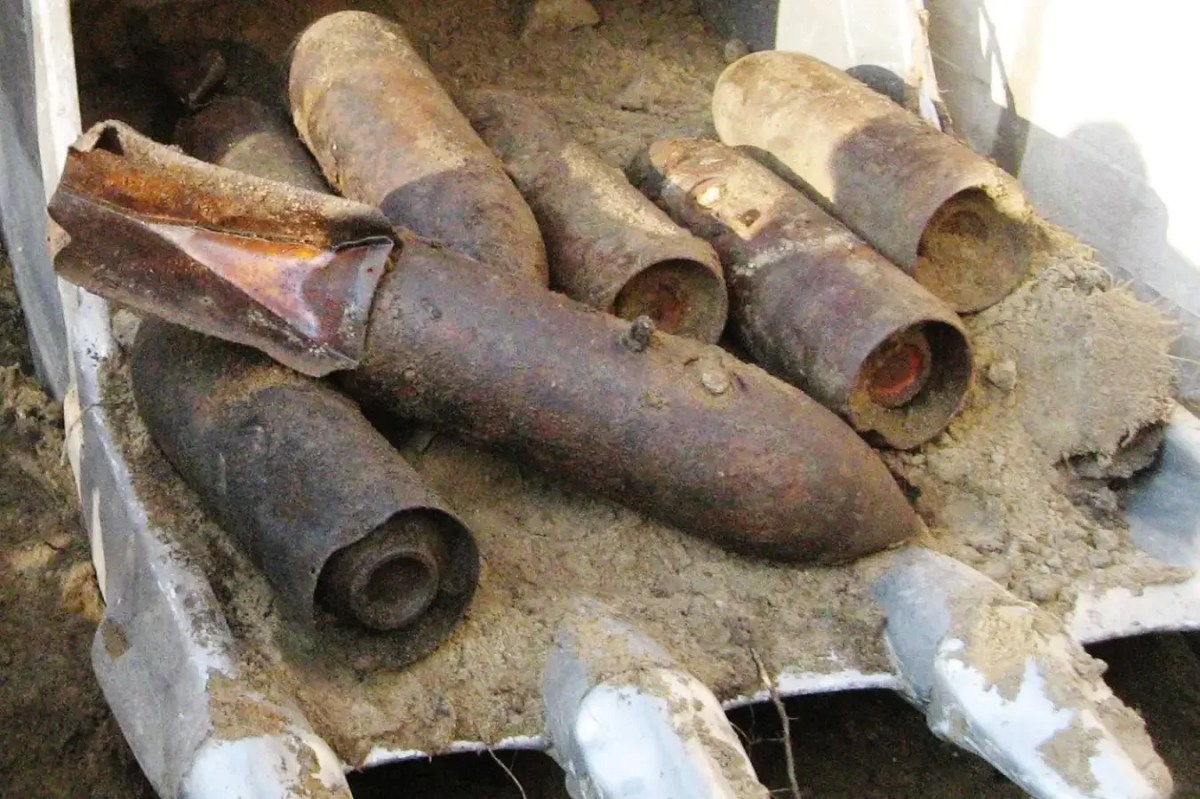
Such finds are not unusual. Thousands of undetonated bombs are defused annually in Germany alone. Building sites, playgrounds, and even military installations are swept routinely for concealed ordnance. In Wooler, in northern England, laborers uncovered dozens of practice bombs and smoke cartridges under a children’s playground, a testament to wartime Home Guard training. The council made sure to point out that even dummy bombs have a charge and need to be professionally extracted before the site may be classified as safe.

The risks extend beyond the immediate threat of explosion. Evacuations disrupt daily life, strain emergency services, and create anxiety for residents. Authorities must coordinate large-scale operations, reroute school buses, and sometimes even activate emergency alert systems to keep the public informed. The psychological impact of living with the possibility of hidden bombs is real, and the financial cost of repeated evacuations and disposal operations is significant.

What makes these operations go so smoothly is the skill and readiness of bomb disposal units. Military and civilian experts draw upon years of training, sophisticated equipment, and meticulous planning to evaluate each device. They need to find out if a bomb can be transported or needs to be blown up where it sits, balancing the danger to surrounding homes and infrastructure. Public safety procedures have been upgraded to include specific evacuation areas, communication networks, and worst-case scenarios contingency plans.

For societies constructed on the war-torn ruins, the remnant of bombs left behind is a part of everyday life. The efforts of sappers, bomb disposal agents, and first responders make sure that these concealed threats are dealt with skillfully and with courage. Their actions make it possible for cities to expand and flourish, even as they keep watching for whatever history may hide from them underneath their feet.
