


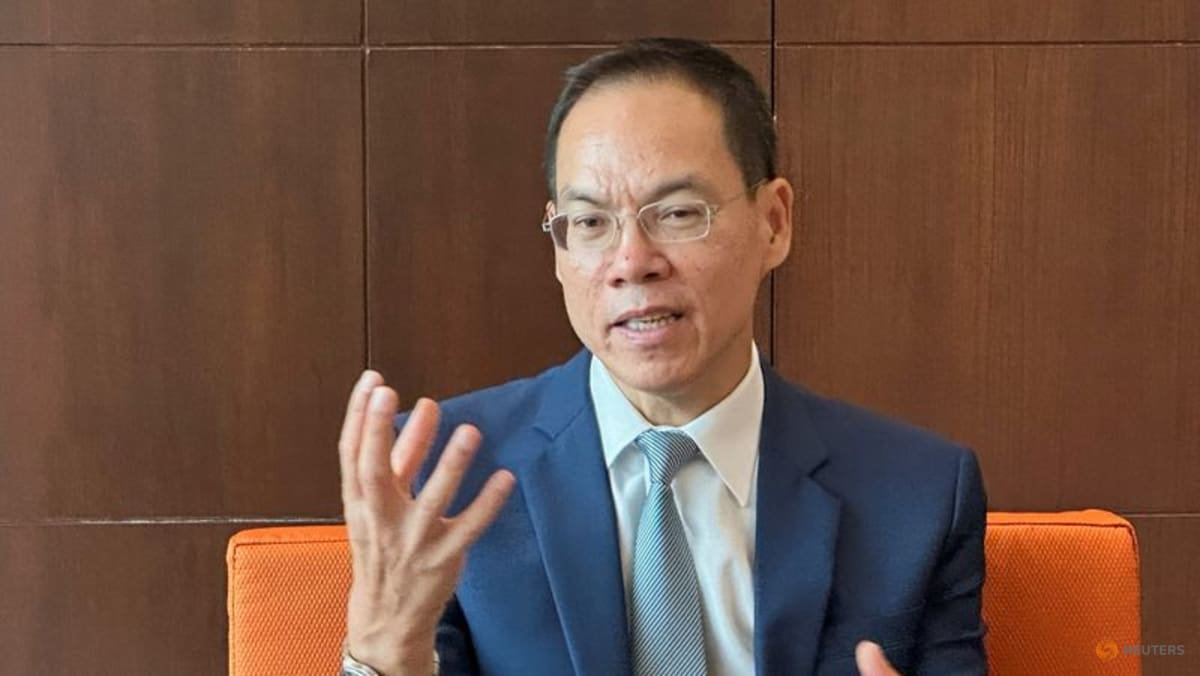
BANGKOK, Oct 14 : Thailand’s return to economic growth of about 3 per cent is “definitely possible” within three years if it can tackle some of its structural issues, a deputy central bank governor said on Wednesday, signalling alignment with the government’s stance.
The Bank of Thailand’s monetary policy will remain accommodative for now and the policy rate, currently at 1.00 per cent, will normalise only when the economy is ready, Piti Disyatat, the deputy governor for monetary stability, told Reuters.
Piti said he expects the economy to grow 2.3 per cent or slightly higher this year and to expand by 1.8 per cent in 2027. The central bank’s baseline scenario is to get back to a 2.8 per cent to 3 per cent range the year after.
“In the more distant future, two or three years horizon, we do think our potential trend growth is around 2.8 per cent to 3 per cent. So it is definitely possible to grow to 3 per cent and we expect growth to get to that level,” he said in an interview on the sidelines of the International Monetary Fund-World Bank annual meetings.
“It’s subject to not having negative shocks and also partly subject to some of the constraints that are within our control, the so-called more structural things that can be alleviated.”
Backed by a government push for new investments in key sectors such as semiconductors and data centres, Thailand’s economy is expected to grow by 2.5 per cent next year and potentially by 3 per cent within the next three years, Finance Minister Ekniti Nitithanprapas told Reuters last month.
In an interview last month, Don Nakornthab, Bank of Thailand assistant governor for monetary policy, said the Thai economy’s potential growth rate stood at 2.7 per cent, which would take four to five years to reach.
RATE CUT ‘HARD TO IMAGINE’
Southeast Asia’s second-largest economy has struggled in recent years compared to other countries in the region, weighed down by weak demand and stubbornly high levels of household debt.
The economy expanded 1.9 per cent annually in the second quarter of 2026, down sharply from 2.8 per cent in the previous quarter.
The central bank left its key interest rate unchanged at 1.00 per cent in August and cut its policy rate six times between October 2024 and February, amounting to a total of 150 basis points, as it sought to give a boost to the economy. It will next review policy on October 28.
“We don’t foresee any reductions in rates,” Piti said. “It’s hard to imagine a cut unless there’s a big shock hit, because 1 per cent is low historically. We’ve never been at 1 per cent outside of crisis times.”
He added: “Definitely, I think at some point we will have to normalise interest rates when the economy is ready.”
