





Published Sat, Feb 7, 2026 · 02:29 PM
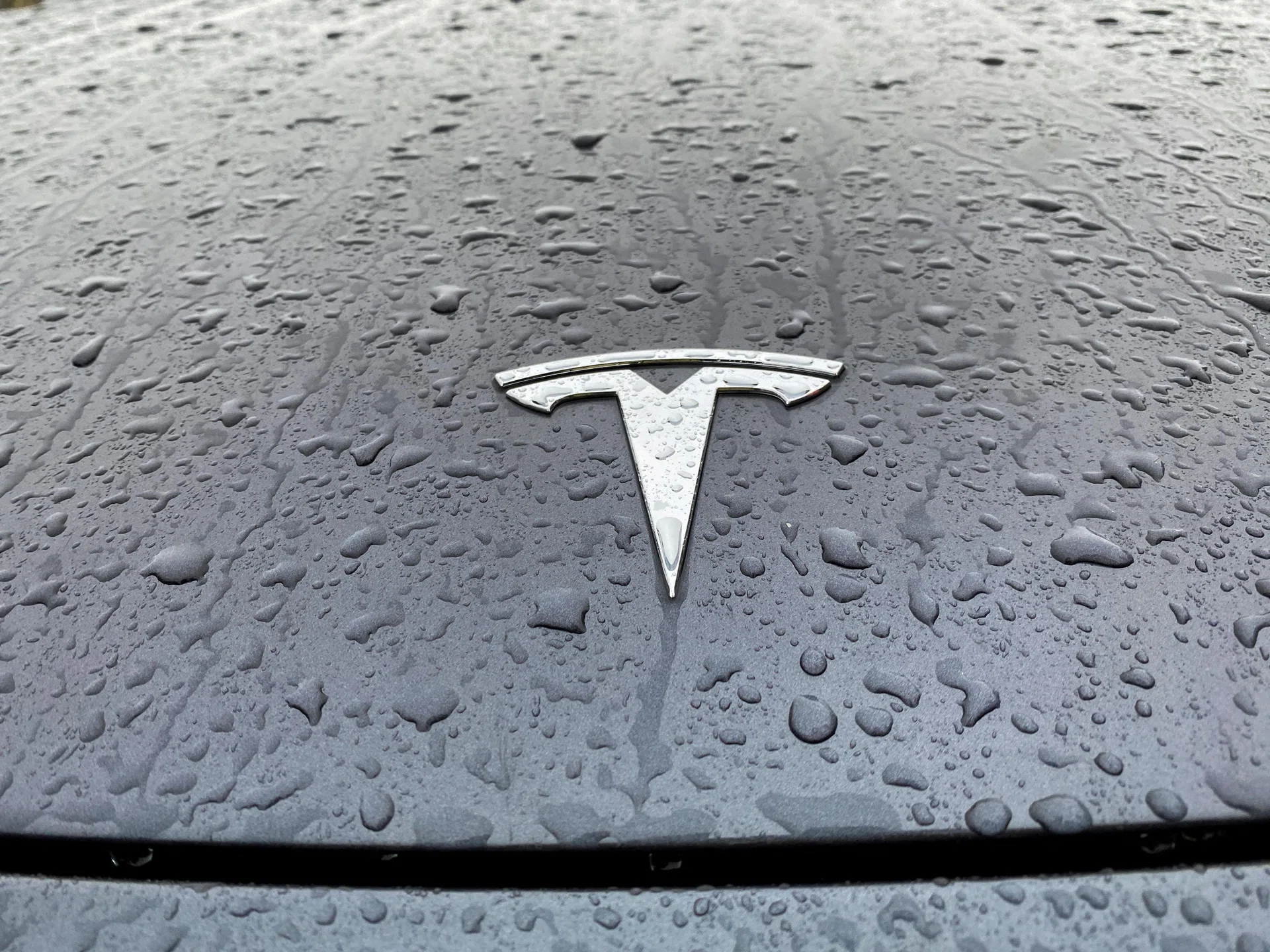
[LOS ANGELES] Tesla is hiring to support founder Elon Musk’s recently announced plan to become the biggest US manufacturer of solar energy components, according to online posts by senior executives at the company.
The posts show the company is acting on Musk’s new vision of setting up 100 gigawatts (GW) of domestic solar production, a target he announced last month.
“This is an audacious, ambitious project,” Seth Winger, Tesla senior manager for solar products engineering, wrote in one of several posts by company executives on LinkedIn. “We need audacious, ambitious engineers and scientists to help us grow to massive scale. If you want to solve tough manufacturing problems at breakneck speed and help the US break through on renewable energy generation, come join us.”
A job posting on the Tesla website for a solar manufacturing development engineer said the company’s goal is to “deploy 100 GW of solar manufacturing from raw materials on American soil before the end of 2028”.
Musk had not previously given a timeline for the goal or announced plans to ramp up hiring for it.
Tesla officials and Musk did not immediately respond to requests for comment.
Navigate Asia in
a new global order
Get the insights delivered to your inbox.
Tesla director of engineering Ralf Gomm and Bonne Eggleston, a vice-president overseeing battery cell manufacturing, also posted this week about the company’s hiring plans in solar.
Tesla is turning its ambitions to solar manufacturing at a time when its EV sales are flagging. The company last week unveiled a new solar panel it is producing at its factory in Buffalo, New York. Local media in China reported this week that delegations sent by Musk had visited various Chinese solar companies.
It was not clear where the 100 GW of production would be located.
SEE ALSO

“We have not yet engaged with Tesla,” Pamm Lent, a spokesperson for Empire State Development, a New York state economic development agency, said in an emailed statement.
Musk himself has said that solar and batteries are the best way to add large amounts of electricity to the power grid at a time of soaring demand from data centres linked to the expansion of artificial intelligence.
Those views clash with those of US President Donald Trump, whose administration Musk previously served as head of the Department of Government Efficiency. Trump has called renewable energy expensive and inefficient, and has signed legislation slashing clean energy subsidies.
Solar in space
Musk has also raised the possibility of putting solar panels in space, suggesting potential synergies with his SpaceX business. Setting up 100 GW of solar manufacturing in the US in a couple of years would be a staggering feat.
The US currently boasts 65 GW of solar module capacity and just 3.2 GW of solar cell capacity, according to the Solar Energy Industries Association. Cells are the crucial components that transform sunlight into energy and are substantially more complex and expensive to manufacture. China currently dominates their production.
US solar production capacity has grown dramatically thanks to a law passed under former president Joe Biden, creating tax incentives for clean energy manufacturing. Still, many announced factories never materialised and existing producers have struggled to compete with cheap imports from Asia. Musk is known for making big promises on ambitious timelines that often do not pan out.
“While Musk’s long-term forecasts are often directionally accurate, near-term timelines have been missed frequently, especially for projects involving new manufacturing ecosystems,” TD Cowen analyst Jeff Osborne said in a client note. “We consider these targets aspirational rather than likely for the US solar supply chain in the midterm.”
Separately, Musk promised every year since 2016 that driverless Teslas would arrive no later than the following year. Last July he predicted that Tesla robotaxis would serve “half the population of the US” by the end of the year.
Tesla is operating a limited robotaxi service in one market, Austin, and only recently removed human safety monitors from some of the vehicles. The “Full Self Driving“ service Tesla offers to vehicle owners requires an attentive human driver.
Tesla has also struggled with solar manufacturing in the past. The company acquired a Buffalo, New York factory through its 2016 acquisition of installer SolarCity and said at the time that it aimed to ramp up to 1 GW of solar production.
But its manufacturing partner, Panasonic, left the project in 2020 and Tesla has used the facility to produce superchargers in addition to its premium solar roof tiles, which make up a small part of its business. REUTERS
Decoding Asia newsletter: your guide to navigating Asia in a new global order. Sign up here to get Decoding Asia newsletter. Delivered to your inbox. Free.


