


It will secure the flow of information and protect the integrity of transactions for ship fuels
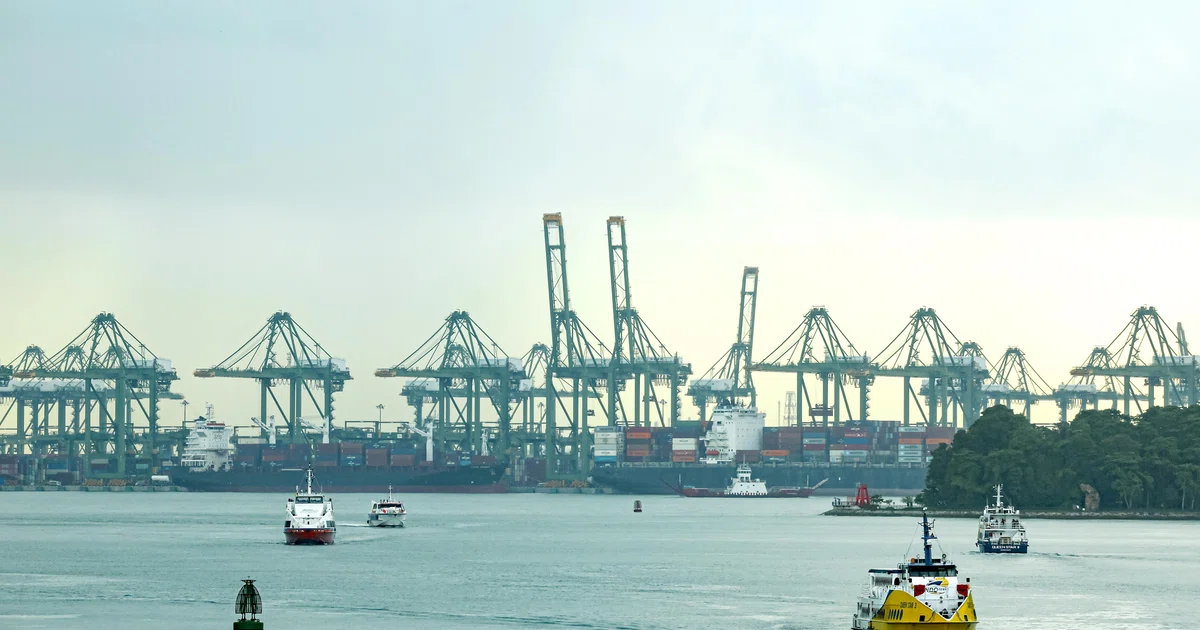
[SINGAPORE] Singapore will build a digital data ecosystem that captures bunkering data at source and automates the flow of this data with end-to-end security as it is transmitted to various parties in the value chain.
These parties will include the Maritime and Port Authority of Singapore (MPA), as well as stakeholders such as traders and financiers who fund the purchase of these fuels used in commercial shipping.
The system will reduce intermediary handling and provide greater assurance over the integrity of transactions.
Singapore, the world’s largest bunkering hub, is also exploring the use of liquefied biomethane as a marine fuel; at the same time, the Republic is developing ammonia as a bunker fuel and will conduct its first ethanol bunkering operation.
Senior Minister of State for Transport Murali Pillai, speaking at the 24th Singapore International Bunkering Conference and Exhibition on Wednesday (Oct 14), made these announcements in the context of Singapore’s goal of transitioning to net-zero greenhouse gas emissions by 2050.
Ramping up digital push
Digitalisation will be key to sustaining confidence in bunkering as ship refuelling becomes more complex, said Murali, who is also senior minister of state for law.
The Business Times turns 50
Five decades of milestones and moments that shaped Singapore’s success story – told through our headlines.
Explore BT50
The digital data ecosystem, which reduces the need for manual data entry, is designed to secure and automate the flow of bunkering data from measuring devices to the parties on the value chain.
This development under Phase 2 of the digital bunkering initiative builds on Phase 1, under which ship refuelling processes and documentation were digitalised through electronic bunker delivery notes.
All bunker suppliers in the port of Singapore have been required to provide digital bunkering services since Apr 1, 2025.
SEE ALSO
MPA will launch a grant call in November to support selected trials for Phase 2. Licensed bunker craft operators may team up with their technology partners to take part.
“Through reliable data, strong standards and operational preparedness, Singapore will strive to remain a reliable bunkering hub,” said Murali.
More moves to go “multi-fuel”
Murali announced several other initiatives at Wednesday’s event, which was held at Resorts World Sentosa with the theme “Charting a resilient multi-fuel future”, a reference to Singapore building capabilities in different marine fuel pathways.
One such initiative is the “strengthening (of) more readily available options” by expanding the bunkering capacity for liquefied natural gas (LNG), and developing biofuels and biomethane.
“For LNG, we are already seeing this demand take shape,” Murali noted.
Singapore achieved a record 570,000 tonnes in LNG bunker sales in 2025; in the first eight months of 2026, sales were up 24 per cent year on year.
MPA will invite licence applications to operate LNG floating storage units in Singapore anchorages by end-2026 to expand storage capacity and enhance the resilience of the supply chain.
Three parties – MPA, French shipping and logistics company CMA CGM and Singapore LNG Corporation – have signed a memorandum of understanding to explore ways in which existing gas infrastructure and networks can support biomethane for maritime use.
Singapore’s first ethanol bunkering trial takes place this week. The parties involved are Danish shipping and logistics player Maersk, marine fuel supplier and product tanker owner-operator Golden Island, and port operator PSA Singapore.
The Republic has also introduced a technical reference for ammonia bunkering.
Covering requirements for safety, bunkering procedures, custody transfer and personnel competencies, the reference will be put to the test in the ammonia bunkering trials.
Separately, the Singapore Chamber of Maritime Arbitration is seeking public feedback on a model contract for ammonia bunkering transactions to support the development of the chemical as a marine fuel.
Murali said that Singapore intends to build a resilient multi-fuel ecosystem by “progressively putting the pieces in place: the standards and contracts, operational experience and infrastructure, supply chains and partnerships”.
He also announced a grant to encourage early adoption of electric harbour craft. The grant provides support of S$250 for each kilowatt-hour of battery capacity for all new electric harbour craft, capped at S$150,000 for smaller electric harbour craft and S$250,000 for larger ones.
The early adopter scheme runs for two years. Applications open in January 2027.
From 2030, all new harbour craft operating in Singapore must be fully electric, capable of using pure biofuel produced from vegetable oils, recycled cooking oil or animal fats, or compatible with net-zero fuels.
More than 1,600 predominantly diesel-powered vessels are now providing essential marine services, from passenger transport and towage to bunkering and maintenance operations. Only 10 are electric.
