







An albino, he entertained crowds at the California Academy of Sciences for years by not doing much at all
[SAN FRANCISCO] This funeral traded hymns for a brass band, sombre pallbearers for dancing drag queens, and black suits and dresses for reptile costumes.
There were no platters of cheese and crackers, but there was a nearly life-sized loaf of sourdough shaped like the deceased.
In San Francisco, people do things differently – including the memorial service on Sunday (Jan 18) to mourn the passing of Claude, an albino alligator who entertained crowds at the California Academy of Sciences for years by not doing much at all.
The city has long embraced those who stand out from the crowd, and Claude certainly did.
He was pure white, had pink eyes that did not see well, stretched 3 m long, weighed 136 kg and was so quiet and still that many first-time visitors to the science museum thought he was a statue.
A few times over the years, Claude shocked his admirers with a roar – and on Sunday, the city roared its love and appreciation back at him.
Navigate Asia in
a new global order
Get the insights delivered to your inbox.
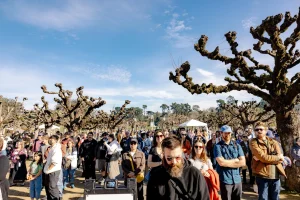
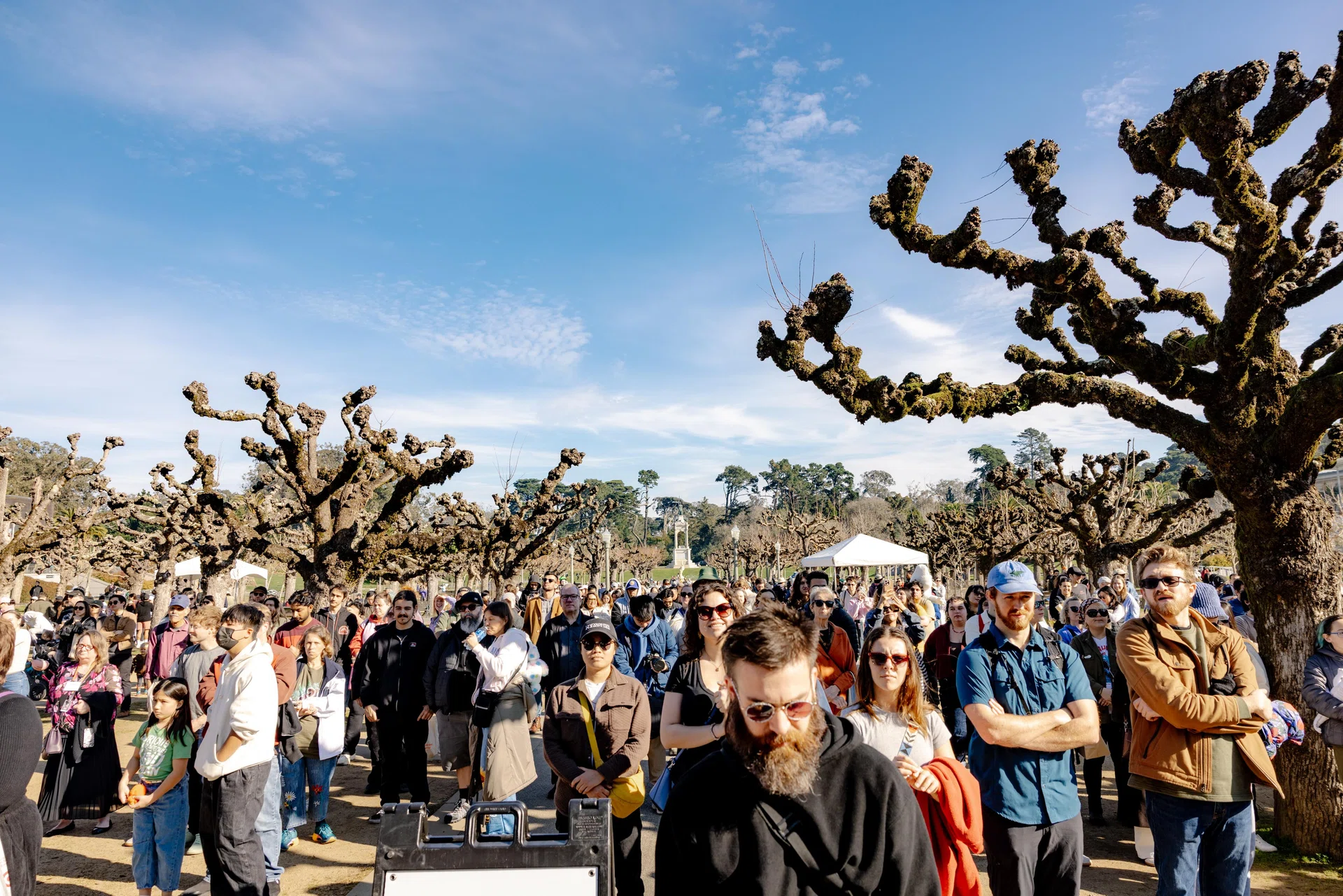
In December, he died of liver cancer at 30, a ripe age for an albino alligator, and thousands turned out to a concourse near the museum in Golden Gate Park for his jubilant memorial service.
Catherine Stefani, member of the California State Assembly, said: “This city of misfits and originals recognised him as one of our own.”
Wearing a white suit resembling the colour of Claude’s scales, she told the crowd: “His difference wasn’t hidden or corrected. It was honoured.”
SEE ALSO

Fans turn up for Claude
Dellah Chaboya, 6, held a sign reading: “Albinism is Awesome.” She has albinism like Claude did, and her father, Nick, said that visiting the alligator taught her about the rare genetic condition.
Alia Dong-Stewart, a 47-year-old emergency medical technician with the San Francisco Fire Department, wore a homemade white alligator outfit.
It included a headpiece filled with giant teeth, a massive swinging tail and a turtle-shaped purse. How did she craft such a thing? “A wish and a prayer,” she said. “I had no pattern.”
It is hard to explain why one alligator, who spent his life sitting on a museum rock, became so beloved in San Francisco – and even famous worldwide. But this one did.
He was the subject of children’s books, and numerous young visitors ended up owning Claude stuffed animals.
A webcam sponsored by Anthropic, the maker of an artificial intelligence assistant also named Claude, broadcasted his movements, or lack of them, around the globe.
Bundles of cards made for Claude by schoolchildren arrived at the museum constantly, with the students often commenting on how they felt better about their own differences after seeing him thrive with his.
When Claude died on Dec 2, the museum was inundated with condolence cards and flowers.
Former US House Speaker Nancy Pelosi called him “a cold-blooded icon” in a social media post. Numerous fans posted that they were crying as they read the news.
The city will also rename the road running along the front of the museum Claude the Alligator Way. The road behind the museum is named for Pelosi.
Beloved by the city
Claude almost certainly lived far longer than he would have in the wild.
Albino alligators, in lacking pigmentation, have difficulty blending into their surroundings, and they tend to have poor eyesight, making them easy pickings for predators.
But at the museum, those special qualities, plus his toothy grin, endeared him to visitors.
Claude was to San Francisco what other famous animals have been to their cities.
In Los Angeles, there was P-22, the wild mountain lion who lived in a park. New Yorkers loved Flaco, an owl that escaped the Central Park Zoo and lived as a free bird for more than a year before hitting a building and dying, his body weakened by a pigeon virus and rat poison.
Meanwhile, in Cincinnati, a baby hippo named Fiona, who was born prematurely, became a social media sensation.
Scott Sampson, executive director of the California museum, said: “These animal ambassadors become beloved neighbours. They serve a really important role to connect people with nature, and I would argue that we need people to be connected with nature more now than ever before.”
Claude was born on an alligator farm in Louisiana in 1995, weighing just 57 g, and was sold to an alligator park and zoo in Florida.
In 2008, the California Academy of Sciences bought Claude and another alligator, a traditional green one named Bonnie, for its swamp.
Bart Shepherd, senior director of the academy’s Steinhart Aquarium, said that his predecessor, Chris Andrews, who purchased the alligators, had wanted to create an exhibit featuring one regular alligator and one albino one to educate people about evolution and genetic mutations.
“He knew what Claude would do,” Shepherd said, adding that Andrews had “a bit of PT Barnum” in him. “He knew he could become a mascot for us and San Francisco.”
Claude did just that, but life for Bonnie did not go so swimmingly. The pair did not get along, and Claude, nearly blind, kept bumping into her.
Bonnie, in a fit of pique, chomped Claude’s toe. The museum kept the toe in its collection, but did not keep Bonnie. It was back to Florida for her.
Most of Claude’s body was cremated, but a portion of his white hide, prepared like leather, will remain in the museum’s collection along with his skull, Shepherd said. That will make Claude one of 46 million specimens preserved at the academy for research and education. NYTIMES
Decoding Asia newsletter: your guide to navigating Asia in a new global order. Sign up here to get Decoding Asia newsletter. Delivered to your inbox. Free.


