






The cold war brewing on the bayou has temperatures running hotter than a stovetop.
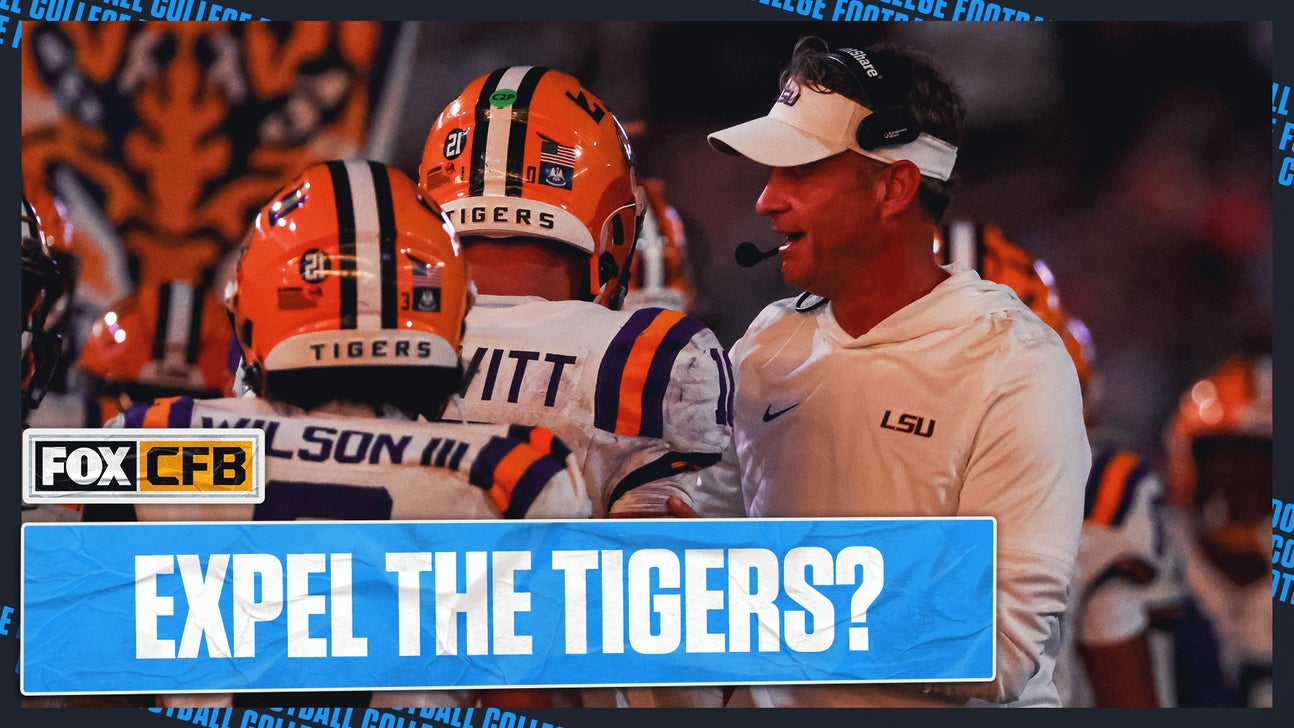
Five days after SEC commissioner Greg Sankey took the stand in Baton Rouge, the SEC amended a complaint in an Alabama federal court Tuesday morning, disclosing the league will hold a meeting this week to “decide whether to terminate” LSU as a member of the SEC over its attempts to add former professional athletes to its football roster, per court documents.
The unprecedented move squarely addresses the seriousness of the proceedings between the league and stakeholders in Baton Rouge that range from campus to the Governor’s mansion and escalates a fight that has only grown in hostility in recent weeks.
“The SEC and its member universities have the right to establish, through agreed-upon governance procedures, the rules under which they voluntarily compete and to expect those rules to be followed,” the league said in a statement provided on Thursday. “A commitment to those rules, and to the core principles of the Southeastern Conference, is an essential element of SEC membership.”
The clash between league and member has seen a dispelling of pearl clutching across the SEC, replacing it with almost daily haymakers stiffer than what Lane Kiffin’s Tigers hit Clemson with on Saturday night in Death Valley, while this week has the potential to further ramp up the hostilities.
The SEC has scheduled a vote of the conference presidents on whether to expel LSU from the league. (Photo by Gus Stark/LSU/University Images via Getty Images)
But before going there, let’s backtrack. How we arrived here is its own tale.
The NCAA instituted a new-look eligibility statute this summer that will allow athletes five years to play five seasons in their respective sport, compared to the flood of waivers and other inconsistencies under the former five years to play four seasons stipulation.
The line drawn by college sports’ governing body was between the 2022 and 2023 high school classes — the former having to complete their careers under the old rules. That decision has led to myriad court cases across the country, while also opening the door — particularly in the case of LSU — for athletes who had previously signed contracts with professional teams to attempt to return to college for an extra year of eligibility.
The Louisiana of this all played out across a pair of court proceedings: One that involved more than 30 athletes, including former Ole Miss football players Dae’Quan Wright and Xzavian Harris, and another centered on former men’s basketball All-American RJ Luis.
Wright, Harris and Luis had each signed contracts with professional teams and, under rules spelled out by the SEC and other leagues across the country, would be unable to return to college sports. That is, until a Louisiana judge issued a ruling on Thursday that paved the way for LSU to, in fact, add those players without threat of punishment from the SEC.
“Today, justice was served to the SEC like a cold cup of gumbo,” said the plaintiff’s attorney, Tony Clayton, on Thursday night. “And that judge forced them to eat it.”
The SEC — at least as of Tuesday — doesn’t appear inclined to eat what Clayton is serving.
The filings released publicly this week reveal what has been felt behind closed doors for months: that the league wants to enforce its own rules and create its own arm of self-governance, but pushback has created an almost untenable position.
There are many main characters here. Sankey. Kiffin. LSU brass. Even Louisiana Governor Jeff Landry is involved. All have helped create a narrative befitting of a John Grisham novel.
The SEC filed an amended complaint against LSU regarding Lane Kiffin’s plans to add former NFL players to the team’s roster. (Photo by Derick Hingle/Icon Sportswire via Getty Images)
The filing on Tuesday called into question Kiffin’s motives and puppetry behind the scenes in attempting to bring back Wright and Harris, despite their professional contracts.
It alluded to a consensus that the league’s presidents had concerns with senior leadership at the university, the way it has handled legal proceedings in Baton Rouge and that, specifically, President Wade Rousse and athletics director Verge Ausberry have “no meaningful control” over the football program and Kiffin.
It also took issue with prodding from LSU’s enigmatic lightning rod of a head coach during halftime of the Tigers’ season opener on Saturday. “Imagine if we’d have had pro players,” Kiffin told ESPN’s Holly Rowe as he headed for the locker room with a 31-3 lead.
The filing cited Kiffin’s comments as justification for Tennessee President Donde Plowman to conduct a special meeting Thursday to “consider the termination of LSU’s membership in the SEC, whether LSU renounces its intention to roster and play professional players on its football team, or not,” per court documents.
The broader question, one that looms over LSU’s ongoing game of chicken with the SEC, however, is where would the Tigers even go?
Sources who spoke with me on Tuesday suggest the Big Ten would have little interest in the Tigers given the way recent weeks have played out. There is also the necessary relationship between commissioners Tony Petitti and Greg Sankey that would almost certainly be soured over such a move amid talks of College Football Playoff expansion and other looming conversations.
Sentiments in the ACC and Big 12, however, are squarely mixed.
“I am sure it would be a mixed reaction by ADs in the room,” said one Big 12 source. “But if we didn’t, I guarantee some other conference would.”
“I think you’d have to for stability and revenue,” added an ACC source. “But it would be utter chaos.”
Lane Kiffin kicked off his LSU head coaching debut with a dominant 51-10 victory over Clemson. (Photo by Derick Hingle/Icon Sportswire via Getty Images)
There is, of course, the independent route.
LSU athletics reported more than $120 million in revenue annually since 2015 and pushed past almost $200 million or more since 2022, per the Knight-Newhouse College Athletics Database. The school also reported at least $60 million in donor contributions each year since 2022.
But for the kind of national brand that is Notre Dame, Ohio State or even USC, LSU remains inherently regional and tied to a state of just 4.5 million people. Is that enough to entice a television partner to grant the Tigers a deal on par with the Fighting Irish’s $50-ish million they receive annually from NBC?
“The question isn’t if the Big 12 is a landing spot for LSU,” said another industry source. “But the real question is does LSU think they’re better than the Big 12 and ACC?”
Based on Tuesday’s filings and Wednesday’s looming hearing, we might actually get an answer.
Mike Pereira explains controversial decision to add one second back at end of Michigan game 🏈 Joel Klatt Show