









To scan and secure important documents during emergencies, you should use encryption for both digital files and transmissions, apply strict access controls, and enable multi-factor authentication. Store physical documents in locked, secure locations and dispose of unneeded files properly to prevent breaches. Regularly review your security protocols and guarantee all actions comply with regulations like GDPR or HIPAA. Stay vigilant about security features, and if you continue, you’ll discover more ways to protect your critical information effectively.
Key Takeaways
- Use secure, encrypted scanning devices and store digital copies with strong encryption at rest and during transmission.
- Implement role-based access controls and multi-factor authentication to restrict document access during emergencies.
- Digitize physical documents promptly and securely, then dispose of originals following proper disposal protocols.
- Maintain detailed audit logs of document access, modifications, and sharing for accountability and compliance.
- Regularly review and update security measures and protocols to ensure ongoing protection and readiness.
The Importance of Digital Document Security in Emergency Situations


In emergency situations, having quick access to essential documents can make the difference between effective response and chaos. Digital security guarantees that your crucial information remains protected from unauthorized access, theft, or tampering during crises. When you encrypt files and transmissions, you prevent hackers or malicious actors from exploiting sensitive data. Strong access controls and multi-factor authentication restrict document access to only those who need it, reducing the risk of accidental leaks. Secure storage solutions safeguard records against physical or cyber threats, maintaining their integrity and availability when every second counts. Additionally, understanding the importance of digital security best practices can significantly enhance your preparedness during emergencies. Implementing identity verification methods ensures that only authorized individuals can access sensitive documents, further strengthening your security measures. Recognizing data protection strategies helps you develop comprehensive plans to defend your records from evolving cyber threats. Maintaining proper documentation procedures is essential to ensure your records are organized and easily retrievable during crises. Staying informed about cybersecurity advancements can help you adapt your security protocols to emerging risks, ensuring your documents remain protected under changing threat landscapes. By prioritizing digital security, you ensure that critical documents are not only accessible in emergencies but also protected from compromise, helping you respond swiftly and confidently under pressure.
Implementing Encryption and Access Controls for Sensitive Data

Implementing encryption and access controls is essential for protecting sensitive data during document scanning and storage. You should encrypt files both at rest and in transit to prevent unauthorized access. Use strong encryption methods like AES for stored data and SSL/TLS for transmission. Set strict access controls that limit document viewing, editing, and sharing to authorized personnel only. Multi-factor authentication enhances security by requiring multiple verification steps. Assign roles based on job responsibilities, guaranteeing users only access what they need. Maintain detailed logs of all access and actions, creating an audit trail for accountability. Regularly update security protocols and monitor for vulnerabilities. Additionally, employing vertical storage solutions can optimize space while maintaining security. Staying informed about security best practices and implementing regular training ensures that personnel are aware of potential threats. Incorporating access management systems can further streamline permission controls and reduce human error. Conducting periodic security audits helps identify and address potential weaknesses proactively. Implementing encryption standards and ensuring compliance with industry regulations further bolster your security framework. By applying these measures, you considerably reduce the risk of data breaches and ensure your sensitive information stays protected.
Ensuring Secure Storage and Proper Disposal of Physical and Digital Files
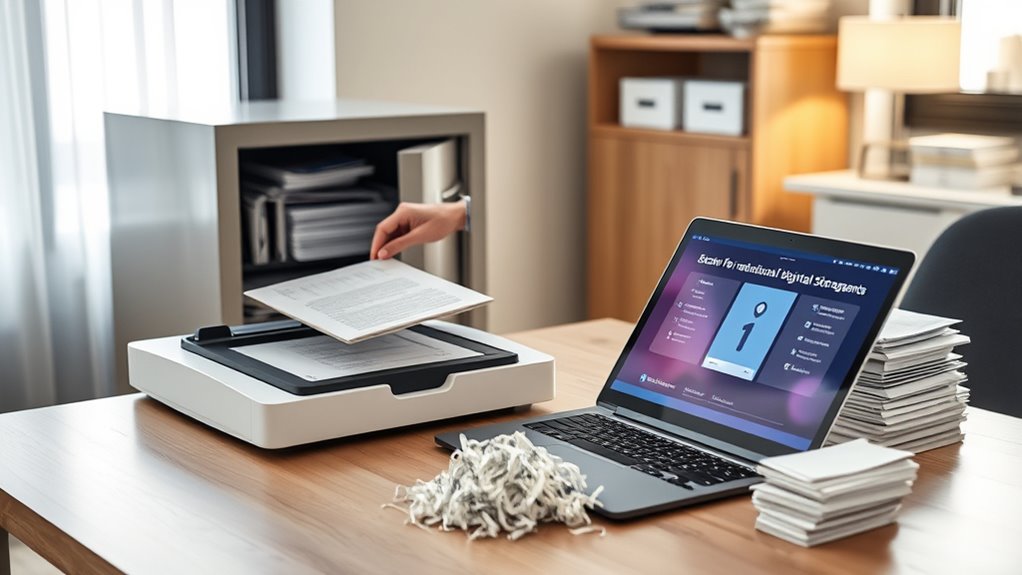
To guarantee your files are protected throughout their lifecycle, you must store physical documents securely and dispose of digital files properly. For physical papers, use locked filing cabinets or secure warehouses to prevent unauthorized access. Limit handling to authorized personnel and establish clear protocols for retrieval and storage. Once digital files are no longer needed, dispose of them securely through shredding or recycling—never leave sensitive data accessible or discarded improperly. Make certain your disposal methods comply with privacy standards, and document the process for accountability. Regularly audit your storage and disposal practices to identify vulnerabilities. Proper document management is essential for maintaining data integrity and security. Implementing secure storage methods can further reduce the risk of data breaches and unauthorized access. Additionally, training staff on data handling procedures helps reinforce security measures and prevent accidental disclosures. Employing confidentiality protocols during storage and disposal processes further enhances data protection. Maintaining data security practices is crucial to prevent breaches and ensure compliance with privacy regulations. By maintaining strict control over storage and disposal, you minimize the risk of data breaches, safeguard sensitive information, and uphold your data security responsibilities.
Regulatory Compliance and Record-Keeping During Emergencies
During emergencies, maintaining regulatory compliance and accurate record-keeping becomes critical to guarantee legal accountability and protect sensitive information. You need to verify your digital records meet industry standards and legal requirements. To do this effectively: 1. Keep detailed logs of document access, modifications, and sharing to support audits. 2. Implement encryption for stored and transmitted data, safeguarding against breaches. 3. Restrict access through role-based permissions, ensuring only authorized personnel can view sensitive files. 4. Regularly review and update your compliance protocols to align with regulations like HIPAA, GDPR, or PCI DSS. Additionally, monitoring your cookie preferences can help ensure that your data handling practices remain transparent and compliant during emergency situations. Incorporating home decor principles such as organized and secure storage solutions can also aid in maintaining order during chaotic times. Staying informed about data security best practices enhances your ability to respond effectively under pressure. Ensuring digital record integrity is maintained during crises is essential for ongoing compliance and accountability, especially when verifying the authenticity of digital documents through timestamping techniques can further bolster record credibility.
Utilizing Advanced Security Features to Protect Critical Documents
Building on your efforts to maintain regulatory compliance and secure records, leveraging advanced security features offers an added layer of protection for your most sensitive documents. Encryption safeguards both stored and transmitted files, ensuring only authorized users access content. Access controls, like role-based permissions and multi-factor authentication, restrict who can view or modify documents. Audit trails track user activity, providing transparency and accountability. Implementing document-level password protection and encryption further fortifies security. Use the following table to understand key features:
| Security Feature | Benefit |
|---|---|
| Encryption | Protects data in transit and at rest |
| Multi-factor Authentication | Adds layered user verification |
| Audit & Tracking | Monitors access for suspicious activity |
Additionally, access controls are essential for restricting unauthorized access and ensuring only designated personnel can handle sensitive information. Regularly reviewing security protocols helps maintain robust protection against evolving threats. Incorporating encryption methods that align with industry standards can further enhance your document security.
Best Practices for Rapid and Secure Document Scanning in Crises
To scan and secure documents quickly during emergencies, you need to prioritize strong encryption methods to protect sensitive data. Implement access controls immediately to restrict who can view or handle the files, minimizing exposure. Once the crisis passes, guarantee secure disposal of unneeded documents to prevent any data leaks or breaches. Incorporating sound design techniques can also help create clear audio alerts or instructions during the scanning process, ensuring efficient communication in chaotic situations. Additionally, understanding field recording techniques can enhance the clarity of verbal instructions or alerts, making them more effective during high-stress moments.
Prioritize Encryption Methods
When rapid and secure document scanning is essential in crises, prioritizing robust encryption methods becomes critical to protect sensitive information. You should focus on implementing the strongest encryption standards, such as AES-256, for both storage and transmission. To maximize security, consider these key practices:
- Use end-to-end encryption during document transfer to prevent interception.
- Encrypt files at rest with secure algorithms, ensuring data remains protected even if storage is compromised.
- Apply encryption within copier or scanner systems to control viewing, printing, and editing rights.
- Transcode and encrypt storage media to prevent raw data exposure and unauthorized access.
Implement Access Controls Rapidly
In urgent situations, implementing access controls swiftly is essential to protect sensitive documents from unauthorized exposure. You should immediately restrict access by updating permissions to only authorized personnel. Use role-based access controls to limit what users can view or modify, based on their responsibilities. Enable multi-factor authentication—like biometrics or PINs—to add an extra security layer, making it harder for intruders to gain entry. Quickly establish individual login accounts and keep detailed audit logs of who accesses what and when. Utilize redaction technology to hide sensitive data during processing, reducing human exposure. By acting fast and configuring these controls correctly, you minimize the risk of data leaks and ensure that only trusted individuals handle critical documents during emergencies.
Ensure Secure Data Disposal
After swiftly implementing access controls during emergencies, safeguarding data doesn’t end with digitization; you must also guarantee secure disposal of physical and digital documents to prevent unauthorized retrieval. Proper disposal minimizes data breach risks and maintains compliance. Here’s what you should do:
- Shred or incinerate physical documents immediately after digitization to prevent physical leaks.
- Use secure deletion tools that overwrite digital files, ensuring they cannot be recovered.
- Regularly audit disposal procedures to confirm adherence and document actions taken.
- Implement chain-of-custody protocols to track document handling and disposal activities.
These steps ensure sensitive information stays protected throughout its lifecycle, reducing the risk of unauthorized access or data breaches during crises.
Frequently Asked Questions
How Can I Ensure Remote Access to Scanned Documents Remains Secure During Emergencies?
To keep remote access secure during emergencies, you should implement multi-factor authentication and role-based access controls. Use encrypted channels like VPNs or secure cloud platforms, and guarantee all connections are protected with strong encryption. Regularly update security software, monitor access logs for suspicious activity, and limit access to only those who need it. Educate users on security best practices, and conduct periodic audits to identify and address vulnerabilities promptly.
What Specific Encryption Methods Are Most Effective for Urgent Document Transmission?
Think of encryption as a digital fortress guarding your urgent transmissions. The most effective methods include AES-256, which locks data with a virtually unbreakable cipher, and TLS protocols, ensuring secure, encrypted channels during transmission. Use end-to-end encryption for sensitive files, and always verify the recipient’s security measures. This layered armor keeps your urgent documents protected, even when they’re flying through the vast, unpredictable skies of the internet.
How Do I Verify the Integrity of Scanned Documents After Emergency Storage?
To verify the integrity of your scanned documents after emergency storage, you should perform checksum or hash value comparisons, like MD5 or SHA-256, on the files. This process guarantees the files haven’t been altered or corrupted. Additionally, check audit logs for access history and use digital signatures if available. Regularly validating these aspects helps confirm your documents remain intact, authentic, and secure for future use.
What Are Quick Steps to Comply With Security Regulations During a Crisis?
To comply with security regulations during a crisis, you should immediately guarantee all documents are encrypted both at rest and in transit. Restrict access using role-based permissions and multi-factor authentication. Log all actions for audit purposes, and store files in secure, compliant storage solutions. Dispose of physical documents securely after digitization. Regularly update security protocols and train staff on compliance measures to maintain data integrity and meet regulatory standards swiftly.
How Can I Train Staff for Secure Document Handling in High-Pressure Situations?
Actions speak louder than words, especially in high-pressure situations. To train staff, you should run regular security drills that simulate emergencies, emphasizing encryption, access controls, and proper disposal. Teach them to verify identities, use multi-factor authentication, and follow protocols for secure storage. Reinforce the importance of staying calm, adhering to procedures, and reporting suspicious activity promptly. Consistent practice helps guarantee they handle sensitive documents securely when it matters most.
Conclusion
By prioritizing, protecting, and preparing your documents with proactive practices, you guarantee swift, secure, and seamless access during emergencies. Safeguard sensitive information through smart scanning, strict storage, and steadfast security measures. Stay vigilant, vigilant, and versatile—essential for valuable, vulnerable documents. With consistent commitment and clever controls, you can confidently conquer crises, keeping vital records safe, secure, and swiftly accessible when seconds matter most.


