








Separately, shareholder Octava Fund wants NY-listed ride-hailing firm to buy out its shares
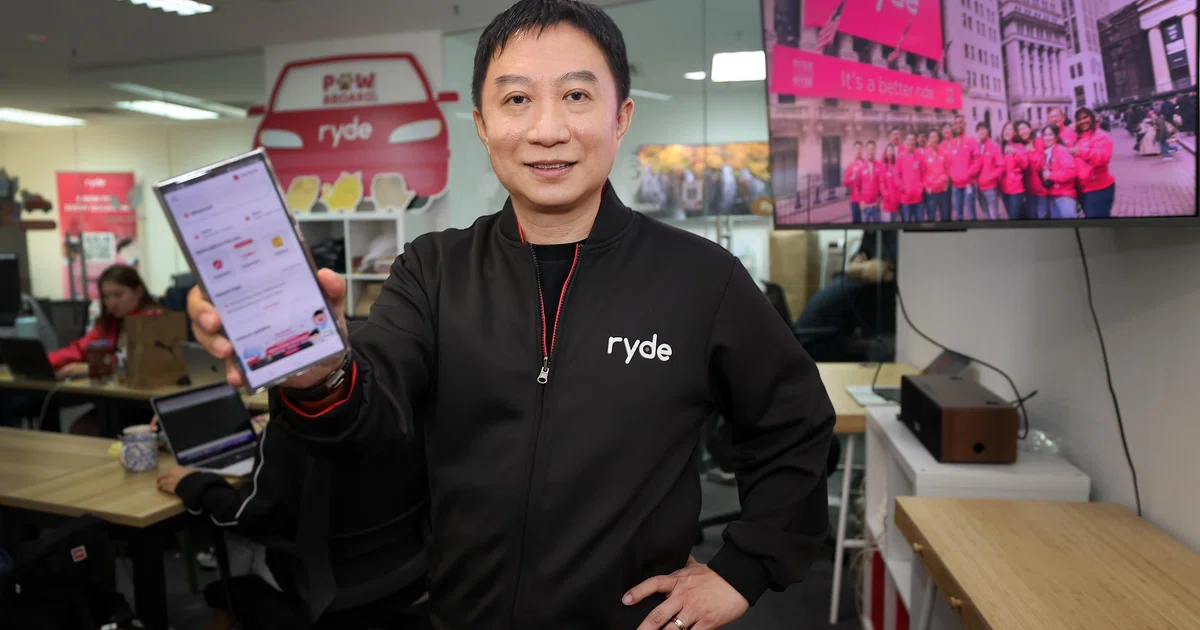
[SINGAPORE] Singapore-based ride-hailing firm Ryde, which is listed on the New York Stock Exchange (NYSE), is facing two separate legal cases – one a shareholder petition and the other a class action lawsuit.
On Jul 3, a shareholder of Ryde Group – Octava Fund – submitted a petition to the Grand Court of the Cayman Islands, where both it and Ryde Group are incorporated.
The petition calls for its 6.9 million shares to be bought out, or for Ryde to be wound up on grounds of improper governance, breach of duty and other issues.
Separately, a class action lawsuit was filed on Sep 10 in the Southern District of New York, under the US District Court accusing Ryde of being involved in a pump-and-dump scheme. The practice involves fraudsters artificially “pumping” up the price of a traded financial instrument through false or misleading positive statements, and then “dumping” their holdings at the peak.
Ryde responded in a media statement on Sep 18.
With regard to the shareholder petition, the company said: “The proceedings remain at an early stage and no findings have been made by the court on the substantive allegations. No official or provisional liquidator has been appointed, the directors remain in control of the company, and the proceedings have not affected the company’s operations or its ability to conduct business in the ordinary course.”
It also does not presently believe the proceedings are material to the company.
Regarding the class action lawsuit, Ryde said it intends to “engage litigation counsel and actively defend the action”.
In response to queries from The Business Times, the ride-hailing platform said it has no further comment beyond the Sep 18 response.
“As these matters are subject to ongoing legal proceedings, the company will refrain from commenting further at this time and will make any further disclosures as appropriate in accordance with applicable requirements,” it said.
Shareholder alleges issues
Ryde was founded in 2014 by Singaporean Terence Zou as Ryde Technologies, a private limited company. He is currently the CEO and chairman of Ryde Group.
It began as a carpooling app, but later expanded to ride-hailing and delivery services. In Singapore, it is one of seven full ride-hail service operators, alongside the likes of CDG Zig and Grab.
On Mar 4, 2024, Ryde made its initial public offering on Nasdaq with three million Class A shares at US$4 per share.
Octava Fund is an investment holding company that is wholly owned by Octava Offshore Holdings (also incorporated in the Cayman Islands) but managed by Octava Management, a private limited company based in Singapore.
Octava Management describes itself as a holding company that invests in real estate, prioritising sustainable growth and strategic partnerships.
In its petition, Octava Fund said it has “…justifiably lost all trust and confidence that the assets and affairs of the company are being properly managed and mutual trust and confidence between the petitioner and the company has irretrievably broken down”.
According to the petition, at one point in 2019 Ryde was on the brink of insolvency and unable to meet its payroll obligations.
Octava Fund bought over the shares of its principal investor, Nomad X, and became majority shareholder in January 2020.
Then, there was a relationship of “mutual trust and confidence” between Zou and Octava Fund. But Octava contends that over time and through multiple incidents, it was excluded from management decisions and its voting power was eroded.
For example, under a February 2025 memo Ryde issued three million Class B shares to Zou. Class B shares have 10 times more voting rights than Class A shares and the move was carried out without approval from Octava.
This tilted the voting rights in favour of Zhou to 58.7 per cent, up from 42.7 per cent. Octava’s rights fell to 23 per cent from 39.8 per cent.
Octava also contends mismanagement of the company.
Among other things, on Oct 7, 2025, Ryde completed a private offering of 33.3 million Class A shares at a price of US$0.30 per share, and received gross proceeds of about US$10 million.
Ryde failed to notify NYSE of this before trading began on Oct 7, and was subsequently warned by the stock exchange.
Octava also referenced another incident in September, which proposed that Zou be awarded up to 32 million Class B shares if the company hit certain revenue, fundraising and other targets.
It noted that for increasing revenue for H1 2025 by US$1.1 million, Zou was awarded two million Class B shares, then worth around US$1 million. That meant for each dollar earned, more than 94 cents was awarded to Zou and recorded as share compensation expense on the income statement, while Ryde’s bottom line improved by only six cents.
Class action lawsuit
The class action lawsuit was filed on Sep 10 in the Southern District of New York, under the US District Court.
Shari Weiss, a retail investor who purchased around 19,000 Ryde shares from Sep 9 to 11, 2024, spending almost US$400,000 in the process, brought the action against the company and key leadership including Zou and then chief financial officer Lang Chen Fei.
The class action is on behalf of those who bought or acquired Ryde securities between Mar 6 and Sep 11, 2024.
The lawsuit alleges that Ryde participated in, facilitated, or enabled a pump-and-dump scheme to defraud investors. It states that the company used people claiming to be financial advisers on online channels, including social media and forums, to “create a buying frenzy among retail investors”.
This boosted buying activity and share price, which reached an all-time high of US$22.49 during intraday trading on Sep 11, 2024, “despite no fundamental changes to the company or news to justify the spike”. The next day it crashed 75 per cent to US$5.50.
The complaint cites Nathan Anderson, the founder of financial intelligence firm Hindenburg Research, who said on social media that Ryde had “all the hallmarks” of a pump-and-dump fraud. On Sep 11, he said: “Plummeted 80 per cent in an hour, from US$22 to about US$4.60, after weeks of wash-trading and coordinated pumping in chat rooms.”
The suit also claims that Ryde failed to disclose this to investors even though unusual trading activity, outsized price swings, and the circulation of false claims in online investor groups were already public and readily observable.
This also meant its “business, operations and prospects were materially misleading and/or lacked a reasonable basis”.
Ryde’s latest financial results from Q1 2026 saw its adjusted earnings before interest, taxes, depreciation and amortisation deficit narrow to S$1 million from S$1.8 million year on year, and its revenue up 38 per cent to S$3.8 million.
On Oct 1, Ryde’s share price closed trading at US$0.68. The price of its shares has generally hovered around US$0.50, down from a high of US$20.28 in September 2024.


