


The Trump administration credits its fraud control efforts for the disappearance of millions of people from Obamacare rolls rather than a sharp rise in premiums — a claim disputed by policy experts that glosses over the reality that many more Americans now find themselves without health insurance.
Enrollment in Affordable Care Act plans fell by nearly 3 million this year to about 19.2 million, following steep premium increases by insurers and the Republican-led Congress’ unwillingness to extend more generous premium subsidies. On average, ACA customers pay $178 a month in premium payments this year, a 58% increase from 2025, according to KFF, while their deductibles — the amount consumers must pay annually before insurers pick up their share — have climbed 37% to nearly $3,800 a year.
“These are real people who are now forced to make impossible choices,” said Annalyse Keller, a spokesperson for Keep Americans Covered, a large coalition of lobby organizations for the healthcare industry, including insurers and patient advocacy groups.
But a Department of Health and Human Services report released in June, written mostly by President Trump’s political appointees and allies, asserts that 5.6 million people were fraudulently enrolled in ACA plans in 2025, and that the Trump administration removed 2.9 million of them — the same number as the 2026 drop in enrollment.
There’s little dispute that the ACA suffers from some fraud, as do most government programs. The administration said it has taken actions to tighten the enrollment process to thwart brokers who fraudulently enroll people without their knowledge.
For example, the administration in August 2025 halted a Biden-era initiative that allowed low-income people to sign up for coverage year-round. Regulators also have removed 1.5 million people since 2025 for reasons such as not meeting a requirement to file their taxes over two years or being concurrently enrolled in another health program, such as Medicaid, which is not allowed.
But health policy experts say that the administration is overstating the extent of ACA fraud and that the HHS report relies on debatable assumptions, such as that all sign-ups under the year-round enrollment program for low-income people were potentially fraudulent. ACA enrollment fell off a cliff because of escalating prices for insurance plans, policy analysts say, which the administration’s done nothing to stem.
“The top-level claim” that all the decline in enrollment since 2025 is because of improper or fraudulent enrollees leaving the market “is not remotely credible,” said Matthew Fiedler, a senior fellow at the Brookings Institution. “We know that lots of people have seen higher premiums, and there’s really good evidence that when premiums go up, people drop coverage.”
Healthcare costs are a big concern for voters ahead of November’s midterm elections, and both Democrats and Republicans are trying to spin the issue to their advantage. Democrats argue more needs to be done to make insurance less expensive for consumers, while Republicans are trying to focus on the need to save taxpayer dollars from fraud.
A recent KFF poll found that voters trust Democrats over Republicans to address healthcare costs (37% vs. 26%). The poll also found, though, that 55% of Republican voters consider it extremely important for candidates to address healthcare fraud, more than any other issue, showing that the White House’s effort to shift focus from costs has had some success with its own supporters.
But Jonathan Oberlander, a professor of health policy and management at the University of North Carolina, questioned whether the fraud narrative will hold up as voters continue to struggle with rising costs.
“It will be cold comfort to the very real persons who could no longer afford coverage and dropped their plans,” he said in an email to KFF Health News.
How we got here
Under President Joe Biden, Congress passed a law that included more generous tax subsidies for people enrolled in Obamacare, starting in 2021. Those enhanced subsidies lowered premium payments, with millions qualifying for a large enough tax credit to reduce their monthly payment to zero. The Biden-era law also allowed wealthier households to get assistance.
ACA coverage essentially doubled, from just over 11 million Americans in 2021 to more than 22 million in 2025, according to the HHS report.
Republicans and conservative groups argue that the growth wasn’t driven only by people newly enrolling because of lower premiums. Instead, they say, the enhanced subsidies, along with other Biden-era policies — including easing income verification requirements for some enrollees — invited fraud. Unscrupulous, commission-seeking insurance brokers found it easier to sign people up for coverage, often without their knowledge, while ordinary consumers could more easily fudge their income and qualify for the largest subsidy possible.
The conservative Paragon Health Institute’s president, Brian Blase, wrote in a recent webpost that the HHS report’s conclusion on the scope of improper enrollment is likely an undercount. He remains unconvinced by the arguments that rising premiums are to blame for the sharp drop in ACA enrollment, saying subsidies remain generous for many people.
The administration’s current targets
The debate will continue as more enrollment data emerges from the federal marketplace and the exchanges run by states. Some policy experts — including the consulting group Wakely — expect the year to end with the number of ACA policyholders down by as much as 26% from last year.
Trump’s regulators will likely connect further drops with anti-fraud efforts. The HHS report alleges there are potentially millions more who remain improperly enrolled. The report’s authors noted that some of the administration’s anti-fraud proposals have been blocked by court rulings.
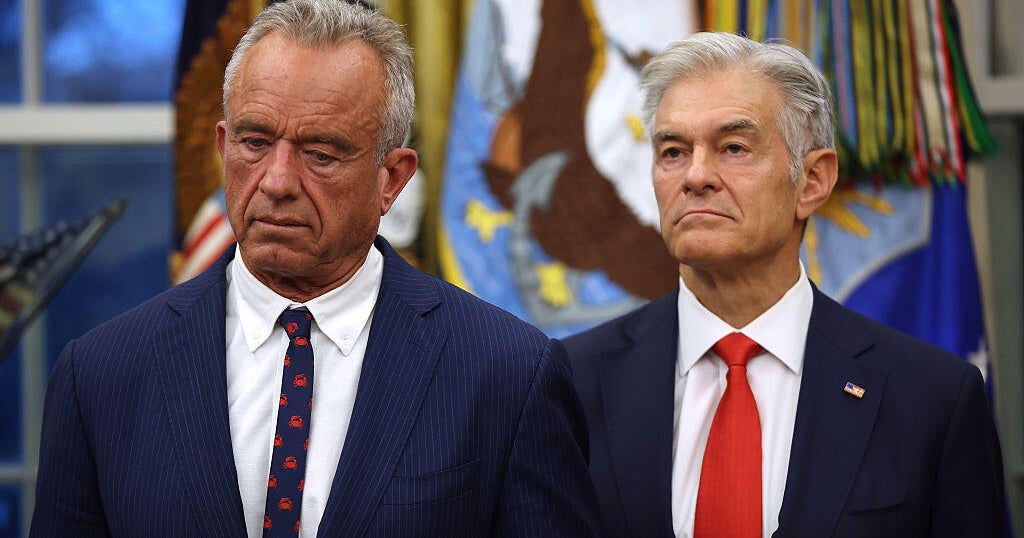
In a video HHS released June 27, HHS Secretary Robert F. Kennedy Jr. pats Mehmet Oz, the head of the Centers for Medicare & Medicaid Services, on the back for the number of canceled ACA plans so far. Oz threatens potential ACA hucksters: “Don’t walk away from us, run! Because we are going to find you.”
In an email responding to KFF Health News’ questions, CMS spokesperson Christopher Krepich said his agency this summer will block ACA applications made by brokers that lack a Social Security number. By open enrollment this fall, CMS plans to require more identify-proofing when brokers enroll people and will limit a broker’s access to accounts until that person “has been authorized by the consumer to work on their behalf.”
How some suspicious enrollments will be removed is spelled out in emails sent in June to insurance carriers and obtained by KFF Health News.
CMS told insurers that the agency will send them files for ACA accounts it believes are potentially unauthorized. Each flagged consumer account will have used a sales broker to enroll, be in a zero-premium plan, and lack a Social Security or an immigration documentation number — which Kennedy said in the video is a glaring sign of fraud.
Insurers must try to contact the enrollees to verify that they signed up for coverage. After 60 days, insurers must report policies they were unable to verify to CMS, which will cancel them.
Krepich wrote that carriers are cooperating with efforts to investigate accounts with missing or unverified information.
Policy experts, including Fiedler, note that the absence of a Social Security number doesn’t automatically prove fraud. While it could indicate a fake enrollee, a missing Social Security number might also be a simple oversight by the consumer or their broker, for example, or a newborn added to a parent’s account at birth, before they’ve received a number.
“That the administration put it in a report and did not summarily terminate these enrollments suggests they believe there is some mix of different circumstances,” Fiedler said.
The administration report singles out another segment of enrollments as suspicious: very low-income, subsidy-eligible people who shifted to plans that carry no monthly premium, suggesting “fraudulent agents and brokers are moving them to keep gaining commissions and avoid detection.” The report also cites ACA enrollees who file no medical claims as suspicious.
Policy experts question the assumptions behind those concerns.
Younger or lower-income people use healthcare less often, for example, which can explain why they may make no claims — particularly when they must first spend thousands of dollars out-of-pocket to meet high deductibles.
And very low-income people may switch to plans with higher deductibles in exchange for making no premium payment because they struggle to come up with the $50 or $80 monthly share that other plans might require.
“People are hurting for money,” said Florida insurance agent Jason Fine. “I literally have people who can’t afford to pay $15. I would not immediately assume that a person who went from a silver plan to a bronze plan, that it’s fraud,” referring to two types of ACA plans.
Fine said the administration needs to focus on better enforcement of existing rules, saying he has reported to regulators dozens of unscrupulous agents who have switched clients without authorization, yet none were barred from selling ACA policies.
He and other agents continue to push for adding multifactor identification, as banks and other financial institutions use, to the federal ACA marketplace. Some states that run their own exchanges have two-factor authentication or other types of ID verification and have not reported problems with unauthorized switching.
CMS — under both Biden and Trump — has not added two-factor authentication to the federal marketplace, healthcare.gov.
Rep. Glenn Grothman (R-Wis.) introduced legislation to require it in June, but its prospects are murky.
“It will help reduce fraud,” said Ronnell Nolan, who leads Health Agents for America, a lobbying group that has long urged CMS to add the feature. Grothman’s legislation, she said, might “encourage CMS to do it themselves.”
KFF Health News is a national newsroom that produces in-depth journalism about health issues and is one of the core operating programs at KFF — the independent source for health policy research, polling, and journalism.
