








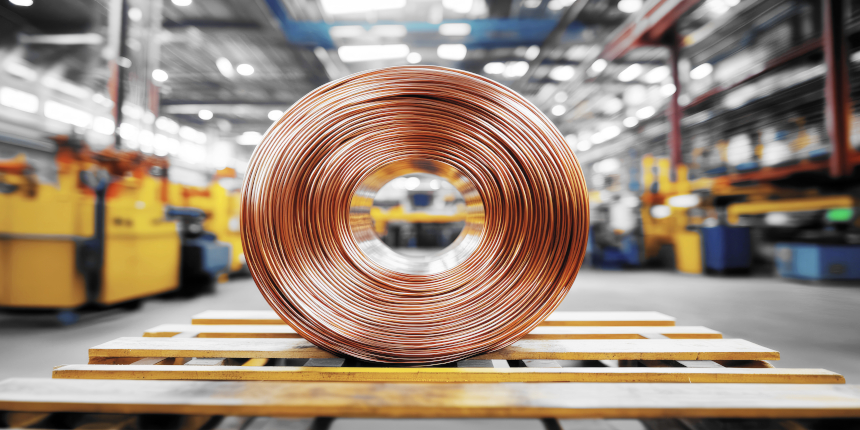
As nations from India to Indonesia, Brazil to South Africa accelerate the build out of solar arrays, wind farms and the high capacity grids required to integrate them, demand for this highly conductive metal is entering a structurally higher phase.
Unlike the cyclical booms of past decades driven mainly by construction and manufacturing in China, today’s growth carries a powerful new tailwind: the physical infrastructure of decarbonisation itself. Yet this opportunity arrives alongside acute supply constraints, raising profound questions for investors, governments and mining companies about whether the red metal can fulfil its pivotal role without becoming a bottleneck.
Renewable energy technologies are notably (and importantly) more copper intensive than their fossil fuel counterparts, particularly once grid connection and system integration are taken into account. Industry analyses show that utility scale solar photovoltaic installations typically contain around 5.5 tonnes of copper per megawatt of capacity, primarily in wiring, cabling, inverters and earthing systems.
Onshore wind farms use approximately 3.5 tonnes per megawatt on average, with the bulk in turbine generators, transformers and internal cabling. Offshore wind installations are significantly more demanding, often requiring 9.5 tonnes or more per megawatt because of the extensive subsea export cables needed to bring power ashore over long distances.
These intensities compound rapidly when multiplied by the scale of planned deployment. Wood Mackenzie’s October 2025 Horizons report, High wire act: Is soaring copper demand an obstacle to future growth?, projects that copper demand specifically from the renewable energy sector will rise from 1.7 million tonnes per annum today to 4.3 million tonnes per annum by 2035. That represents a compound annual growth rate of around 10 per cent, far outpacing overall economic growth in most regions. The additional requirement equates to roughly 2 million tonnes per annum of new supply needed over the coming decade simply to meet renewable power generation needs.
Grid modernisation and expansion represent an even larger and often underappreciated slice of the story. Integrating variable renewables at scale demands more robust transmission and distribution networks, including high voltage direct current lines, smart grid components and reinforcement of existing infrastructure. Broader electrification trends, including data centre growth and electric vehicle charging, further amplify copper use in power networks. Bank of America and CRU analysts have highlighted that global copper demand for power generation and transmission networks alone is on track to reach nearly 14.9 million tonnes by 2030, up from around 12.5 million tonnes currently. In short, the energy transition is not merely adding incremental demand; it is structurally reshaping the copper consumption profile for decades ahead.
The International Energy Agency’s copper analysis, published in May 2024 as part of its critical minerals work, underscores the point. Under the Announced Pledges Scenario, clean technology applications for copper are expected to rise from approximately 5.4 million tonnes in 2021 to 12 million tonnes by 2030 and more than 16 million tonnes by 2040, while traditional uses remain broadly stable. This divergence confirms that the marginal growth in global copper demand will increasingly be driven by the energy transition rather than conventional economic expansion.
Hotspots of Demand: Emerging Economies Take Centre Stage
While China remains the single largest consumer, the most dynamic incremental demand is shifting toward other emerging and developing economies pursuing their own energy security and industrialisation agendas. S&P Global’s January 2026 report, Copper in the Age of AI: Challenges of Electrification, forecasts that China together with the rest of Asia will account for around 60 per cent of global copper demand growth between 2025 and 2040. Within this, India stands out as a particularly powerful engine.
India’s renewable capacity reached 258 gigawatts by the end of 2025 and is on track to meet or exceed its 500 gigawatt non fossil fuel target by 2030, according to the IEA’s Renewables 2025 report. Solar has become the country’s largest clean electricity source, contributing 9.4 per cent of total generation in 2025, with wind and solar together reaching 14 per cent. This build out requires enormous quantities of copper not only in modules and inverters but, crucially, in the transmission and distribution networks needed to evacuate power from remote solar parks in Rajasthan and Gujarat to demand centres. Wood Mackenzie notes that rapid industrialisation in India and Southeast Asia could add 3.3 million tonnes per annum of copper demand by 2035 under base case assumptions, with electrical networks forming a major component.
Southeast Asian nations such as Vietnam, Indonesia and the Philippines are similarly scaling solar and wind capacity, often supported by international development finance and domestic policy incentives. In Latin America, countries including Brazil, Chile and Mexico are expanding renewables while simultaneously hosting major mining operations, creating interesting domestic loops between production and consumption. Across Africa, Morocco’s Noor Ouarzazate complex and South Africa’s renewable procurement programmes illustrate growing demand, albeit from a lower base, alongside urbanisation driven needs for new distribution infrastructure.
What distinguishes these emerging market demand centres is the combination of rapid electricity demand growth, relatively low existing per capita copper stock in buildings and grids, and ambitious policy targets. India’s electricity consumption is projected to grow at 4.2 per cent annually through 2040, according to S&P Global. This creates a virtuous cycle: more renewables require more copper intensive grids, which in turn enable further electrification and industrial growth.
Grid Modernisation: The Overlooked Copper Powerhouse in Emerging Renewable Markets
While the gleaming solar panels and towering wind turbines capture public and investor imagination, the true scale of copper demand from the energy transition often lies in the less visible but equally critical domain of electricity transmission and distribution networks. In emerging markets, where grids are frequently underdeveloped, loss prone or poorly suited to variable renewable generation, the required modernisation and expansion represents a powerful, sustained driver of copper consumption that multiplies the impact of new generation capacity.
Recent analysis by BMI, reported in July 2025, projects global copper demand for power generation and transmission networks rising from 12.52 million tonnes in 2025 to 14.87 million tonnes by 2030. This growth reflects not only the physical connection of new renewable projects but the broader need for higher capacity, smarter and more resilient grids capable of managing intermittency, enabling long distance power transfers from resource rich areas to load centres, and reducing technical losses that remain stubbornly high in many developing economies. Copper’s superior conductivity makes it the material of choice for many high performance cables, windings in transformers and switchgear, and the intricate earthing and control systems that underpin reliable operation.
India provides a compelling illustration. With renewable capacity already exceeding 258 gigawatts by late 2025 and further rapid growth planned, the country faces the dual challenge of evacuating power from remote mega solar parks in Rajasthan’s Thar Desert and wind installations along its southern and western coasts while simultaneously strengthening distribution networks to serve rising industrial and residential demand.
Initiatives such as the Green Energy Corridor programme involve thousands of kilometres of new high voltage transmission lines, substations and associated equipment, much of it copper intensive. These investments are essential if India is to meet its 500 gigawatt non fossil target by 2030 and integrate the variable output without compromising grid stability. Similar patterns are emerging across Southeast Asia. Vietnam’s earlier solar boom exposed transmission bottlenecks that have since triggered urgent grid reinforcement programmes. In Indonesia and the Philippines, island geographies add complexity, often requiring subsea or robust overhead lines that increase copper intensity per megawatt delivered.
The multiplier effect is significant. Renewable resources are frequently located far from population centres, necessitating longer transmission distances than traditional thermal plants sited nearer to demand. High voltage direct current lines, increasingly favoured for efficient long distance bulk transfer, still rely on substantial copper components in converters, cables and earthing. Undergrounding or subsea cabling for environmental or resilience reasons further elevates copper use compared with conventional overhead aluminium dominated lines. As grids incorporate greater digitalisation for real time monitoring, predictive maintenance and demand response, additional copper enters through sensors, communication cables and intelligent devices.
For emerging market economies, grid modernisation delivers co benefits beyond renewable integration. Reduced technical and commercial losses improve utility finances and energy security. Modern copper rich infrastructure supports broader electrification goals, including electric mobility and industrial growth. Local content policies in countries such as India can stimulate domestic cable and transformer manufacturing, creating jobs and industrial capabilities that extend beyond the energy sector.
Yet delivering this infrastructure at the required pace is far from straightforward. Land acquisition and rights of way for new transmission corridors frequently encounter delays from community opposition or complex regulatory processes. Financing models must accommodate long asset lives, regulated returns and the need for creditworthy offtakers. Multilateral development banks and climate funds are playing a growing role in de risking projects, but private capital mobilisation remains essential. Technical standards must also evolve to accommodate high shares of variable renewables, sometimes favouring more robust copper based designs over lower cost alternatives.
Looking ahead, the grid segment is likely to remain a resilient source of copper demand even if generation build rates fluctuate with policy or economic cycles. Smart grid roll outs, regional interconnection schemes in ASEAN or African power pools, and climate adaptation investments that favour more resilient infrastructure all point to sustained requirements.
For investors and corporates, this underscores the importance of viewing copper demand through the full electrification value chain rather than generation assets alone. Cable manufacturers, equipment suppliers and engineering firms with strong positions in high growth emerging markets stand to capture meaningful value, while utilities and governments that successfully accelerate grid programmes will remove a key bottleneck to their broader renewable ambitions.
The Supply Side: A Race Against Time and Geology
Meeting this demand surge will test the global mining industry’s capacity to deliver new supply at speed and scale. Global copper mine production stood at approximately 22.9 million tonnes in 2024 and is projected to rise only modestly to 23.4 million tonnes in 2025, according to industry consensus figures. Growth is constrained by declining ore grades at mature operations, water scarcity in key producing regions, community opposition and lengthy permitting timelines that can now stretch to 15 or 25 years for major greenfield projects.
Chile, the world’s largest producer, continues to dominate with output above 5 million tonnes annually, yet state owned giant Codelco reported just 1.333 million tonnes in 2025 despite operational improvements. Lower grades at flagship mines such as Collahuasi and Los Bronces, together with water management challenges in the Atacama Desert, illustrate the headwinds facing even the most established jurisdictions. Peru and the Democratic Republic of Congo have delivered stronger growth in recent years, with the DRC benefiting from high grade deposits and significant Chinese investment; production there is approaching or exceeding 3 million tonnes annually in some estimates.
The International Energy Agency’s Global Critical Minerals Outlook 2025 warns that announced mining projects fall short of projected demand in 2035 under the Stated Policies Scenario, implying a potential shortfall of around 30 per cent for copper. Closing the gap would require dozens of new large scale mines and hundreds of billions of dollars in investment, much of it in jurisdictions where political, social and environmental risks remain elevated. Indonesia’s push to develop domestic smelting capacity, exemplified by the new Gresik facility, demonstrates how producing nations are seeking to capture greater value, yet such policies can also complicate global concentrate flows in the short term.
Recycling offers a partial solution. Secondary copper supply is growing and already accounts for a meaningful share of refined production in Europe and North America. However, collection rates for end of life products remain low in many emerging markets, and the long lifespan of copper in buildings and infrastructure means that urban mining cannot substitute for primary supply growth in the critical decade ahead.
Unlocking Secondary Supply: Recycling and the Circular Copper Economy
No credible pathway to meeting future copper demand relies solely on primary mining. The circular economy, built around collection, processing and reuse of copper scrap, represents a strategically vital complementary source of supply that is faster to scale, lower in environmental impact and less exposed to the geopolitical and geological risks of new mine development.
According to the International Energy Agency’s copper analysis from May 2024, secondary supply and reuse is projected to increase from approximately 4.1 million tonnes in 2021 to 5.9 million tonnes by 2030 and 10.0 million tonnes by 2040 under the Announced Pledges Scenario. This trajectory would see recycling’s contribution to total supply rise from around 16 per cent to over 27 per cent, materially easing pressure on primary production while delivering substantial sustainability benefits.
The advantages of secondary copper are compelling. Producing copper from high grade scrap typically consumes only 15 to 20 per cent of the energy required for primary production from ore, translating into dramatically lower greenhouse gas emissions and avoiding many of the water consumption, land disturbance and community impacts associated with mining. High purity scrap streams, such as clean copper wire from electrical demolition or manufacturing offcuts, can be melted and refined relatively quickly, entering the market in months rather than the 10 to 20 years often required to bring a new mine into production. In a world of tightening supply and rising prices, this speed and flexibility provide valuable optionality for fabricators and consumers.
Realising this potential at the scale implied by IEA projections requires overcoming significant barriers, especially in the emerging markets that will drive much of future demand growth. Collection infrastructure remains fragmented in many developing economies, where informal sector operators handle a large share of scrap but often lack access to advanced processing technology or formal markets. Contamination with other metals, plastics or insulation materials reduces the value and usability of scrap for high specification electrical applications. Quality consistency is paramount for products such as power cables and transformer windings, where even small impurities can affect conductivity and longevity. Furthermore, global trade in copper scrap is heavily influenced by processing capacity, with significant flows historically directed toward China and, increasingly, other Asian hubs.
Innovation and policy are beginning to address these constraints. Advanced sorting technologies employing artificial intelligence, spectroscopy and automated systems are improving recovery rates and purity from complex mixed scrap streams. Hydrometallurgical and electrowinning processes offer lower temperature, lower emission routes for certain grades of scrap. Design for recyclability principles are gaining ground in cable and electrical equipment manufacturing, with modular constructions and material identification systems that facilitate disassembly and high value recovery at end of life.
On the policy front, extended producer responsibility frameworks, mandatory recycled content targets in public procurement, and incentives for domestic recycling infrastructure are proliferating. The European Union’s Critical Raw Materials Act and similar initiatives in China and India signal a growing recognition that circular supply chains are essential for strategic autonomy and industrial competitiveness.
For emerging economies, developing robust domestic recycling capabilities offers a rare alignment of economic, environmental and strategic interests. As India’s stock of copper in use expands rapidly with urbanisation, electrification and renewable deployment, the country is creating its own future urban mine. Formalising and upgrading recycling capacity can generate employment, reduce import dependence for refined copper, improve environmental outcomes compared with informal processing, and position local industry to supply high quality secondary copper to domestic manufacturers of cables, motors and transformers.
Comparable opportunities exist across Southeast Asia, parts of Latin America and selected African economies with growing industrial bases. International technology partnerships, development finance and knowledge transfer can accelerate progress while ensuring higher environmental and social standards than traditional informal routes.
The investment proposition for recycling infrastructure is attractive on several dimensions. Capital intensity and construction timelines are substantially lower than for primary mines, enabling faster returns and lower execution risk. ESG credentials are strong, appealing to sustainability linked capital and to downstream customers seeking traceable, lower carbon copper for their own decarbonisation commitments. Major integrated producers and specialist recyclers are already expanding capacity, and joint ventures or new entrants focused on high growth emerging markets could capture attractive margins as scrap volumes rise in line with economic development.
Nevertheless, secondary supply is a complement rather than a complete substitute for primary production in a market where total demand is structurally increasing. Even under optimistic recycling scenarios, the IEA projections confirm that significant new mine supply will still be required. Recycled copper also serves somewhat different market segments and frequently requires blending with primary metal to meet the stringent purity standards of electrical applications. The optimal future therefore combines accelerated primary development in responsible jurisdictions with a rapidly scaling circular sector that enhances overall supply resilience, reduces environmental pressure and provides a buffer against price volatility.
Businesses and policymakers that invest today in collection systems, advanced processing technology and enabling policy frameworks will be best positioned to benefit as the circular copper economy matures through the 2030s. For the wider market, a vibrant recycling sector acts as a stabilising force, moderating the need for every marginal tonne to come from new mines and supporting a more diversified, lower risk supply picture. In the context of emerging markets both consuming and, in some cases, processing growing volumes of copper, building local circular capabilities will be integral to achieving sustainable industrial growth alongside renewable energy ambitions.
Risks, Opportunities and Strategic Implications
The tightening supply demand balance creates a broadly constructive price environment for producers, yet it also introduces volatility and strategic dilemmas. Higher copper prices can incentivise new investment and technological innovation, including improved recovery rates, in situ leaching techniques and more efficient processing. They also encourage greater attention to recycling infrastructure and material efficiency in downstream manufacturing.
For emerging market governments, the copper boom presents a classic resources governance challenge. Export revenues can fund development, yet over reliance on raw concentrate shipments risks repeating historical patterns of limited local value capture. Indonesia’s experience with nickel offers a template that some copper producing nations are studying closely: mandating domestic processing to build smelting and refining capacity. Success depends on stable policy frameworks, access to technology and energy, and the ability to attract responsible investment.
Investors face equally nuanced choices. Established majors with high quality assets in tier one jurisdictions, strong balance sheets and credible decarbonisation plans are well positioned. Junior explorers and developers in stable emerging markets may offer higher upside but carry execution and permitting risk. Downstream opportunities in cable manufacturing, transformer production and grid technology within high growth demand centres such as India also merit attention.
Challenges should not be understated. Community opposition to new mines, water stress exacerbated by climate change, and geopolitical tensions over critical minerals supply chains could delay projects or raise costs. Substitution risks exist in certain applications, notably some lower voltage cabling where aluminium can compete on cost, although copper’s superior conductivity and reliability preserve its dominance in most high performance uses. Environmental, social and governance scrutiny of mining operations continues to intensify, requiring producers to demonstrate genuine progress on tailings management, water stewardship and local economic development if they are to secure social licence.
Outlook: A Structural Bull Market with Clear Caveats
Looking toward 2035 and beyond, the structural case for copper remains robust. Wood Mackenzie’s base case sees total global demand reaching 42.7 million tonnes per annum by 2035, a 24 per cent increase from current levels, with energy transition and related electrification drivers contributing a substantial share of incremental growth. The IEA’s longer term scenarios point to even higher clean technology demand by 2040 under ambitious policy pathways.
Yet the market will not clear smoothly. Periodic deficits, price spikes and project delays are likely features rather than bugs of this transition. Policymakers in consuming nations may respond with strategic stockpiling, offtake agreements or support for domestic recycling and processing. Producing countries will balance revenue maximisation against the desire to industrialise and diversify their economies.
For business leaders and investors, the imperative is clear: treat copper not as a cyclical commodity bet but as a strategic exposure to the physical infrastructure of the net zero economy. Securing reliable, responsibly produced supply; investing in technologies that improve material efficiency and recycling rates; and engaging constructively with host communities and governments in both established and emerging mining jurisdictions will separate winners from laggards.
The renewable energy infrastructure now rising across emerging markets is more than an environmental project. It is a vast, copper hungry construction programme that will define commodity markets, industrial policy and geopolitical alignments for a generation. Those who understand both the scale of the opportunity and the realities of delivering supply will be best placed to navigate what promises to be one of the defining commodity stories of the coming decades.


