


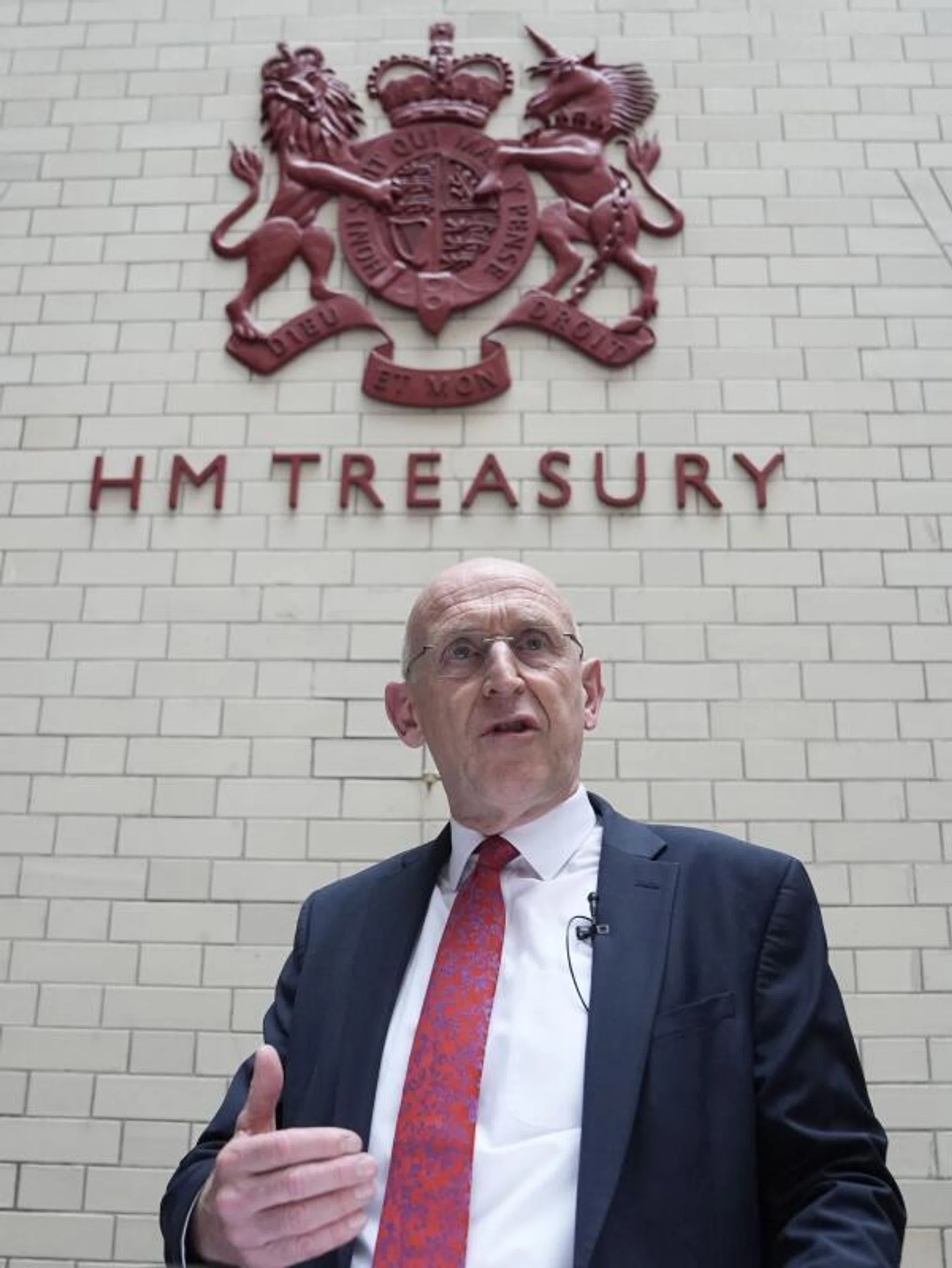
For now, the appointment of Healey has calmed the UK’s jittery government bond market
[LONDON] The surprise decision by Britain’s new Prime Minister Andy Burnham to make John Healey his finance minister is adding to questions about how much extra borrowing or tax hikes are coming for the stretched bond market and an economy struggling to grow.
Healey – who quit as defence minister in the previous government of Keir Starmer over what he criticised as under-spending on the armed forces – is widely seen as a safe pair of hands for the Treasury job.
But analysts are now trying to tot up the likely extra investment in defence on top of promises made by Burnham – the centre-left former mayor of Greater Manchester who ousted Starmer – including an expansion of social housing.
UK weapons-maker stocks rose on Tuesday (Jul 21) on expectations that spending on defence could rise to 3 per cent of economic output by 2030, higher than around 2.7 per cent agreed by Starmer, which could cost roughly an extra £10 billion (US$13.3 billion) a year.
Burnham has also suggested he wants to raise the threshold at which people start to pay income tax, said he would keep the triple-lock mechanism for raising the state pension – which costs an estimated £13 billion more than a less expensive alternative – and tackle a crisis in social care, a multi-billion-pound challenge that his predecessors have dodged.
“You’re starting to talk about quite a bit of money,” said David Zahn, head of European fixed income at Franklin Templeton.
For now, the appointment of Healey – rather than former energy minister Ed Miliband, whose past enthusiasm for borrowing to fund green investments worried investors – has calmed the UK’s jittery government bond market.
Borrowing costs jumped on Monday when Burnham talked about using flexibility within the fiscal rules that he inherited from Starmer’s government, before stabilising on Tuesday after Healey’s appointment.
After two spells in junior finance ministry roles in the 2000s under Gordon Brown, Healey has first-hand experience of how the UK’s public finances work.
SEE ALSO

However, the day after Burnham moved into Downing Street and named Healey as the first of his Cabinet picks, the relationship between the country’s two most powerful politicians remains to be understood.
“We will need to wait and see if Healey talks in the same way as Burnham, and if he can soften Burnham’s flexibility and high-spend message to calm financial markets and taxpayers,” Kathleen Brooks, research director at XTB, a brokerage, said.
Nigel Green, chief executive of deVere Group, a wealth advisory, was more critical.
“Healey’s appointment is not evidence the pressure to spend has gone away,” Green said. “It is evidence Burnham knows the market needed reassurance while he works out how far he can push.”
Britain’s economy, like much of the rest of Europe, has struggled to grow since the financial crisis almost 20 years ago and government spending to offset shocks such as Covid and the Ukraine war has pushed up debt.
Data published on Tuesday showed the limitations on the new government when it comes to extra spending.
Day-to-day spending – which the government is seeking to balance with tax revenues by the end of the decade – was £42 billion in the red in the first three months of the tax year, £1.3 billion above forecasts that underpin the budget.
Those forecasts do not yet include the impact on the public finances of the Iran war, which the Resolution Foundation think tank estimates at around £14 billion.
That would leave Healey with a historically low £10 billion of wiggle room for remaining on track to hit the 2030 target, even before any extra spending on defence, housing or other priority areas.
A first announcement of cost-of-living support made on Tuesday – removing value-added tax from domestic power bills – prompted some to question the new government’s claim that it would be fully funded by scrapping a digital ID scheme.
“The government will have to set out how it will pay for its new policies at the budget,” a Starmer ally, Darren Jones, a former chief secretary to the Treasury, said.
While Burnham has talked about savings from Britain’s fast-growing welfare spending, he has also said his priority will be more training to help get people back into work, suggesting no short-term reductions from lower benefits payments.
With the public finances so tight, attention is turning to possible tax increases when Healey delivers his first full tax and spending plan, probably in the autumn.
Burnham has said that staying on track to meet the fiscal targets might mean “having to ask for a little more” on tax.
Having pledged to stick with Labour’s 2024 election promise not to raise the main rates of taxation, that could mean higher taxes on capital gains, inheritance or property purchases, or a new levy on wealth.
“We expect more tax-funded spending and the government to boost borrowing as much as allowed by the fiscal rules,” Rob Wood, chief UK economist at consultancy Pantheon, said, adding he saw higher inflation pressure and possibly interest rates.
Zahn at Franklin Templeton said there were dangers in delaying the announcement of the new government’s fiscal plans, after uncertainty about tax changes by the Starmer government weighed on the economy.
“It will be critically important that they bring the budget earlier, not wait until end of November,” Zahn said. “The longer you have uncertainty, the more the markets will dislike that.” REUTERS
