


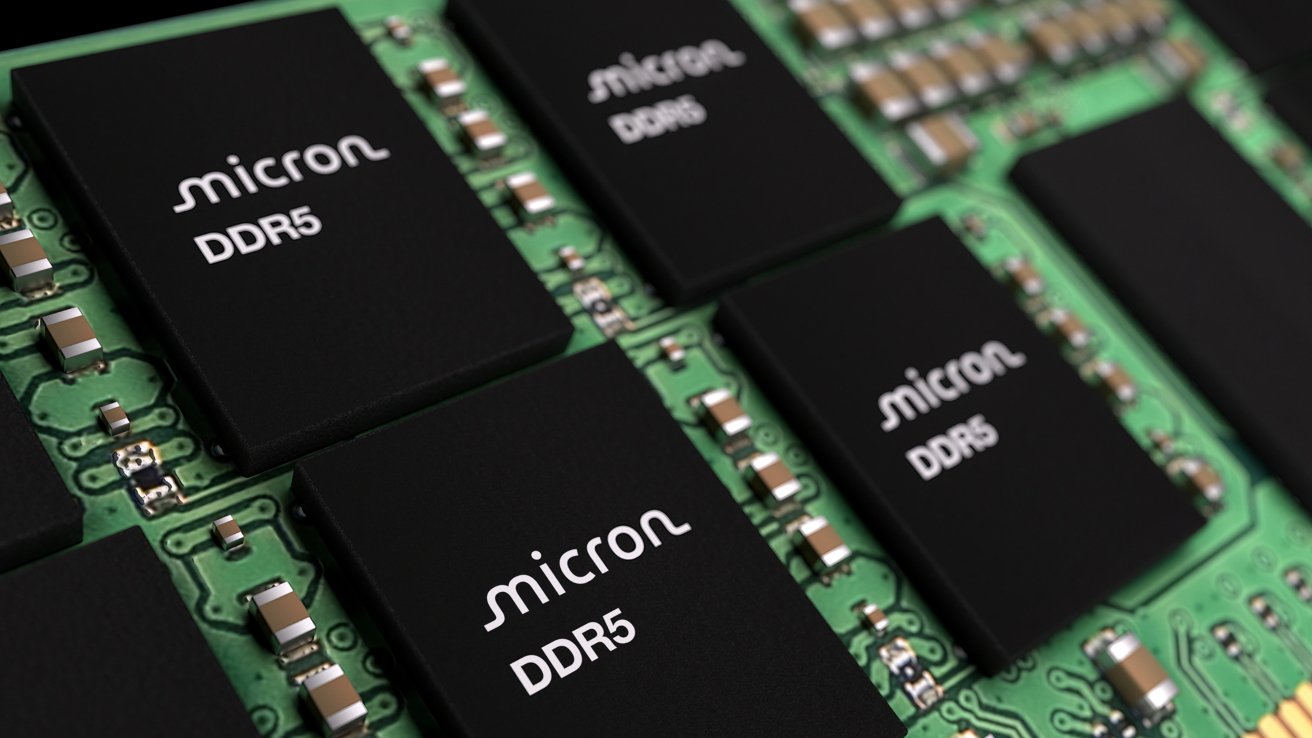
Apple’s plan to buy memory from a blacklisted supplier is receiving some pushback from Micron, which claims it will destabilize the U.S. tech industry.
In June, Apple petitioned the Trump administration to allow it to buy Mac RAM chips from a supplier blacklisted in the United States. Now, a U.S. memory producer has urged President Trump not to give in to Apple’s request.
According to the Wall Street Journal on Friday, Micron lobbied the White House on the matter. Micron CEO Sanjay Mehrota and others met with Commerce Secretary Howard Lutnick and others, saying the move to allow sales from blacklisted Chinese companies to U.S. tech companies will be incredibly harmful.
To Micron, it believes that permitting such sales would harm the U.S. tech manufacturing industry in the same way that China decimated U.S. steel and manufacturing plants.
Blacklist sales
The problem revolves around the ongoing memory chip crisis and reducing the cost of components. Apple wants to secure supplies of memory at more reasonable prices, but like all other manufacturers, it has to fight for a limited manufacturing capacity, which has spiked memory prices.
June’s petition explained that Apple should be allowed to buy memory from CXMT, a company on the Chinese Military Company Blacklist, or the 1260H list. The list is made up of companies the Pentagon believes have links to the People’s Liberation Army, and so could be considered a risk to U.S. national security.
Apple isn’t explicitly banned from buying from CXMT, and it reportedly has for small-scale testing. However, the Defense Department is not able to make agreements with companies on the list, nor use products or services from third parties that use components from the list.
In effect, Apple would immediately lose sales to the Defense Department, and others who also monitor the list.
There’s the further issue of CXMT potentially being placed on the “Entity List” in the future, which would block all trade with the supplier. That would also impact Apple, as it would have to find another supplier if it had to stop using CXMT.
While it’s safe to say that Micron has a financial incentive to keep Apple buying its memory chips, it does at least offer an alternative route forward. Albeit not one that will fix things anytime soon.
Micron told the White House that the memory pressure could be alleviated by building more domestic plants faster.
This is basically the same as the general belief in the industry that the situation won’t be fixed until production capacity increases. That is a slow process, as that means getting more factories and production lines online and up to speed.
Micron insists that it plans to spend $250 billion in the U.S. to boost capacity.
However, Micron is framing it as a means to increase investment in the United States, as well as increasing U.S.-based manufacturing. These are two topics that President Trump has openly discussed improving during both his terms in office.
Apple, meanwhile, has gone on the offensive. The report claims Apple has argued that Micron’s gross profit margins of 80% are evidence of price gouging.
Apple also reportedly said that Micron isn’t reinvesting fast enough to meaningfully increase supply. That improved capacity will also have little effect to the supply chain, as the vast majority will be allocated to AI customers.
Micron, meanwhile, believes that Apple and others squeezed suppliers during downturns, which laid the groundwork for the current shortages to take place.
As it stands, it’s a problem that has two possible routes for President Trump to take. He could side with Apple for a more immediate short-term solution to the problem, but the U.S. manufacturing investment proposal will be a very tempting option for Trump too.
