








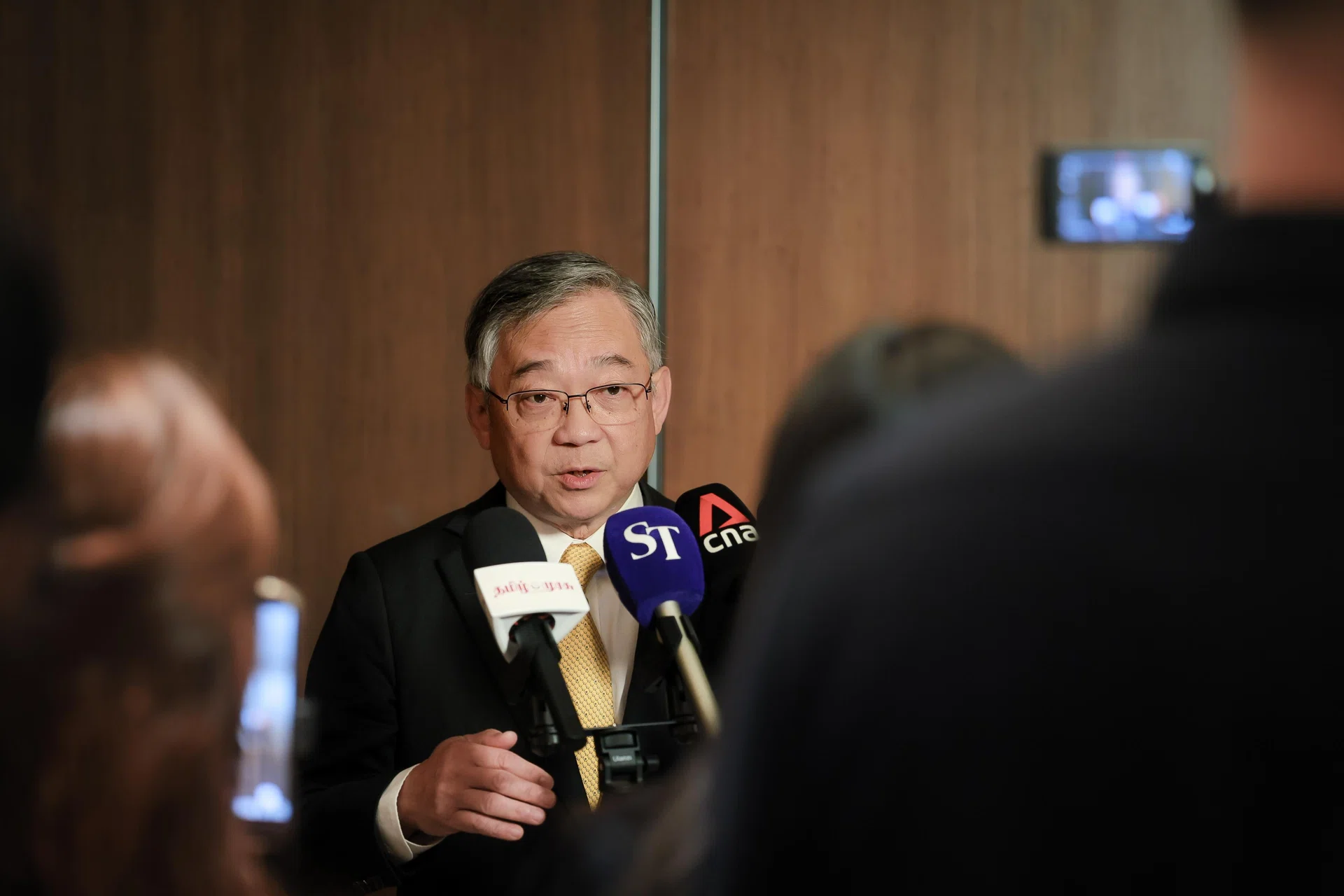
The funds are for the fourth tranche of the Financial Sector Technology and Innovation scheme over three years
[SINGAPORE] Singapore will invest S$220 million over three years to boost the fintech ecosystem, as part of the next tranche of the Financial Sector Technology and Innovation (FSTI) scheme.
The fourth tranche of the scheme will be implemented through six tracks covering institutional innovation, artificial intelligence adoption, infrastructure and platforms and talent development, the Monetary Authority of Singapore (MAS) said on Monday (Aug 31).
“With AI and other frontier technologies emerging, we want to capture new growth opportunities,” said Deputy Prime Minister Gan Kim Yong, who is also minister for trade and industry and chairman of MAS.
Each tranche has different priorities; the key goals of FSTI 4.0 are to:
- Anchor and scale innovation activities in Singapore;
- Accelerate and adopt fintech, with a focus on frontier technologies;
- Develop tech infrastructure; and
- Support talent development.
The manpower track will support at least 1,000 fintech internship opportunities over the next three years. MAS will co-fund internship stipends and open a new dedicated internship portal.
“It is always important for us to continue to invest in our people, to continue to build a pipeline of talent,” Gan said. “This is particularly critical in the fintech industry because this is a new and emerging industry (that is) also evolving very rapidly with the emergence of AI and frontier technologies.”
Lye Junxu, founder and chief executive at fintech Acme Technology, noted that this track stands out as it funds people at the point they enter the industry, which is “the least glamorous and the one that compounds longest”.
Having run programmes with students, he said the constraint has never been willingness.
“It is that a small firm carries the full cost of training someone who is not yet productive,” he said.
Research by the Singapore FinTech Association (SFA) consistently showed talent shortages in AI, data, cybersecurity and cloud capabilities, said SFA president Holly Fang.
“In parallel, we also need to create clearer entry points for young Singaporeans into fintech,” she said.
Under the institution project track, MAS will support Singapore-based financial institutions and fintech firms to develop and deploy innovative solutions, with a focus on frontier technologies such as AI, distributed technology and quantum technology.
The infrastructure and platform track supports industry-wide infrastructure and platforms that improve sector efficiency, productivity and innovation in the financial sector.
The AI Pathfinder track supports the scaling and adoption of market-ready AI fintech solutions listed on PathFin.ai, an MAS-led initiative to support AI adoption in the financial sector.
SFA’s Fang said this track is particularly relevant, as the issue is no longer simply whether financial institutions should experiment with AI, but how they can deploy proven solutions responsibly and at scale.
Marcus Quek, co-founder and chief executive at AI startup Akro, noted that many financial institutions have already experimented with generative AI.
“But moving from pilots to production remains difficult because of requirements around data privacy, accuracy, governance, integration with existing systems and the ability to verify outputs,” he said.
The central bank also enhanced the Fintech Awards track through the Global FinTech Hackcelerator (GFH) Scale-up Grant, which will help eligible finalists attract private investment and scale their businesses.
Supporting the finance sector
Compared with FSTI 3.0, which ran from 2023 to 2026, the latest iteration retains the centre of excellence track, while environmental, social and governance (ESG) fintech is no longer a standalone track.
Fang said it might be worthwhile to help credible fintech solutions secure their first meaningful institutional deployments.
“One area that comes up in our conversations with founders and builders in Singapore is how we can continue to develop the commercial demand side of innovation,” she said.
MAS should also look into financing for fintech players and small and medium-sized enterprises (SMEs), said Kelvin Teo, co-founder and group CEO of SME financing platform Funding Societies.
This includes improved access to debt funding at a reasonable cost for SMEs and fintech lenders, equity funding for growth-stage general technology firms, as well as open finance.
The FSTI scheme was launched in 2015 to support Singapore’s financial sector innovation journey.
MAS has since supported more than 350 fintech projects, helped open more than 30 centres of excellence, while GFH finalists have raised more than S$3.8 billion in funding.
The scheme comes as Singapore’s fintech sector has grown to more than 1,800 firms employing close to 10,000 employees across tech, data, AI, compliance, cybersecurity and business roles. Fintech investments in Singapore hit S$2.9 billion in 2025.
“The financial industry is not a zero-sum game; I think as we get better, Hong Kong and other financial sectors will also get better,” Gan said.
“And as they get better, we want to make sure that we get even better.”


