


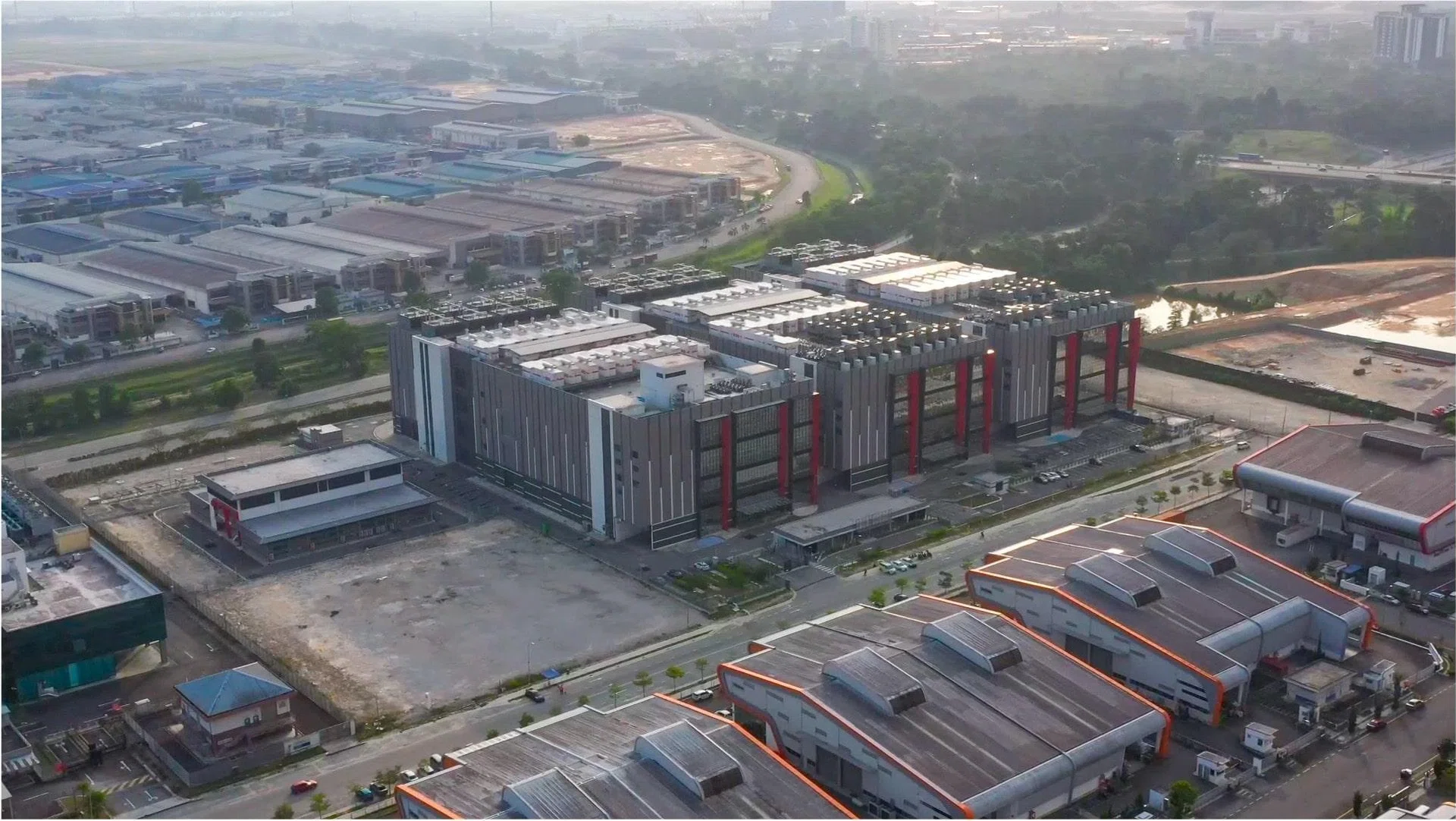
Data centres are projected to use nearly 31% of Malaysia’s available energy capacity by 2035
[SINGAPORE] Malaysia’s explosive data centre expansion is shifting into a deliberate reset mode as the market transitions from unbridled growth to a structured model favouring more sustainable builds.
This comes as the sector faces stricter regulatory guardrails, looming utility bottlenecks and a US$20 billion funding gap, said S&P Global Ratings in a report on Sunday (Jul 19).
This follows a Jul 13 JPMorgan report which highlighted that while Malaysia’s pipeline outpaces regional peers, Singapore will retain its premium status.
The recent tightening of infrastructure allocations in Malaysia underscores the structural challenges of supporting that massive footprint. It reinforces Singapore’s high-efficiency advantage while Malaysia has to shift to prioritise value over volume.
Quality over quantity
S&P noted that Malaysian regulators are deploying stricter utility tariffs and tighter utilisation thresholds to prevent speculative over-allocation of finite resources.
The state of Johor, which is the epicentre of the country’s data centre surge due to spillover demand from Singapore’s previous moratorium, is leading this charge by blocking approvals for less efficient Tier 1 and Tier 2 facilities.
These legacy builds can consume up to 200 times the water volume required by advanced Tier 3 and Tier 4 configurations. Furthermore, Johor has codified strict sustainability thresholds into mandatory enforcement metrics rather than mere guidelines.
It mandates a Power Usage Effectiveness of 1.8 or lower to narrow the gap with Singapore’s gold standard of 1.25, alongside a Water Usage Effectiveness threshold of 1.4 or lower that is notably stricter than Malaysia’s national guideline of 2.2.
To disincentivise speculative applications, Malaysia has introduced strict penalties under its new regulatory framework.
Operators must declare annual power demands and face a shortfall penalty of RM8.50 (US$2.07) a kilowatt a month if they fail to meet an 85 per cent electricity utilisation threshold during their first four years.
This policy follows data showing that the actual power demand of 850 megawatts (MW) in 2025 accounted for just 55 per cent of the 1,550 MW in approved capacity.
Additionally, newly adjusted utility frameworks have raised electricity costs for data centres by an estimated 5 to 15 per cent. Water tariffs have jumped 30 to 50 per cent in key hubs such as Johor, Selangor and Kuala Lumpur.
Infrastructure execution risks loom
While Malaysia’s Green Lane Pathway offers competitive power approval timelines – slashing lead times to as little as 12 months compared to three to five years in major Asia-Pacific hubs – the actual execution of power and water infrastructure remains a risk, said the S&P report.
Data centres are projected to swallow up nearly 31 per cent of Malaysia’s available energy capacity by 2035, up from about 7 per cent currently.
While Peninsular Malaysia plans to expand its power generation footprint to 40 gigawatts (GW) by 2035 primarily through new gas and renewable allocations under the NewGen26 competitive bidding system, global shortages of gas turbines have already caused commissioning delays, said S&P.
The power reserve margin in Peninsular Malaysia dropped to 25 per cent in 2025, hitting the lower bound of the optimal 20 to 25 per cent comfort zone. Water resource expansion carries even higher execution risks because raw water reservoirs can take up to eight years to construct, added the report.
This means that treated water supplies are likely to remain highly constrained till the late 2020s despite Johor’s plans to lift its treated water capacity to more than three billion litres per day by 2030.
Corporates securing alternative pathways
To navigate these bottlenecks and secure rapid market entry, major players are increasingly securing their own resources through alternative pathways.
The rating agency highlighted that tech giants are executing long-term agreements through frameworks such as the Corporate Renewable Energy Supply Scheme. This was the case when Google signed a 21-year corporate power purchase agreement with TotalEnergies for solar power in Kedah; while DayOne secured a 500 MW renewable agreement with Tenaga Nasional.
Simultaneously, operators such as Bridge Data Centres and AirTrunk have bypassed local domestic water strain by partnering with Johor Special Water to deploy dedicated on-site recycled and reclaimed water facilities.
Navigating an inflection point
As the physical realities of the reset take hold, the financial architecture backing these mega-projects is also reaching an inflection point.
Over the next three years, Malaysia’s projected 2 GW capacity addition will require more than US$20 billion in funding for powered shells and infrastructure equipment alone. This figure excludes the massive capital needed for high-end AI chips, and can easily double or quadruple development costs, said S&P.
This capital requirement heavily tests the capacity limits of the local financial ecosystem, as the total data centre funding requirement threatens to breach the domestic banking system’s aggregate sector exposure cap, estimated at US$30 billion.
Furthermore, regulatory boundaries limit a bank’s exposure to a single borrower to 25 per cent of its total capital. S&P estimated that this translates to an aggregate exposure cap of US$4 billion to US$19 billion for a top borrower among Malaysia’s largest institutions. This creates structural roadblocks for mega-scale hyperscale developments.
Consequently, S&P forecast that the next phase of Malaysia’s data centre evolution will require a structural shift in financing away from conventional local bank loans. Instead, international project finance, private credit and asset-backed securitisation structures can be tapped to keep pipelines moving.
