


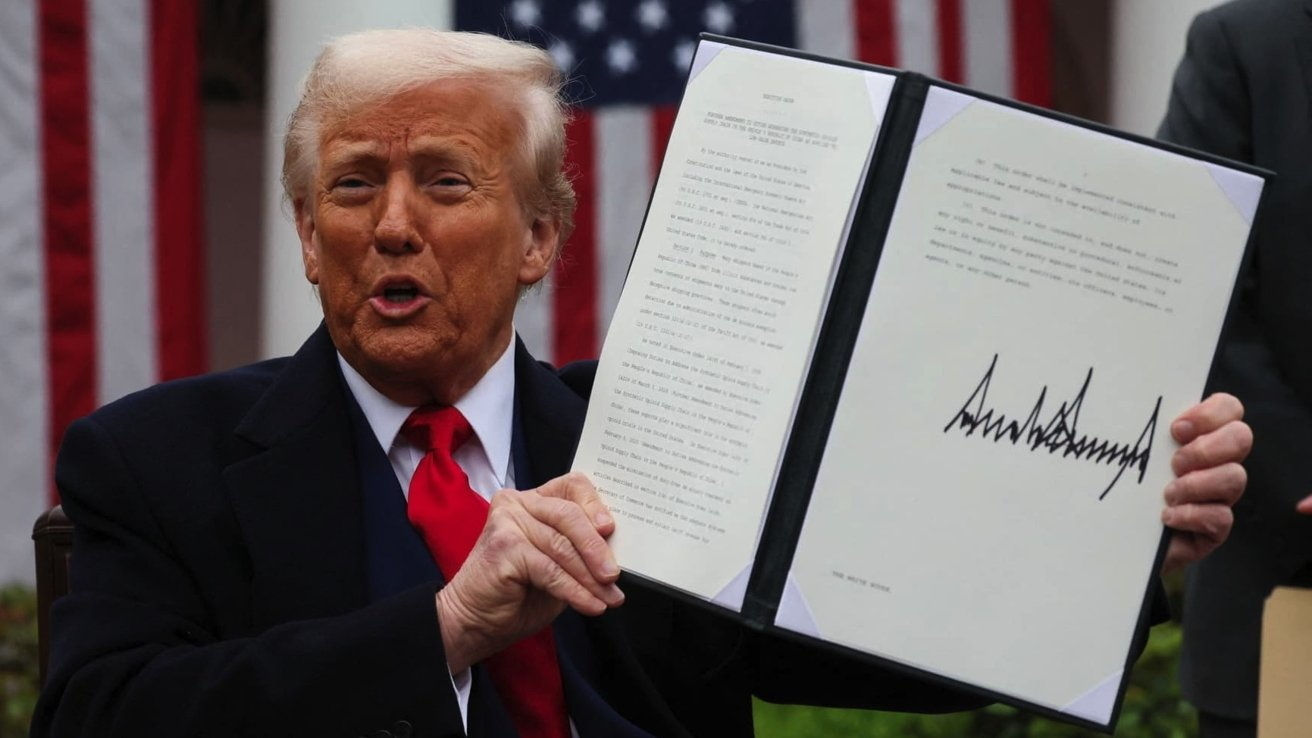
U.S. Lawmakers have written to President Donald Trump, hoping he will do something to help big tech companies being targeted by the E.U.’s Digital Markets Act.
The European Union’s Digital Markets Act has been a thorn in Apple’s side since its introduction. Lawmakers in the United States want something done to fight what they consider to be rules that target U.S. Big Tech firms unfairly.
A letter signed by 25 Republicans, including seven members of the House of Representatives Trade Subcommittee, has been sent to Trump, urging him to open trade investigations against the E.U. The letter, seen by Reuters on July 21, focuses chiefly on the Digital Markets Act as a tool that works against U.S. firms.
Describing the rules as “anti-competitive acts, policies, and practices,” the letter accuses the E.U. of using them as tools of “economic extraction and regulatory coercion against American firms.” Trump is urged to take action before Europe “further entrenches this anti-American regime.”
As an example, the letter proposes that the addition of the cloud units of Amazon and Microsoft under the Digital Markets Act would place “unprecedented regulatory burdens” on the companies. Burdens that European and Chinese rivals apparently wouldn’t face.
Apple’s designation as a gatekeeper under DMA rules is also raised, alongside Amazon and Meta’s inclusion. Meanwhile, China giants Temu and AliExpress are not classed as such, partly due to the rules relying on the number of European users who use them.
There’s also the apparent problem of firms in the E.U. having access to the U.S. market with less regulatory oversight than the U.S. firms in the E.U. This access should be limited if the E.U. continues to use discriminatory rules, it continues.
The letter said that the U.S. should use all available tools, including Section 301 of the Trade Act of 1974. This rule would combat perceived unfair trade practices by imposing tariffs, Trump’s favorite international economic weapon.
E.U. “innocence”
While lawmakers are insistent that the transatlantic relationship between the U.S. and Europe is very much one-sided and grossly unfair, the EU thinks otherwise.
Thomas Regnier, European Commission spokesperson, said the European Union has the sovereign right to regulate economic activities taking place within its borders. This also applies to digital regulation, he continued, insisting they are being enforced in a “fair and non-discriminatory manner.”
This enforcement has included continuing to fight Apple over the App Store and iMessages. For the App Store, this has led to the fairly lukewarm creation of third-party app storefronts on the continent.
Apple has also caught the occasional break from regulation, too. When it comes to Apple Maps and Apple Ads, the E.U. doesn’t believe they are large enough to be subject to regulation under the DMA.
The regulations have also led to Apple holding back from launching some products in Europe, because of DMA compliance concerns. While the rest of the world will get to use Siri AI this fall, the EU will miss out.
Reviving retaliation
The letter to President Trump and the reference to Section 301 is a carefully planned request, that effectively is a callback to a warning from September 2025.
At the time, Trump warned Europe that the U.S. would retaliate if the E.U. continued to fine U.S. companies and burden them with regulations. There was the same threat of invoking Section 301 to allow U.S. officials to investigate and respond to unfair foreign trade practices.
Trump insisted that Europe was unfairly targeting American companies, such as Apple. The penalties levied by Europe were deemed to be diverting money away from U.S. investment and jobs.
By spelling out that the lawmakers want Trump to do what he threatened in September, the letter could be enough to nudge the President into following through.
