






Editor’s Note: The following interview contains spoilers for the entirety of Apple TV‘s “Cape Fear” series.
The TV series version of “Cape Fear” — a lurid slice of Southern Gothic sleaze with Javier Bardem in the roles previously incarnated by Robert De Niro and Robert Mitchum — came with a full-circle moment for at least one of its cast members.
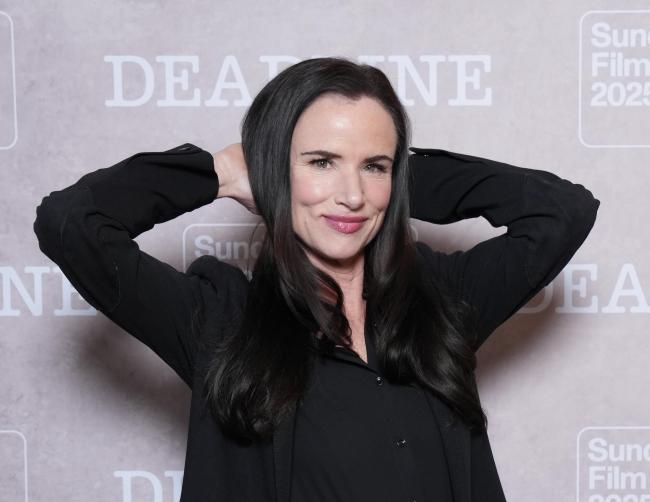
That would be Juliette Lewis, whose Best Supporting Actress Oscar nomination in 1992 came from playing Dani, the teenage girl who was, in more contemporary parlance, being groomed by De Niro’s psychopathic Max Cady. Lewis was 18 at the time, but starring as a young woman closer in age to, say, the 16-year-old girl De Niro’s character is imprisoned for beating and raping.


But in Nick Antosca’s Apple TV series version, which just finished airing this past weekend, Lewis plays Crystal Cady, the unwell and perpetually cloaked and hooded half-sister of Bardem’s Max. The penultimate and final episodes — “The Scar” and the aptly named “The Executioners,” after the original novel by John D. MacDonald — are rife with reveals. Especially around Crystal’s true intentions in quietly stalking Max Cady in Savannah after he’s freed from prison and amid his campaign of terror on Anna (Amy Adams) and Tom Bowden (Patrick Wilson).
The last hour goes down in melodramatic flames, including the revelation that Crystal killed Max’s wife, ripped their baby from his wife’s body, and raised him (Max Mattern) as her own. An explosive argument between Crystal and Max ends with him locking her in her houseboat and setting it ablaze, with Crystal presumed dead. This is drama television, though, and a recent conversation with Lewis intimated there could be more story to tell.
Most dramatically, however, both the film Lewis starred in and the series end up on a houseboat — even though the similarities between swamp-dwelling villain Crystal and terrorized teenage Dani just about end there. But next to each other, they show Lewis’ range for nervy performances that have spanned her entire career, even with the last at-bat of “Cape Fear” three-plus-decades past.
After the finale, IndieWire caught up with the spiky, iconoclastic, cult-movie-heroine performer to talk about her role in both projects, including memories of working with De Niro.
This interview has been edited for brevity.
IndieWire: Your identity in this version of “Cape Fear” isn’t revealed until late in the series, so how did you keep it a secret? You’re no stranger to keeping spoilers under wraps because of “Yellowjackets.”
Juliette Lewis: It’s hard because I’m one of those personalities if you say, “Don’t tell so-and-so that such and such…” I’ve been told about surprise parties, and I’ll do the opposite because I’ll forget. This was actually really fun to keep this secret. And I was so into it … I pitched my voice a little bit different … because my voice, people recognize me when I’m standing in line, they don’t even see my face. I often play with my voice with characters, and so I definitely [would] try to make it so that nobody could guess it was me from when she first speaks. And then they took my name off the credits. This was a deep secret to keep, and I was really excited about that. I wanted to have it be a surprise for people who care.


What was your initial reaction to the idea of the series? You worked with showrunner Nick Antosca for one episode on “The Act.” Yes. We already have two “Cape Fear” movies that are masterpieces of economy. A 10-episode series always begs the question of why, so you’d be forgiven for having a cynical reaction.
I was intrigued because it was Nick. I had worked with Nick before, and I like him as a person; I like him as a writer and a storyteller. He didn’t know yet at the time that we met, I think it was 2019, [when] he was just ruminating on the idea. And the reason why you could do this as a series is because the themes are biblical. They’re as old as time: seeking justice, revenge, being done wrong, and then evil and goodness and what is what? I remember even when we did the “Cape Fear” in ‘91, it was very important for the writer [Wesley Strick] and Scorsese at that time to dirty them up [the family]. The black-and-white movie, it’s sort of just good and evil. In the ’90s, that’s where we’re getting into — especially in the ’70s, they did the same — into the storytelling that’s a little more complicated. And now they’re pushing that even further with all the different ways you could. All of the different forms of fear or stalking through your phone, through staying in someone’s house. These are all these topical themes today. So I think with this series, you can explore even deeper any one dimension of it. You can explore it in a full hour-long episode. So that’s interesting.
You end the series on a houseboat, presumably dead, which is a full-circle moment from the climax of Scorsese’s movie also on a houseboat. You earned a Best Supporting Actress Oscar nomination, and then you went right into these dark, iconoclastic roles that have really defined you. Were casting directors looking for “Cape Fear” again, or is it just what you were innately drawn to then?
In a career, you only get known for what hits. So after. After “Natural Born Killers,” I did a Nora Ephron-Steve Martin comedy with Madeline Kahn. It didn’t hit. So I was always topsy-turvy. I was always drama, comedy. And just for myself, for my own pleasure and for what I wanted to do, I like to keep people guessing. I like things that are unpredictable. I don’t ultimately call the shots. It’s sort of what comes my way. And I did see the pretty girl … that was drawn really thinly. I did not gravitate toward that. And I always looked for something a little more colorful. And for lack of a better phrase, it would be, I call them high-stakes genres. Like “Kalifornia” is high-stakes. But you have the side of me that’s super innocent and vulnerable, and then there’s the psychopathy, which was really special to get offered that with “Natural Born Killers.” I was 19. Isn’t that crazy?


You were 18 when you shot Scorsese’s “Cape Fear.” Jodie Foster was 12 on Scorsese’s “Taxi Driver” and has said her initial impression of Robert De Niro was alienating and even off-putting. What was your experience? Was he Max Cady between takes?
I think that must have been tricky for her, but what I got to experience is the best of American cinema, the utmost professionals in Nick Nolte, Jessica Lange, De Niro. But De Niro was really kind to me. He was really respectful. He was really sweet and just told me, “Good morning, hello.” I remember I had a birthday; he wrote me a birthday card. He was just a very warm, nice person.
With Scorsese, they all just treated me as an equal and as a peer. It helped a lot because it made me more brave in my choices where I could really let my instincts out because I felt I belonged. It’s something I try to do when I work with people who are younger and where I want them not feel apologetic for being there, but to let them know they belong there. They got this job for a reason. But yeah, De Niro … he taught me a lot about professionalism. He was Method because I heard Marty tell me he had an organ player and was speaking in tongues in his trailer one day. So all these other wild things that he was doing, I didn’t know about. Maybe he was being Method with me because in the movie he’s kind to her and he’s trying to win her over. You know what I mean? But what I saw is someone who was just a top-tier professional, and it stayed with me forever.
You had a small role on the series, but it’s very impactful. How much time were you on the production?
Over months. I went back and forth. They shot this in Atlanta. And Nick in the beginning. Series are interesting because you don’t get to read the script. I come from film where you read the script, you know everything that’s expected. In series storytelling, you usually get a pitch, and maybe you read one script. I was really intrigued by the backstory Nick wrote for Crystal and Max Cady and their history together. Even if you have three lines or if she shows up on the sidewalk, and she’s watching him, when he wrote the backstory that he did of what she’s after and why she keeps coming into his orbit, that’s exciting to play. You’re just trying to honor the backstory that’s given and not telegraph too much where you’re going. If we’re fortunate enough to have a second season, we might learn even a little bit more.
I gather your character is dead, but you never know with TV.
I could come back as a burn victim, and haunt him for all his days.


At what point did you get your hands on the script for this penultimate episode where you have this truly operatic showdown with your half-brother?
You never know how things are edited, but basically their history is that he came to live with them. They are half-siblings. That was very Sam Shepherd. I did that play “Full for Love,” and they’re siblings in that. She was not so nice to him growing up. And then he changes that during puberty and messes with her mind a bit, and then she’s on the receiving end. I liked this back and forth of how these two might’ve tortured each other. But eventually he became an equal, and then he surpassed her. I just think when you write that kind of history, it has everything to do with the actor that’s going to play it. So from day one when I played with Javier, it was pretty exciting because we both respect each other’s work so much.
You’re in so many films that are deemed “cult classics,” but is there a project you’d love audiences to rediscover?
I actually did something recently with Peter Dinklage, one of those things where not a lot of people saw it. It was a movie for Tubi. They put up the money. And it was a Western, and I just did it. It came out I think a year ago or year and a half ago. So Peter Dinklage is in it. Levon Hawke is in it. My whole career, I always wanted to be able to disappear into a role where even I get so lost, I’m unrecognizable. And I think with this movie, it’s called “The Thicket,” I think I did it. I think I disappeared, and I was unrecognizable. And that was because that one was written for a man. Anyway, I’m always trying to do new things. And I was a villain who was named Cutthroat Bill. And everyone thinks she’s a man the way she talks, because she has scarred vocal cords. So those ingredients, I had to play something. [where] I’m striving for realism. I’m not trying to do Captain Hook. I’m not trying to do something campy. I want to make something so breathtaking and real and really visceral. And it was a cool production. We shot it in Calgary. It was a Western. So anyway, if nobody’s seen that, they could see that. “The Thicket.”
All episodes of “Cape Fear” are now streaming on Apple TV.


