


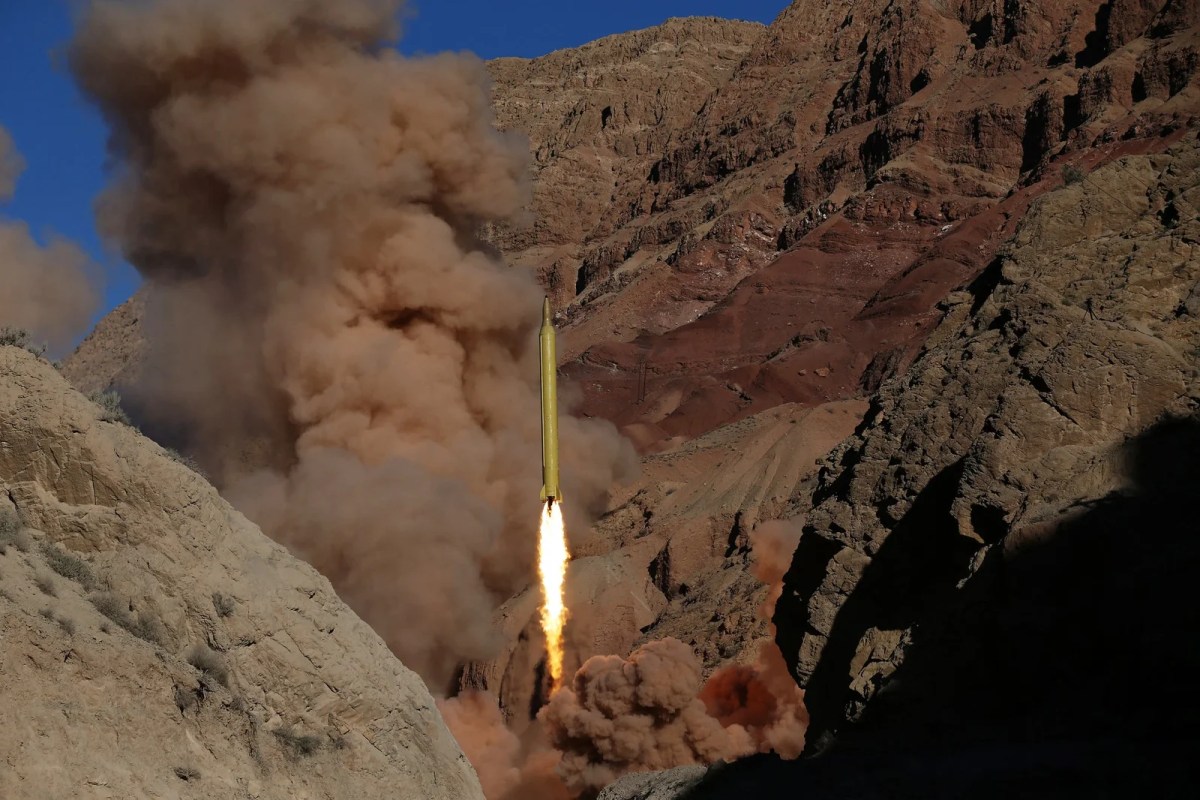

Senior cleric Ahmad Khatami’s thunderous declaration — “Death yes, humiliation never” — was not mere rhetoric. It was a defiant reaffirmation that uranium enrichment remains, in Tehran’s view, a nonnegotiable pillar of national sovereignty. Speaking during Friday prayers in Tehran, Khatami linked enrichment to civilian applications in medicine, agriculture, and environmental science, while underscoring its strategic role in deterrence. His warning to Israel — “These fools don’t know that we will plow Tel Aviv and Haifa” — equated nuclear power with missile power, showing that Iran’s deterrence strategy holds firm even as more sanctions and military raids have been imposed.

Iran’s uranium enrichment has gone far beyond the limits set by the 2015 Joint Comprehensive Plan of Action (JCPOA). Enrichment was capped under the agreement at 3.67 percent U‑235, with a 202‑kilogram stockpile. Iran had stockpiled 182 kilograms at 60 percent purity, 840 kilograms at 20 percent purity, and 2,595 kilograms at 5 percent purity by the end of 2024. The escalation to 60 percent is nearly all the technical effort to weapons-grade material; the final spurt to 90 percent would be achievable in a matter of weeks using current IR‑6 centrifuge cascades. There is no peaceful use for this extent of enrichment, but Iran offers it as a sovereign right under the Nuclear Non‑Proliferation Treaty.

Iran has a combination of IR‑1, IR‑2, IR‑4, and IR‑6 centrifuges at Natanz and Fordow, with more than 100 cascades. Initiatives to install 32 additional cascades and inject 20 percent grade uranium into IR‑6 machines at Fordow may increase the monthly 60 percent from 4.7 kilograms to 37 kilograms. Deep burial at Fordow renders it immune to traditional attacks, making military options difficult. As of late 2024, Iran’s breakout time — the time needed to possess weapons-grade uranium sufficient for a single bomb — had decreased to under two weeks with the capability for material for five or six warheads. Israeli airstrikes in June 2025, followed by American attacks using GBU-57 Massive Ordnance Penetrators, inflicted “severe damage” on Isfahan, Natanz, and Fordow, IAEA Director General Rafael Grossi says.

While capacity for producing civilian-scale fuel was largely laid low, analysts estimate that Iran kept some of its 400-kilogram inventory of 60 percent uranium hexafluoride and potentially secret centrifuge facilities. The suspected weaponization sites also came under attack, with warhead integration capacity restored. Iranian missile forces — the longstay anchor of its deterrent posture — were severely impacted.

Israel disabled some 120 launchers, about one-third of the pre-war inventory, and hit underground bunkers at Khorramabad, Kermanshah, and Tabriz. Iran’s retaliatory salvos consisted of 370 Emad, Haj Qasem, Khaibar Shekan, and Fattah-1 ballistic missiles and over 100 Shahed and Arash UAVs. Interception rates were high, yet casualty numbers in Israel were high due to strikes against cities, and there was a discernible shift toward countervalue targeting.

Pre-war estimates placed Iran’s missile inventory at 2,000 operational units with a monthly production rate of around 50. Ongoing Israeli strikes against production sites will compel Tehran to ration firing. U.S. deployment of THAAD batteries and Aegis ships further improves Israel’s missile defense layer, cutting into Iran’s deterrence-by-punishment paradigm. The latest U.S. sanctions target 44 individuals and entities, including affiliations with the Organization of Defensive Innovation and Research (SPND), alongside export controls on 26 entities.

They align with the U.N. “snapback” under Resolution 2231, reimposed after France, Germany, and the UK invoked Iran’s stockpile of enriched uranium above 8,400 kilograms — over 40 times the JCPOA limit — and unaccounted quantities of 60 percent material. China and Russia resented the snapback but were unable in their draft resolution to delay it in the Security Council.

Nuclear electricity makes up only 1–2 percent of Iran’s electricity, which is supplied by the Russian-built Bushehr reactor, whose fuel is imported and re-exported to Russia upon being utilized. Enrichment of reactor fuel on an industrial scale — with tens of thousands of centrifuges — no longer takes place in Iran after the attacks. Enrichment serves no economic purpose for civilian energy but remains a strategic hedging against weaponization.

To make weapons, Iran would need to enrich to 90 percent, convert uranium hexafluoride gas to metal, and machine it into warhead components. Even with easy physics, precision electronics and explosives are required for missile-compatible warheads. Iran’s missile technology, including those optimized to penetrate defenses, can deliver such warheads, but assembly remains a complex engineering challenge under current military stress.

Iran’s position — combining sophisticated enrichment with threat of missiles — is a calculated combination of technical potential and political provocation. The attacks have weakened both pillars, but the residual capacity ensures that the nuclear file remains very much at the center of Middle East security calculations.
