






The government estimates the initiative to draw up to US$28 billion in investment
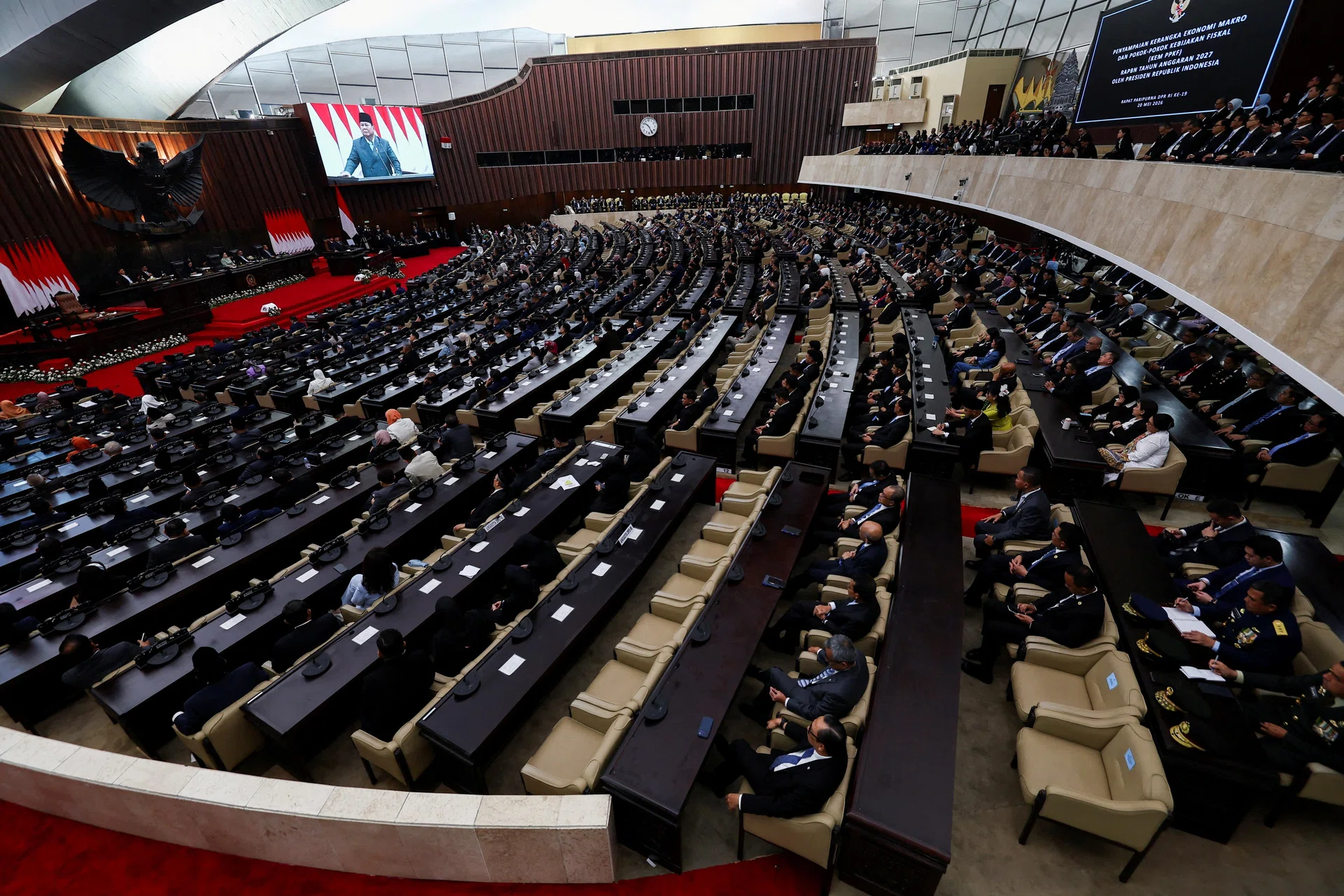
[JAKARTA] Indonesia’s parliament on Tuesday (Jul 21) approved legislation establishing an international financial centre that Jakarta hopes will draw up to US$28 billion in investment and compete with established hubs such as Singapore, Hong Kong and Dubai.
The new law, which offers some of Indonesia’s most generous tax incentives to date, provides the legal framework for the Indonesia International Financial Centre or PFII.
Eligible businesses operating within the zone will receive a 100 per cent reduction in corporate income tax for a specified period, while foreigners holding Golden Visas and residing in the financial centre may be exempt from being treated as Indonesian tax residents during the validity of their visas.
The legislation also allows exemptions from taxes on overseas income, value-added tax, luxury-goods tax and import duties for qualifying activities, with additional fiscal incentives to be introduced through future government regulations.
The government estimates the financial centre could attract between 300 trillion rupiah (US$16.7 billion) and 500 trillion rupiah in investment through the establishment of foreign banks, asset managers, family offices and other financial institutions.
Initial funding for the financial-centre authority may come from state-owned enterprises, businesses, Indonesia’s sovereign wealth fund Danantara or other lawful sources.
Beyond tax incentives, the law provides for a specialised arbitration body and a special court to handle commercial disputes, contracts and tax-related cases within the zone, aiming to provide greater legal certainty for international investors.
This initiative marks President Prabowo Subianto’s latest push to attract foreign capital and position South-east Asia’s largest economy as a wealth-management and financial-services hub.
The legislation was fast-tracked through parliament, with formal deliberations between lawmakers and the government beginning only on Jul 2 before securing final approval less than three weeks later.
SEE ALSO


The move comes as Indonesia seeks to strengthen its investment proposition and attract more foreign capital amid closer attention from global index providers and credit rating agencies.
The rupiah has experienced bouts of volatility in recent months, prompting Bank Indonesia to intervene repeatedly and tighten monetary policy to support the currency and maintain investor confidence.
During Tuesday’s plenary session, deputy chairman of parliament’s financial committee Mohamad Hekal said that the law establishes a governing body for the international financial centre that will report directly to the president and parliament.
While the government has yet to announce the final location of the financial centre, officials previously identified Bali as one of the leading candidates because of its international connectivity and appeal to wealthy foreign residents.
Prabowo has pledged to raise annual economic growth to 8 per cent while funding large-scale infrastructure and industrial projects, increasing the need for investment beyond the state Budget.
More than tax incentives
The financial-centre initiative reflects Indonesia’s broader ambition to keep more domestic wealth onshore.
For decades, many affluent Indonesians have preferred to place their assets in Singapore, drawn by its stable legal framework, sophisticated financial ecosystem and long-established wealth-management industry.
Jakarta hopes that the proposed financial centre will reverse part of that trend by encouraging family offices, global asset managers and multinational financial institutions to establish a presence in Indonesia.
While tax incentives and Bali’s appeal may draw attention, analysts and investors said that legal certainty, policy consistency and ease of doing business will ultimately determine whether Indonesia can attract global financial institutions.
Winning over global financial talent will require Indonesia to offer more than tax breaks.
Irvan Mondro, director at Pangolin Investment Management, said that the tax incentive alone doesn’t address bigger concerns around policy consistency and capital safety. He noted that investors ultimately want confidence that regulations will remain predictable and that capital can move freely under a stable legal and macroeconomic environment.
“It is a fantastic idea, and the prospect of living and working in Bali will undoubtedly appeal to many,” said Mondro. “But it is all in the execution, and Indonesia will have to move to another level to make this work.”
He pointed out that the country will need to streamline visa approvals, business licensing and regulatory processes, while providing the policy certainty international investors expect.
Find a niche
Ravi Varanasi, founding partner at SPRV Consultants, said that Indonesia should not measure success by whether it overtakes Singapore or Hong Kong, whose financial ecosystems have been built over decades and benefit from deep liquidity, extensive professional networks and strong international credibility.
“Indonesia should seek to build a credible, specialised financial centre by leveraging the inherent strengths of its economy such as a large domestic market, abundant natural resources, young population, substantial infrastructure financing needs and an expanding pool of private wealth,” he noted.
He added that sectors such as commodity and energy-transition finance, infrastructure funding, Islamic finance, Indonesia-focused asset management and family offices are more realistic targets than global foreign-exchange trading or international securities markets.


