



No matter what side you come down on, there’s no denying that AI is the currently the most important conversation topic in the realm of filmmaking. The technology appears destined to transform the art form in the near future and is the biggest growth area for investment in independent film at the moment. Depending on who you ask, it’s either a revolutionary tool that will unleash our hidden potential or an existential threat that could take away the very essence of artistry.
That polarized thinking can make it difficult to have nuanced conversations about what film’s AI future can realistically look like. But at the Cannes International Film Festival, IndieWire and Andreessen Horowitz, Cultural Leadership Fund created a forum to do just that. We partnered to host “Music, Film & the New Storytelling Stack — Co-Authoring What Comes Next,” an event held at The American Pavilion that featured panels and demonstrations from artists on the cutting edge of AI in film.


The first conversation convened a panel of storytellers and business leaders whose thinking about AI transcends the “with us or against us” mentality that we so often see. Cultural Leadership Fund partner Judene Small, was joined by Masters vs. Machine CEO Roahn Hylton, Krea founder and Chief Technology Officer Diego Rodriguez, and IndieWire’s Chris O’Falt. All spoke about balancing human artistry with AI tools — and stressed the importance of clarity on such a broad topic.
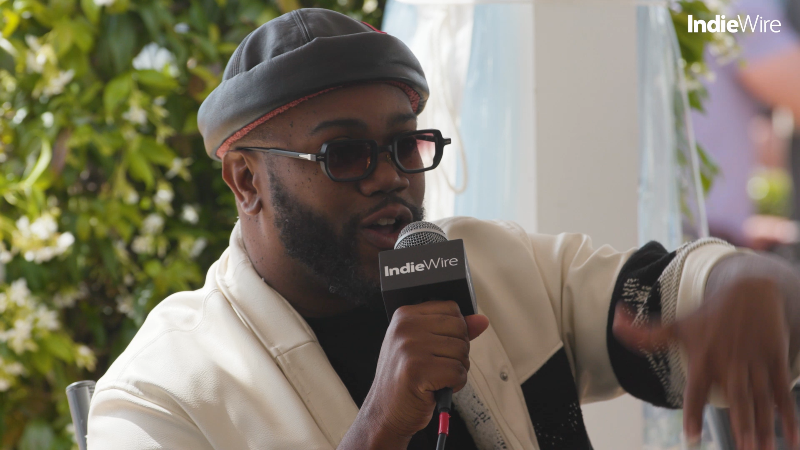
“I get particularly annoyed at the word ‘AI,’ because it means different things for different people. And it’s impossible to have a conversation when people are not speaking the same language,” Rodriguez said. “For some people it means a chatbot, for other people it means TikTok or a recommendation engine, for someone else it means a technology that can automate my labor, whereas for other people it means a new type of tool to enable artists. I think that as long as that’s not clear, we cannot even start having a conversation.”
O’Falt added that many of our conversations about AI are happening so early in the technology’s development process that we find ourselves reacting to the low level, gimmicky products that are unlikely to make their way into actual filmmaking. The actual AI integrations that could happen a decade from now are likely to look more similar to the tools that Hollywood has been using for years.
“It would be easier if we just thought of some of the things being done in AI as natural extensions of what we’ve been doing with CGI for a while. But the problem is, the minute you say AI you’re thinking of a bad Brad Pitt fighting Tom Cruise and the slop,” he said. “Creating a space where this can be talked about is very difficult. Because you’re talking about a world that is fueled by money. And then there’s an audience that the minute they hear it, are angry and turned off. So the question becomes, how do you even create the platform to have that conversation the way we talk about anything else?”
Hylton added that these conversations are not simply technological or economic: they’re philosophical. He argued that AI art has such a visceral impact on people because it seems to threaten our very definitions of being human. He doesn’t see that as the only endpoint, but he stressed that AI advocates have to acknowledge those fears in their counterarguments.
“As humans, we want our art to cost us something,” he said. “We can relate to hard work. We can relate to putting time into something and getting a return. And that cost is threatened when you have a platform that you can prompt and then you see something… We’re having really high level existential questions about what it means to be human and how valuable are experiences are.”
The notion of collaboration between human artists and AI technology was on full display during a musical performance from Hylton and a live cellist, with Rodriguez generating live images along with the music in real time.
The conversation soon turned to a more practical, pressing issue: copyright. Many artists worry about their work being used to train AI models without compensation, and technological advances in the field have been outpacing the legal developments. But the panelists noted that there are also plenty of positive examples of AI helping creators protect their own work.
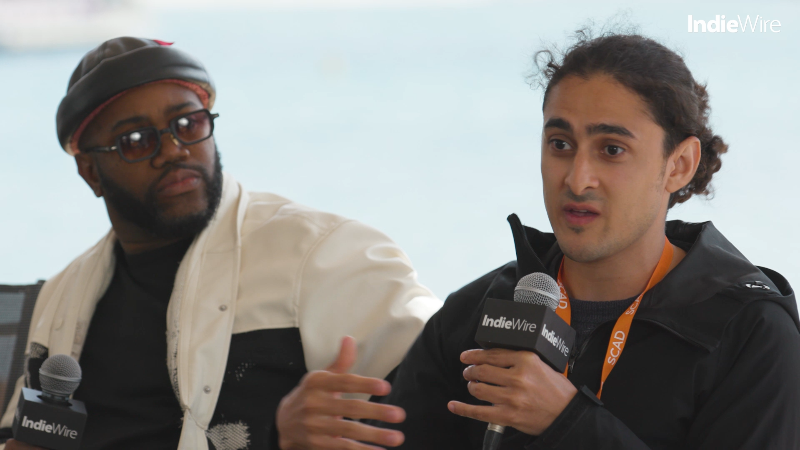
“I am so annoyed at the fact that regulators and IP owners think of AI as an enemy as opposed to a tool,” Rodriguez said. “I’m like ‘did you know that you can use AI to detect your IP at scale and tell if it’s being infringed?’ So now AI can literally help you find IP infringement.”
Small added that the infancy of AI could lead new infrastructure that might share the fruits of the entertainment industry more equitably than in the past. She argued that rather than fighting over whether Silicon Valley or Hollywood sees more of the profits from AI projects, this is the time for conversations about letting creators get in on the ground floor.
“It feels like a false decision,” she said. “Silicon Valley is getting the big meat of the pie, but before Silicon Valley, who was making those decision? When you think about where capital is centered, there are always those individuals who are filtering down and giving us a false sense of real participation. And I think that’s why this conversation is happening, because there are builders and creators and toolmakers that are saying ‘Hey, this is a very early industry… it is ripe for all of us to participate in the infrastructure building.’ At the end of the day those decisions are being made on the artist side and on the tech side. And then it is influencing, thorugh capital, what is happening on the regulatory side.”
Finally, attendees had a chance to witness another demonstration that combined AI and human artistry when Dave Clark, the co-founder and Chief Creative Officer of Promise Studios, took the stage. Clark joined Smalls for a fireside chat about his journey with AI that led him to found a new entertainment studio for the AI age.
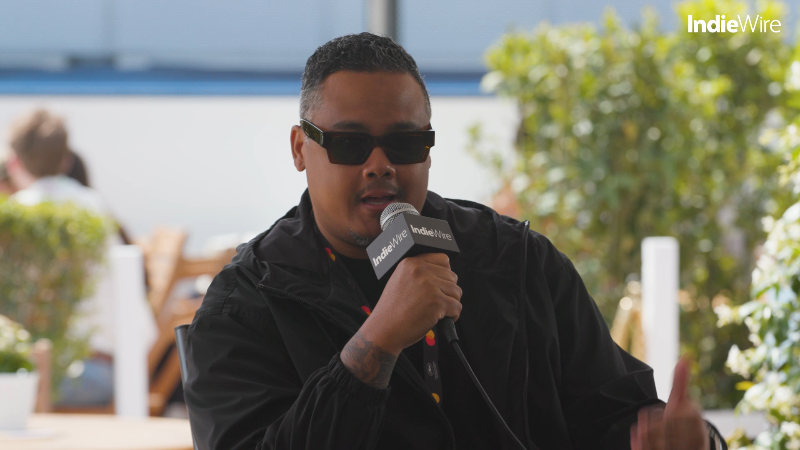
Before demonstrating AI-assisted work that Promise Studios did on a Coca-Cola ad, he explained his journey through traditional film school and his early years in Hollywood, where he was frequently told that his ideas were too large for his relative inexperience as a director. Clark explained that using AI tools to make his short film “Silent Valley” landed him a meeting with Ridley Scott, who echoed his belief that AI tools ultimately serve human storytelling processes.
“For him, it wasn’t about how it really looked. Because three years ago those tools were just, whatever. It was about the story,” Clark said of his meeting with Scott. “‘He goes, you found a way to take a tool that nobody knows what the hell it really does and get your story out there.’ There would be no way in hell I’d be able to do that and show that type of storytelling without the tool. But it was nothing without ten years of dedication of researching history and learning about the story that I wanted to tell that made the tool enable me to be the filmmaker I needed to be.”
The scope of the event, and the wide range of perspectives on display, confirmed how early we are in the AI process and how much we still have to learn. But the conversations also illustrated just how much nuance there is to the topic once we look past binary arguments about it. In her opening remarks, Smalls said that “the Cultural Leadership Fund is really dedicated to those who are shaping and building culture” and giving them a chance to share the financial gains they usher in. The day’s events made it clear that no matter what happens, the fund is well on its way to advancing that goal.
