









Choosing the healthiest bread in UK supermarkets is not as simple as picking the darkest loaf or one labelled sourdough. A good wholemeal bread is often a healthier everyday choice, but fibre, salt, added sugar, oils and preservatives all matter too.
In this guide, I’ve compared some of the best supermarket options, including sliced loaves, sourdoughs, pittas and flatbreads.
Quick Guide to Healthier Supermarket Breads
There is no perfect packaged bread, and every option on this list has at least one compromise. This table gives you a quick overview before we look at each bread in more detail.
| Bread | Why it stands out | Main compromise | Where to buy |
|---|---|---|---|
| Jason’s Wholemeal Ciabattin | Wholemeal, high in fibre and made with just five ingredients | More expensive than a basic supermarket loaf and not stocked in every branch | Tesco, ASDA, Morrisons, Waitrose and Ocado |
| Sainsbury’s Wholemeal | High in fibre, reasonably low in salt and no calcium propionate | Contains rapeseed oil | Sainsbury’s |
| M&S Only 4 Ingredients Wholegrain Rye | Very high in fibre with an exceptionally simple ingredient list | Salt is on the higher side and the texture is quite dense | M&S |
| Bertinet Bakery Seeded Sourdough | High in fibre, made with seeds and wholegrains, with no added sugar or preservatives | Refined wheat flour is the main ingredient and it is relatively expensive | Waitrose, Ocado and selected stores |
| Jason’s Protein Sourdough | Exceptionally high in protein, with seeds and no calcium propionate | Made mainly with refined wheat flour and more expensive than an ordinary loaf | ASDA and selected other supermarkets |
| Crosta & Mollica Wholeblend Midi Piadina | Only five ingredients, including extra virgin olive oil, with no added sugar or preservatives | Only partly wholemeal, moderate in fibre and higher in salt per 100g | ASDA and Tesco |
| Deli Kitchen Sourdough Wheat & Rye Flatbreads | Made with extra virgin olive oil, contains more fibre than many flatbreads and has no artificial preservatives | Refined flour is the main ingredient and one large flatbread contains more than 1g of salt | Tesco, Sainsbury’s and Ocado |
| Taboon Bakery Wholemeal Pitta | No calcium propionate, emulsifiers or added oils | Only partly wholemeal, moderate in fibre and contains some added sugar | Ocado and selected shops |
Product information and availability were checked in July 2026. Recipes can change, so always check the current label before buying, especially if you have allergies or specific dietary requirements.
The Healthiest Breads to Buy in UK Supermarkets: A Closer Look
Jason’s Wholemeal Ciabattin

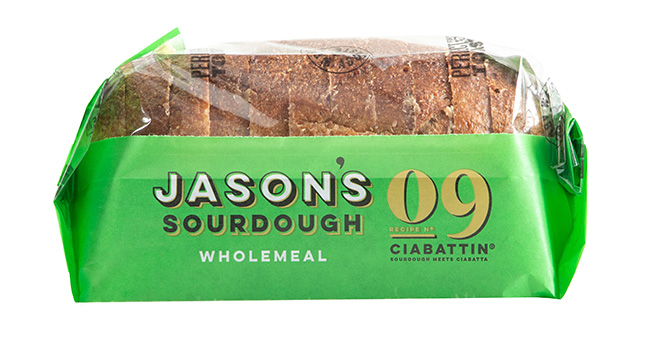
Jason’s Recipe No. 09 Wholemeal Sourdough Ciabattin is one of the strongest all-round options I found. It is made with 100% wholemeal flour and contains just five ingredients: wholemeal wheat flour, water, wheat gluten, fermented wheat flour and salt.
It provides 6.5g of fibre and 11.7g of protein per 100g, while its salt content is relatively low at 0.77g per 100g.
Why it stands out
- Wholemeal wheat flour is the main ingredient
- High in fibre
- Just five ingredients
- No added sugar
- No calcium propionate or emulsifiers
- No added vegetable oils
Things to consider
- More expensive than a basic supermarket wholemeal loaf
- Its ciabattin-style texture may not suit those looking for a traditional soft sliced loaf
Where to buy: Tesco, ASDA, Morrisons, Waitrose, Ocado. Availability may vary by store.
Sainsbury’s 800g Wholemeal Loaf
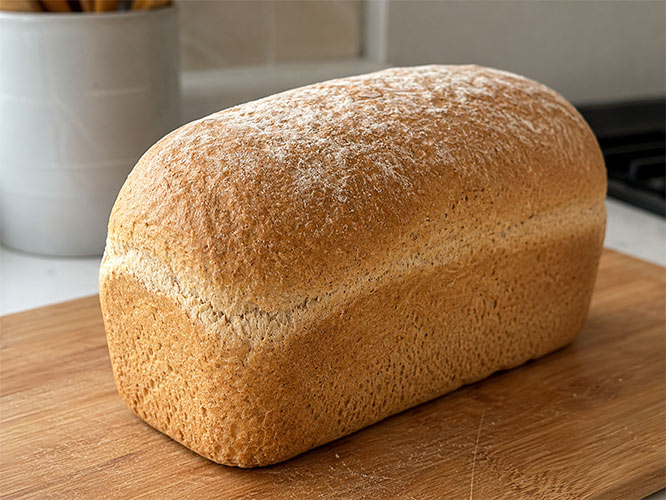
This is a wholemeal loaf from Sainsbury’s in-store bakery, rather than its standard packaged sliced bread. It may be sold unsliced, but you can ask bakery staff whether they can slice it for you.
It is made with wholemeal wheat flour and provides 6.6g of fibre, 11.1g of protein and 0.79g of salt per 100g. You can see the full nutrition information here.
Its ingredient list is fairly simple: wholemeal wheat flour, water, yeast, wheat gluten, rapeseed oil, salt and ascorbic acid. It contains no added sugar, calcium propionate or emulsifiers.
Why it stands out
- Made with wholemeal wheat flour
- High in fibre
- Relatively low in salt
- No added sugar
- No calcium propionate or emulsifiers
- A practical, reasonably priced bakery option
Things to consider
- Contains rapeseed oil
- Has a slightly longer ingredient list than Jason’s Wholemeal Ciabattin
- As a bakery-range loaf, it may not be available in every branch
Where to buy: Sainsbury’s. Availability may vary by store.
M&S Only 4 Ingredients Wholegrain Sliced Rye Bread
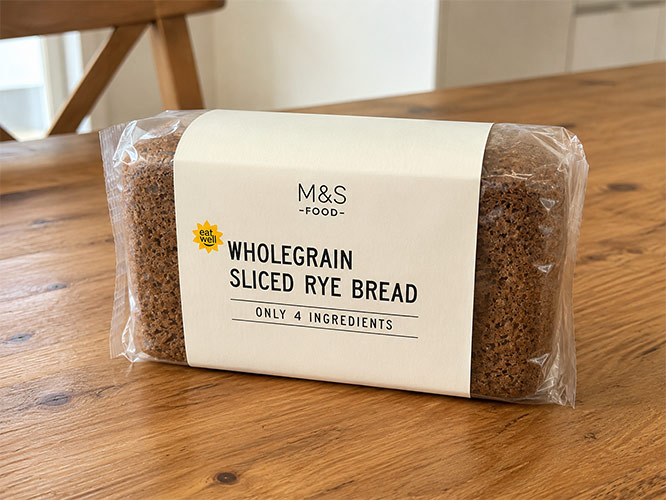
This sliced rye bread from M&S has one of the simplest ingredient lists I found. It is made with just wholegrain ground rye, water, salt and yeast, with no added sugar, oils, preservatives or emulsifiers.
It is particularly high in fibre, providing 10.2g per 100g. However, its salt content is higher than some of the other breads on this list at 1.2g per 100g, and it contains only 5g of protein per 100g. You can see the full ingredients and nutrition information on the M&S website.
Why it stands out
- Made entirely with wholegrain rye
- Very high in fibre
- Contains just four ingredients
- No added sugar
- No preservatives or emulsifiers
- No added oils
Things to consider
- Salt is on the higher side at 1.2g per 100g
- Lower in protein than most of the wheat-based breads on this list
- Much denser than a typical soft sliced loaf, so the texture may not suit everyone
- Once opened, it should be eaten within three days or frozen to help it last longer
Where to buy: M&S, Ocado. Availability may vary by store.
Bertinet Bakery Seeded Sourdough
Bertinet Bakery Seeded Sourdough is a sliced loaf made with wheat, emmer, barley and spelt flours, along with linseeds, millet, sunflower seeds and chia seeds. It is slowly fermented without commercial yeast and contains no added sugar, oils, additives or artificial preservatives.
It provides 6g of fibre, 9.7g of protein and 1g of salt per 100g. This means it just meets the threshold for a high-fibre food, although refined wheat flour is still the main ingredient. You can see the full ingredients and nutrition information on the Waitrose website.
Why it stands out
- High in fibre
- Contains several seeds and wholegrain flours
- Slowly fermented without commercial yeast
- No added sugar
- No added oils
- No preservatives, emulsifiers or other additives
Things to consider
- Refined wheat flour is the main ingredient
- Salt is slightly higher than in some of the wholemeal loaves on this list
- The loaf has a relatively short shelf life, so you may need to freeze some of it
Where to buy: Waitrose, Ocado. Availability may vary by store.
Jason’s Protein Sourdough Sunflower Seeded Bread

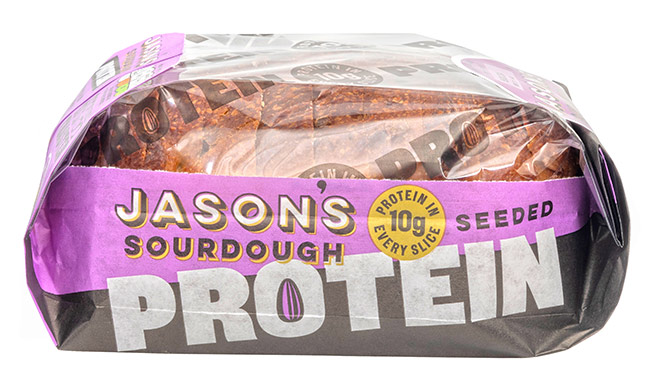
Jason’s Protein Sourdough is a particularly good option for people who want to add more protein to their diet. It contains wheat protein, pea protein and sunflower seeds, providing 20.3g of protein per 100g, or around 11.8g in an average slice.
This could make it useful for people who exercise, are trying to build muscle or want a higher-protein bread that may help them feel fuller. It is also a good source of fibre, providing 5.6g per 100g.
The bread is made with eight ingredients and contains no added sugar, sweeteners, oils, preservatives or emulsifiers. Its salt content is 0.98g per 100g. You can see the full ingredients and nutrition information on the Tesco website.
Why it stands out
- Exceptionally high in protein
- A source of fibre
- Its high protein content may make it more filling than a typical white loaf
- Contains sunflower seeds and pea protein
- No added sugar or sweeteners
- No added oils
- No preservatives or emulsifiers
Things to consider
- Refined wheat flour is the main ingredient
- It is not made mainly with wholemeal flour
- More expensive than an ordinary supermarket loaf
Where to buy: Tesco, ASDA, Morrisons, Waitrose, Ocado. Availability may vary by store.
Crosta & Mollica Wholeblend Midi Piadina

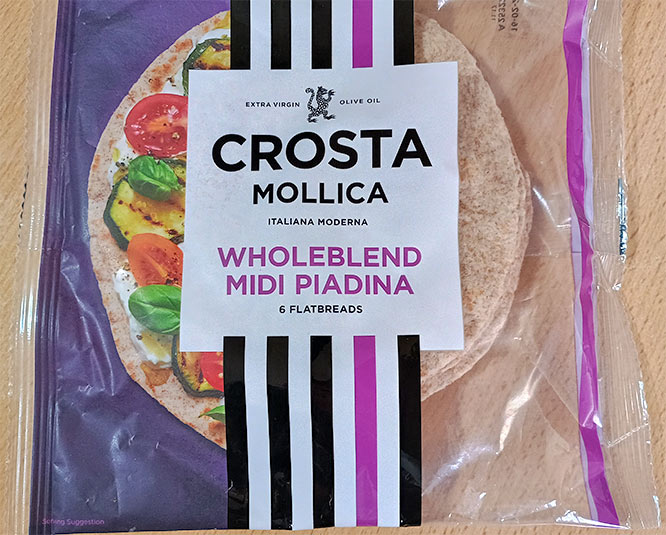
Crosta & Mollica Wholeblend Midi Piadina is one of the simplest packaged flatbreads I found. It is made with just five ingredients: wholemeal wheat flour, wheat flour, water, extra virgin olive oil and salt. There is no added sugar, calcium propionate, emulsifiers or refined vegetable oils.
Wholemeal flour makes up around one-third of the recipe, so this is not as nutritious as a fully wholemeal bread. It provides 3.8g of fibre, 8.1g of protein and 1.5g of salt per 100g. However, each small flatbread contains a more reasonable 0.6g of salt. You can see the full ingredients and nutrition information on the Tesco website.
Why it stands out
- Made with just five ingredients
- Contains extra virgin olive oil
- A source of fibre
- No added sugar
- No calcium propionate or emulsifiers
- No refined sunflower, rapeseed or palm oil
- Smaller than many wraps and flatbreads, which can help with portion size
Things to consider
- Only around one-third of the flour is wholemeal
- White wheat flour makes up much of the remaining flour
- Not high in fibre
- Salt is on the higher side at 1.5g per 100g, although one flatbread contains 0.6g
- Online listings differ slightly on the exact percentages of wholemeal flour and olive oil, so check the current packet
Where to buy: Tesco, ASDA. Availability may vary by store.
Deli Kitchen Sourdough Wheat & Rye Flatbreads
Deli Kitchen Sourdough Wheat & Rye Flatbreads are made with wheat flour, rye flour, wheat fibre, sourdough culture and 5.7% extra virgin olive oil. They contain no added sugar, artificial preservatives, emulsifiers, palm oil or refined vegetable oils.
They provide 5.3g of fibre and 8.4g of protein per 100g, making them a good source of fibre. Their salt content is reasonable at 0.99g per 100g, although each large flatbread contains just over 1g of salt because of its size. You can see the full ingredients and nutrition information on the Tesco website.
Why they stand out
- A good source of fibre
- Made with extra virgin olive oil
- Contains rye flour and sourdough culture
- No added sugar
- No artificial preservatives or emulsifiers
- No palm, rapeseed or sunflower oil
- Suitable for freezing
Things to consider
- Refined wheat flour is the main ingredient
- Rye flour makes up only 9.8% of the recipe
- One large flatbread contains 1.03g of salt
- The ingredient list is longer than the Crosta & Mollica piadina
Where to buy: Tesco, Sainsbury’s, Ocado. Availability may vary by store.
Taboon Bakery Wholemeal Pitta
Taboon Bakery Wholemeal Pittas are made with a blend of white and wholemeal flour. They contain no calcium propionate, emulsifiers or added oils, making them one of the simpler proper pitta breads I found.
They provide 4.5g of fibre, 10.7g of protein and 0.94g of salt per 100g. They do contain added sugar, and the nutrition panel lists 4.1g of total sugars per 100g.
You can see the full ingredients and nutrition information on the Ocado website.
Why they stand out
- Made with 50% wholemeal flour
- A source of fibre
- Good protein content
- No calcium propionate
- No emulsifiers
- No added oils
- Can be frozen
Things to consider
- Half of the flour is refined white flour
- Contains added sugar
- Not high in fibre
- Mainly available online or from selected stores
Where to buy: Ocado, Costco, Budgens, Just Kosher, selected independent shops. Availability may vary by location.
If none of these breads is available where you shop, look for a wholemeal loaf with at least 6g of fibre per 100g, around 1g of salt per 100g or less, and no added sugar where possible. You may still need to compromise on ingredients such as calcium propionate, emulsifiers or rapeseed oil, but a high-fibre wholemeal bread can still be a sensible everyday choice.
What makes one bread healthier than another?
I looked at the flour, fibre, salt, added sugar, oils, preservatives and overall ingredient list. No packaged bread was perfect in every area, so I focused on finding the best balance.
Start with the flour
For an everyday loaf, bread made entirely with wholemeal or wholegrain flour is usually the best place to start.
In the UK, bread can only be described as wholemeal when all the flour used is wholemeal. Words such as brown, malted, multigrain and seeded do not mean the same thing. A dark or seeded loaf may still be made mainly with refined white flour. Read the UK rules on wholemeal bread here.
You can learn more in my comparison of whole grain bread and white bread.
Look at the fibre
Bread containing at least 3g of fibre per 100g is a source of fibre, while 6g or more is classed as high in fibre. See the official nutrition-claim thresholds here.
I would ideally look for at least 6g per 100g, although a bread with 4–5g can still be a reasonable choice. Fibre helps with fullness, regular digestion and gut health.
Read more about the benefits in Is Whole Grain Bread Good for You?
Compare the salt
For the breads in this guide, I used the following as a practical comparison:
- Below 0.8g per 100g: particularly good
- Around 0.8–1g: reasonable
- Above 1g: worth noting
- 1.5g: at the upper end of the medium range
- More than 1.5g: officially high
The NHS defines more than 1.5g of salt per 100g as high. See the NHS food-label guidance here.
Check the amount per portion too. A small flatbread may contain less salt overall than a much larger one, even when its figure per 100g is higher.
Check for added sugar
I prefer bread without added sugar where possible. Check the ingredients for sugar, glucose syrup, dextrose, honey or molasses.
A small amount does not automatically make a bread unhealthy, but it is still a disadvantage when a similar sugar-free option is available.
Consider preservatives and emulsifiers
I prefer bread without calcium propionate, also known as E282, and without unnecessary emulsifiers. Calcium propionate is authorised for use in Great Britain, but I would still choose a preservative-free loaf when a similarly nutritious option is available. See its current authorisation here.
Preservative-free bread naturally has a shorter shelf life, so I freeze any slices I will not use quickly.
If your local shop only offers a high-fibre wholemeal loaf containing calcium propionate, it can still be a reasonable choice. You can read more in my guide to calcium propionate in bread.
Look at the oils
I generally prefer bread with no added oil. Where oil is used, extra virgin olive oil is my preferred option.
Rapeseed, sunflower and palm oil are ingredients I take into account, but a small amount does not necessarily outweigh an otherwise strong nutritional profile. A high-fibre wholemeal bread containing a little rapeseed oil may still be a better everyday choice than a low-fibre white loaf.
Look at the bread as a whole
One positive feature does not tell you everything. A simple rye bread may be relatively salty, a seeded loaf may be mostly white flour, and a high-fibre wholemeal bread may contain preservatives.
There is no perfect packaged bread. Compare the flour, fibre, salt and ingredients, then choose the best option available where you shop.
Frequently asked questions
Is wholemeal bread always better than white bread?
Wholemeal bread is usually the better everyday choice because it generally contains more fibre. However, you should still check the salt, added sugar and ingredients, as not every wholemeal loaf is equally good.
If you prefer white bread, the NHS recommends choosing a higher-fibre option.
Is sourdough healthier than ordinary bread?
Not automatically. A white sourdough can be lower in fibre and higher in salt than a good wholemeal loaf, so the flour and nutrition label still matter.
Some research suggests sourdough fermentation may improve blood sugar response or digestive comfort, particularly when whole wheat flour is used. However, results vary depending on the ingredients and fermentation process.
What is the best option if I only eat white bread?
Look for a higher-fibre white bread or one made with a mixture of white and wholemeal flour. Ideally, choose one with around 1g of salt per 100g or less, little or no added sugar and a fairly simple ingredient list.
White bread still provides vitamins and minerals, but it normally contains less fibre than wholemeal or wholegrain bread.
Is supermarket bread classed as ultra-processed?
Some supermarket breads are classed as ultra-processed because they contain emulsifiers, preservatives and other ingredients used mainly in industrial food production. Simpler breads made mainly from flour, water, yeast or sourdough starter and salt may not be.
There is no single agreed definition of ultra-processed food. The Food Standards Agency also points out that even a nutritious shop-bought wholegrain loaf may fall into this category, so it is still important to look at fibre, salt, sugar and the overall ingredients.
Should I avoid calcium propionate in bread?
Calcium propionate is an approved preservative and safety assessments have not found a concern at authorised levels.
However, I personally prefer bread without it when a similarly nutritious alternative is available. If your only realistic option is a high-fibre wholemeal loaf containing calcium propionate, it can still be a reasonable choice. You can read more in my guide to calcium propionate in bread.
Is homemade bread healthier?
It can be, because you control the flour, salt, sugar, oils and additives. A homemade wholemeal loaf made with a short list of ingredients is likely to be a good option.
However, homemade bread is not automatically healthier. A loaf made mainly with white flour and plenty of salt or sugar can still be less nutritious than a good supermarket wholemeal bread.
For most people, the best bread is simply the most nutritious option they can find, afford and enjoy regularly.


