


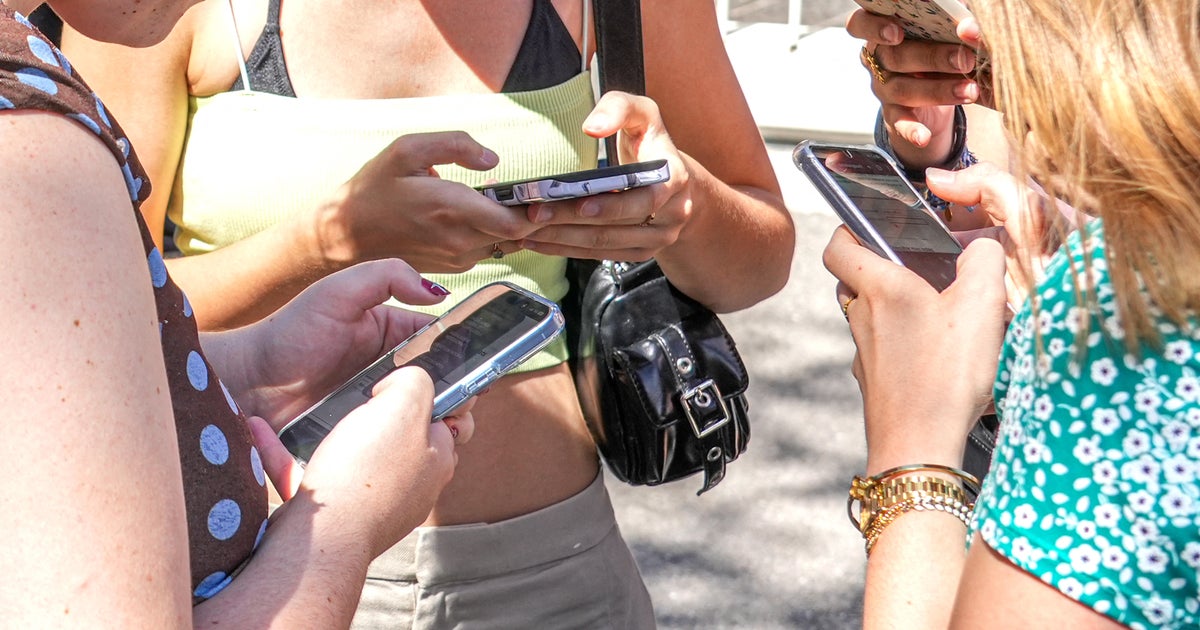
France has become the first country in the European Union to ban social media for children under the age of 15, after its parliament overwhelmingly approved landmark legislation by 279 votes to 81.
Under the new law, children under 15 will be prevented from creating new social media accounts on platforms such as TikTok and Snapchat from September, while existing accounts will be blocked from January 2027, according to the legislation.
The law will also ban students from having phones in high schools from next year, and require social platforms to introduce age verification checks. Students were already prohibited from having phones in French elementary and middle schools.
“France is leading the way in Europe when it comes to protecting our children and teenagers,” President Emmanuel Macron said, hailing the legislation’s passage as a landmark moment.
Earlier this year, France’s public health watchdog concluded that social media had harmful effects on teenagers’ mental health, especially girls.
Nicolas Guyonnet/Hans Lucas/AFP/Getty 
Macron has made online child safety a defining issue of the final years of his presidency, and the ban will likely be one of the last major domestic reforms he ushers through. Macron will mark a decade in office next year, and he cannot run again in April’s national election as, like the U.S., France has a two consecutive term limit for its presidents.
Will it work?
Critics argue that the biggest challenge will be enforcement. Many question whether age-verification technology is robust enough to prevent children from accessing social media.
Some teens may bypass the restrictions by using VPNs, fake dates of birth or accounts created by older friends or family members.
Privacy campaigners have also warned that stronger age checks may require users to hand over more personal information, while others argue the ban could simply push young people toward less regulated platforms rather than reducing the amount of time they spend online.
“The global rollout of social media bans represents a serious threat to the freedom and privacy of millions of internet users across the world. Requiring users to upload sensitive ID or biometric information to access social media does not keep children safe, but does introduce serious cybersecurity and privacy risks for all users of all ages,” Maya Thomas, a legal and policy officer at the British organization Big Brother Watch, told CBS News.
“We have already seen in Australia that a social media ban can easily be circumvented, with some children even bypassing age gates by drawing on fake moustaches. Governments wishing to tackle the harmful business practices of social media companies must do so by regulating the companies directly, not by imposing restrictions upon their users,” Thomas said.
Australia’s experience has fueled concerns about the practicality of blanket bans.
Australia became the first country to impose such a measure when it banned under-16s from social media at the end of 2025. But around 70% of parents polled by Australia’s internet regulator in March said their children remained on the platforms, having found ways to bypass age-gating systems.
The French legislation includes exemptions for educational platforms and online encyclopedias.
Wider trends and “digital sovereignty”
The social media ban aligns with a wider push by France under Macron, along with some EU partners, for “digital sovereignty.” The idea is that Europe should become less dependent on American and Chinese technology companies, while taking a tougher regulatory approach to the digital economy and encouraging European alternatives.
In January, Macron said in a post on X that French “children’s brains are not for sale. Neither to American platforms nor to Chinese networks.”
The strategy extends beyond social media. France and Germany recently announced plans to develop an alternative to military software supplied by the U.S. firm Palantir, while France’s domestic intelligence service ended its contract with the American tech firm earlier this year.
And while France is the first EU member state to introduce such a ban, it is unlikely to be the last.
“It is clear we need age-appropriate restrictions to platforms,” European Commission President Ursula von der Leyen said last week.
Last month, the U.K. also announced plans to introduce a ban on social media accounts for under-16s from January 2027.
But looming bans aside, the parliamentary vote makes France just the second country in the world to introduce a nationwide social media ban for children, following Australia.
As more than a dozen other countries, including Canada, Denmark and Malaysia, weigh up their own legislation to restrict children’s access to social media, France may provide another early test case, with governments across the world watching closely to see if the outright ban can achieve its intended aims.
