



To fix color banding in 10-bit video exports, guarantee you use high-quality export settings like high bitrate, lossless codecs, and appropriate color spaces such as Rec. 2020. Apply post-processing techniques like adding subtle noise, dithering, or gentle blurring to soften harsh shifts. Proper color grading with smooth gradients and careful adjustments can also help. Keep exploring these strategies to achieve seamless, vibrant videos without visible bands.
Key Takeaways
- Export your video using high bitrate, 10-bit color depth, and formats like ProRes or HEVC to preserve smooth gradients.
- Apply subtle dithering or grain to the footage during post-processing to mask visible banding.
- Use noise reduction and gentle blurring to minimize pixel-level inconsistencies that cause banding.
- Ensure your color grading employs gradual transitions with high-quality LUTs and subtle hue shifts.
- Review your export on calibrated displays and avoid aggressive compression to maintain color fidelity and minimize banding.
Understanding the Causes of Color Banding in 10-Bit Videos

Color banding in 10-bit videos occurs when smooth gradients break into visible steps or bands instead of seamless shifts. This usually happens because the video contains insufficient color information in certain areas, making it hard for your display to progress smoothly between shades. Even though 10-bit color depth provides more shades, other factors can cause banding, like compression artifacts or limited color grading. When you apply heavy color adjustments or gradients without proper planning, the subtle differences between shades can get lost, creating those distracting bands. Additionally, poor encoding or exporting processes can reduce the effective color information, making banding more noticeable. To minimize this, understanding the causes helps you recognize the importance of maintaining enough color data throughout your editing and export workflow, and choosing a best heat pump can be an analogy for selecting the right tools to ensure quality.
Choosing the Right Export Settings to Minimize Banding

Selecting the appropriate export settings is crucial for reducing banding in your 10-bit videos. First, choose a high bitrate to guarantee sufficient data for smooth color gradients. Lower bitrates compress color information, making banding more likely. Opt for a format that supports 10-bit depth, like ProRes or HEVC (H.265), to preserve color detail. Use a color space such as Rec. 2020 or Rec. 2100, which offers broader color ranges, minimizing visible transitions. Keep the chroma subsampling at 4:2:2 or 4:4:4 to retain color information. Avoid overly aggressive compression settings and reduce the output resolution only when necessary. These choices help maintain color fidelity and prevent banding artifacts. Carefully selecting your export parameters guarantees your video’s color gradient remains smooth and professional.
Using Post-Processing Techniques to Reduce Banding Artifacts

When banding artifacts appear in your footage, post-processing techniques can help smooth out those harsh shifts. You can apply tools like noise reduction, dithering, or subtle blurring to break up the harsh color progressions. Dithering adds small random noise, which tricks the eye into seeing a smoother gradient. Noise reduction can also help by reducing pixel-level inconsistencies. Here’s how different techniques impact your footage:
| Technique | Effect | Emotion |
|---|---|---|
| Dithering | Creates smoother gradients | Restores visual harmony |
| Noise Reduction | Softens harsh transitions | Eases frustration |
| Subtle Blur | Blends color shifts | Calms the viewer |
| Grain Addition | Adds natural texture | Reassures authenticity |
| Color Dithering | Enhances gradient depth | Invites closer inspection |
Implementing Effective Color Grading Strategies for Smooth Gradients
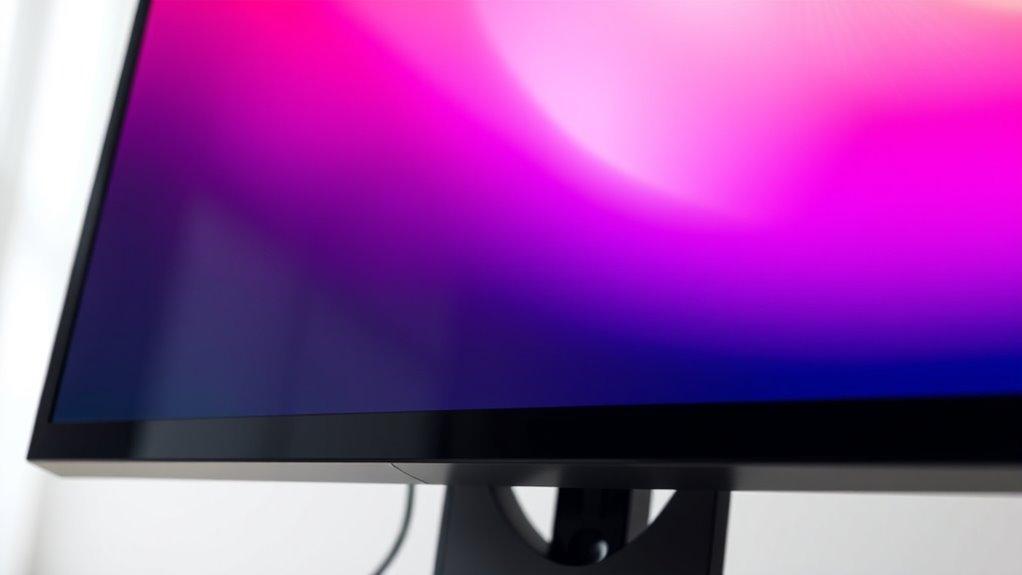
After applying post-processing techniques to reduce banding, your next step is to refine the color grading process to achieve even smoother gradients. Focus on balancing your color transitions by carefully adjusting midtones and highlights. Use soft, gradual changes instead of abrupt shifts to prevent visible banding. To maximize smoothness, consider these strategies:
Refine color grading with subtle, gradual adjustments to ensure smooth, professional gradients and minimize banding.
- Use a high-quality LUT or grading preset to maintain natural transitions.
- Apply subtle hue shifts to ensure seamless color blending.
- Increase the bit-depth during grading to preserve subtle gradations.
- Utilize masks and selective adjustments to refine problematic areas without overcorrecting.
- Incorporate glycolic acid products into your skincare routine to improve skin texture, which can contribute to more even lighting and color rendering in your footage.
Implementing these techniques helps create fluid gradients, reducing the likelihood of banding and producing a more professional, polished look.
Finalizing Your Video to Preserve Color Fidelity and Avoid Banding

To preserve color fidelity and prevent banding in your final export, you need to pay careful attention to your export settings and color management workflow. First, choose the highest bit depth available, such as 10-bit or higher, to retain smooth gradients. Use a color space that matches your project’s workflow, like Rec. 2020 or Adobe RGB, ensuring consistent color reproduction. Avoid compression settings that reduce bit depth or introduce artifacts; opt for visually lossless codecs when possible. Before exporting, review your footage in a calibrated monitor to confirm color accuracy. Additionally, enable dithering if available, to subtly blend any remaining color transitions. Hack’n Jill highlights how cybersecurity vulnerabilities can be exacerbated during outages, emphasizing the importance of robust digital security measures. By meticulously managing these settings, you’ll maximize color fidelity and minimize banding in your final video.
Frequently Asked Questions
How Does Monitor Calibration Affect Color Banding in 10-Bit Videos?
Monitor calibration directly impacts how you perceive color gradations in 10-bit videos. When your monitor isn’t properly calibrated, subtle color transitions may appear as banding, making the image look less smooth. By calibrating your display correctly, you guarantee accurate color representation and smooth gradients. This helps you identify and avoid banding issues, ultimately improving your editing and viewing experience. Proper calibration is essential for true color fidelity in your videos.
Can Hardware Limitations Cause Color Banding Issues During Playback?
Hardware limitations can definitely cause color banding issues during playback. If your graphics card or display isn’t capable of handling 10-bit color depth properly, you might see banding or posterization even if your video is encoded correctly. Low-quality monitors or older GPUs often lack the necessary processing power or color accuracy. Upgrading your hardware or ensuring your system supports full 10-bit playback can help reduce these issues.
What Software Tools Are Best for Detecting Subtle Banding Artifacts?
You want to identify subtle banding artifacts, so you need software that highlights these issues clearly. Tools like DaVinci Resolve and Adobe Premiere Pro are excellent choices—they let you analyze your footage frame by frame, with advanced color grading and zoom features. Additionally, specialized plugins like Neat Video can help detect subtle imperfections. Use these tools to scrutinize your video carefully and pinpoint areas needing correction.
Does Compression During Upload Increase the Risk of Color Banding?
Compression during upload can indeed increase the risk of color banding. When you compress a video, you reduce its file size, which often involves lowering bit depth and introducing more compression artifacts. This process can strip away subtle color gradients, making banding more noticeable. To minimize this, choose high-quality codecs, avoid excessive compression, and consider applying dithering or color grading techniques before uploading.
How Do Different Color Spaces Impact the Visibility of Banding?
Different color spaces influence how visible banding appears in your videos. For instance, using a wider color space like BT.2020 can reduce banding because it offers more color information, making gradients smoother. Conversely, smaller color spaces like Rec. 709 may make banding more noticeable, especially in subtle color transitions. To minimize this, choose a wider color space and guarantee your video editing workflow preserves color accuracy throughout the process.
Conclusion
By understanding the roots of color banding and carefully applying the right settings and techniques, you can transform your videos from harsh, choppy visuals into smooth, stunning masterpieces. Think of it as polishing a gemstone—you reveal its true brilliance by removing the flaws. With patience and the right tools, you’ll craft videos that flow seamlessly, mesmerizing your audience’s eyes and hearts, turning every gradient into a gentle wave of color that leaves a lasting impression.
