


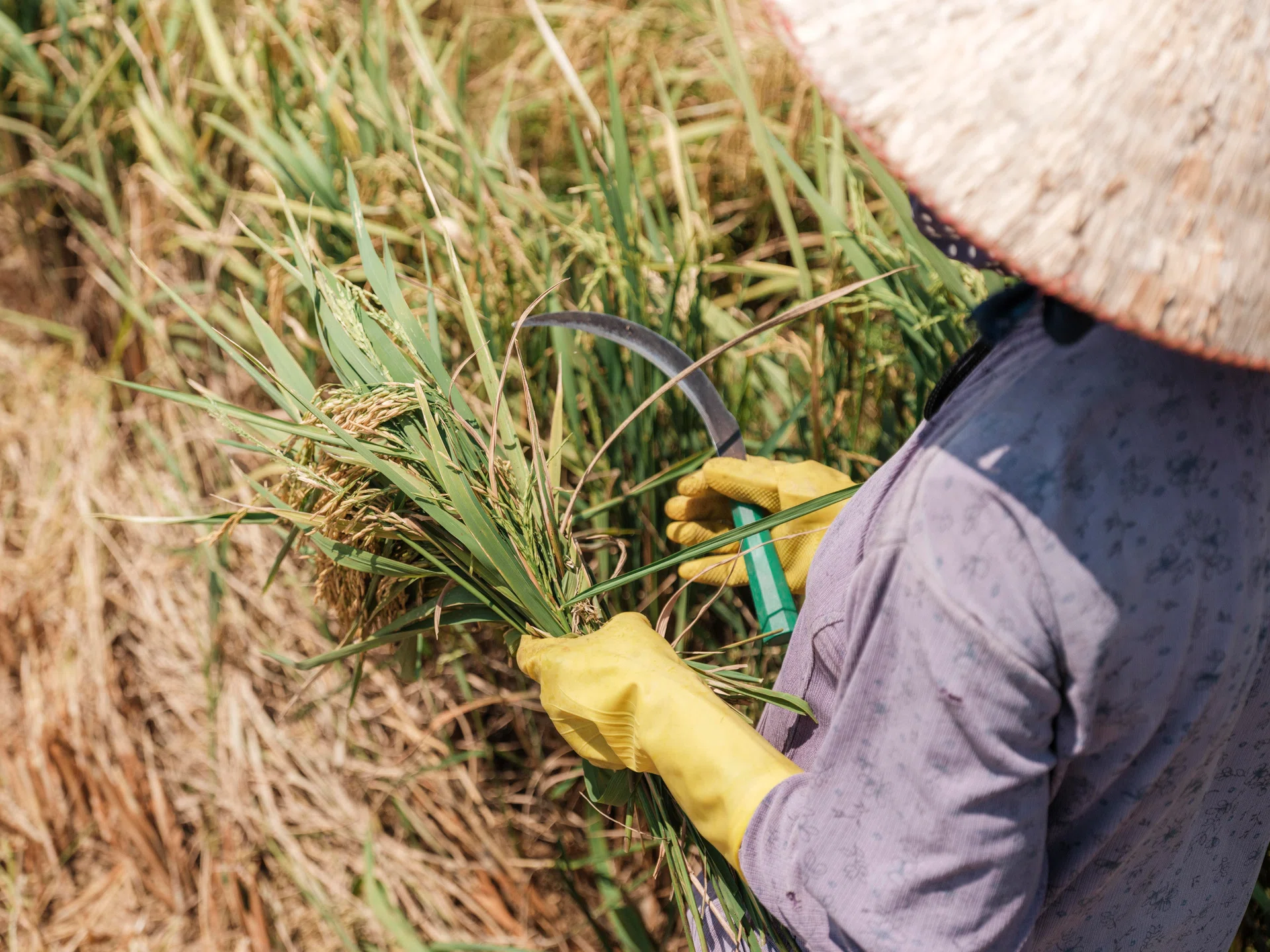
[SINGAPORE] A dry spell is sweeping across Asia’s rice fields, dealing another blow to farmers grappling with steep fuel and fertiliser prices triggered by the war in Iran.
From Vietnam to the Philippines, production of the region’s most important food staple is under threat as a strengthening El Nino prolongs dry weather. That includes India, the world’s top grower and exporter, where the crucial monsoon rains that began in June are running about a sixth lower than normal so far.
Lower harvests risk driving up food prices, fanning inflation at a time when economies are coping with the fallout from the war. Thailand rice prices, an Asian benchmark, recently touched an 18-month high, and the most-actively traded futures in Chicago are up about 40 per cent this year as supply concerns intensify.
“I’m so worried,” farmer Nguyen Van Trung said at the edge of his 1 hectare (ha) rice paddy in central Vietnam. “I’ve already applied fertiliser three times, but the rice just won’t grow because there’s not enough water.”
Two months of drought have already withered the water-intensive crop, yellowing fields in parts of central Vietnam. Rain finally came this month, but some farmers say it’s too little and too late.
“Rice farming is no longer profitable,” said the 60-year-old farmer, who has cultivated the grain in Quang Tri province with his family since he was a child. Fertiliser, plowing and harvesting have all become more expensive this year, said Trung, who has to work shifts on a construction site to make ends meet.
For rice growers, the drought is more than just a spell of bad weather. With the war driving costs higher, many are unable to afford the extra irrigation and investment needed to protect their crops as they enter a critical growth phase.
The combination of a drier monsoon, higher groundwater pumping costs and lower fertiliser use poses the biggest risk to this year’s harvest, according to the International Rice Research Institute (IRRI).
“Individually, many of these shocks may be manageable,” said Alisher Mirzabaev, a senior scientist at the institute. But collectively, they threaten rice production, he added.
SEE ALSO
Declining stockpiles
Ample global inventories have capped prices until now. But, that support may be shifting. The US Department of Agriculture has trimmed its estimate for season-ending stockpiles and expects production this season to decline for the first time in 11 years.
In central Luzon, the Philippines’ largest and most populous island, late June typically heralds the beginning of the rice-planting season. This year, however, was different.
Joe Pangalilingan, who employs five people on his 12-ha rice farm, was forced to push back sowing due to a shortage of water to flood the fields. “We are already experiencing El Nino,” he said. “Farmers didn’t know how to prepare for this kind of calamity.”
More expensive fuel and fertiliser are magnifying the challenges. While global fertiliser prices have eased recently, farmers are yet to benefit.
Iya Abrazado, who is part of a local cooperative that farms 330 ha on Luzon, said she resorted to “dry-seeding” her field because she could not afford diesel for the irrigation pump. The method entails planting rice directly in non-flooded farms, instead of the usual two-step transplanting of seedlings that consumes more water.
Abrazado is also using less fertiliser and turning to cheaper organic nutrients.
Tougher times ahead
Hotter and drier conditions are forecast to spread across Asia as El Nino intensifies over the next few months, threatening crops in some of the world’s top rice-growing regions.
El Nino typically weakens the summer monsoon in most of South Asia, threatening rain-fed crops such as rice and corn. Drought risks stretch from Pakistan and India through mainland South-east Asia and eastward to Indonesia and the Philippines, the United Nations’ Food and Agriculture Organization (FAO) said in late June.
Governments are concerned about shortages that may crimp exports. Vietnam has warned that a severe El Nino may affect rice crops over 350,000 ha. The Philippines and Malaysia are also bracing for drops in output in the coming year.
In India, rice sowing so far this season is about 1 per cent lower than last year, according to farm ministry data, as key growing states are facing a rainfall deficit as of July, the main planting month.
Rice production in rain-fed areas may be lower because of the monsoon deficit while farmers in irrigated states may have to draw more groundwater to protect their crops, said Siraj Hussain, India’s former farm secretary. Still, overall output is unlikely to drop by more than 5 per cent, he added.
In Indonesia, a prolonged dry spell may stoke food inflation.
“As concerns over supply intensify and exporters face rising costs, the balance of risks increasingly points toward firmer prices over the coming 12 to 18 months,” said Bruno Whittaker, an analyst at market intelligence firm Expana.
Cascading effects
The threats, however, extend deeper. In much of developing Asia, where tens of millions of smallholders operate on razor-thin margins, each climate shock arrives with fewer financial buffers and higher risks to livelihoods and food security.
“A farmer might first lose crops, then livestock, and with that their entire livelihood,” said Jorge Alvar-Beltrán, FAO’s natural resources officer. “With cascading impacts of multiple crises already evident, there is an urgent need to act early.”
Aid agencies warn that this year’s El Nino threat is being amplified by record global temperatures and growing geopolitical instability. Even a moderate drought can prove devastating in low and middle-income countries, or those facing unrest and chronic hunger.
Conflict-battered Myanmar is among the countries most exposed to catastrophic weather events. FAO and World Food Programme have identified it as a hunger hotspot, where climate extremes are compounding an already severe humanitarian crisis.
With a lot at stake, farmers, scientists and governments are rethinking how to grow the region’s most important staple crop in a more challenging environment.
IRRI is promoting climate-resilient rice varieties. Agritech startup Rize is scaling up techniques that can reduce water consumption by as much as 30 per cent, said CEO Dhruv Sawhney.
Still, many farmers are on their own.
Back in Vietnam’s Mekong Delta, which produces more than half of the country’s rice, rising costs have forced farmers like 50-year-old Tran Thanh Vu to cut production or switch to crops such as coconut.
“I just haven’t got enough money to invest yet,” said Vu. “We are more worried about price fluctuations than climate change.” BLOOMBERG
