



The U.S. economy could be on the upswing even if tariffs and stubborn inflation continue to weigh on growth, according to a new analysis.
The National Association for Business Economics (NABE) said Monday it expects the nation’s gross domestic product — a measure of the total value of goods and services — to rise 1.8% in 2025, up from the group’s previous estimate in June of 1.3%.
The survey, which was conducted from Sept. 17-25, consulted 40 economists on their forecasts for labor growth, inflation and other key metrics for the remainder of the year and into 2026. NABE also expects the economy to expand at a faster pace in 2026, at 1.7%, higher than its June forecast of 1.4%.
The report is the latest signal that economic growth continues to hold up despite rising inflation and a recent slowdown in the labor market. After economic activity shrank in the first three months of 2025, growth has accelerated over the rest of the year, EY-Parthenon chief economist Gregory Daco, vice president of NABE, told CBS News. The outlook for business investment in particular has improved, he noted.
The economy could get a further boost this year from the Federal Reserve. NABE expects Fed officials, who trimmed their benchmark rate in September for the first time since 2024, to lower borrowing costs by another quarter of a percentage point by year-end and by a total of three-quarters of percentage point in 2026.
Pain points remain
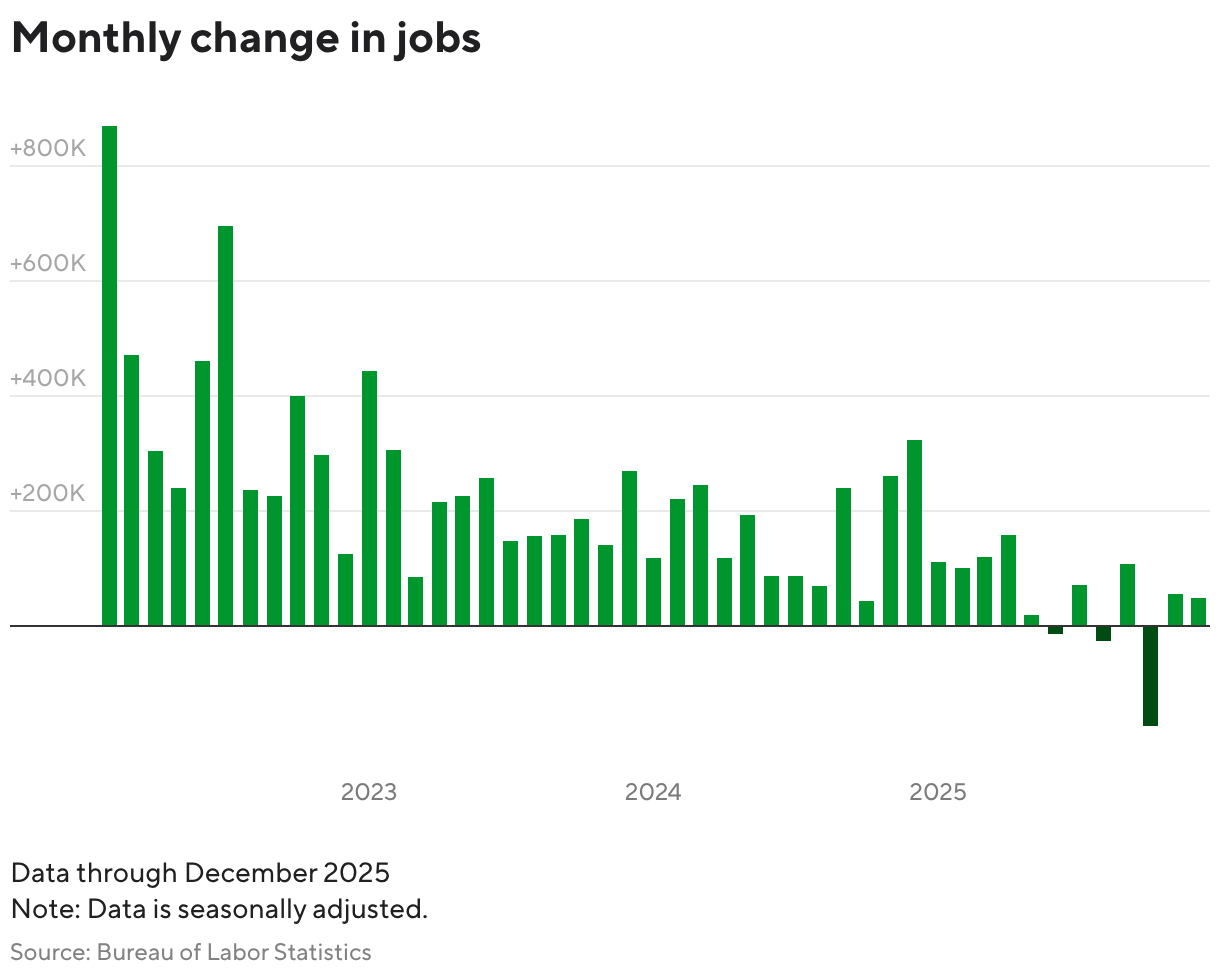
While the economy has performed better than many experts predicted earlier this year, there are still signs of weakness. Government data indicates that job growth has deteriorated since the first half of the year.
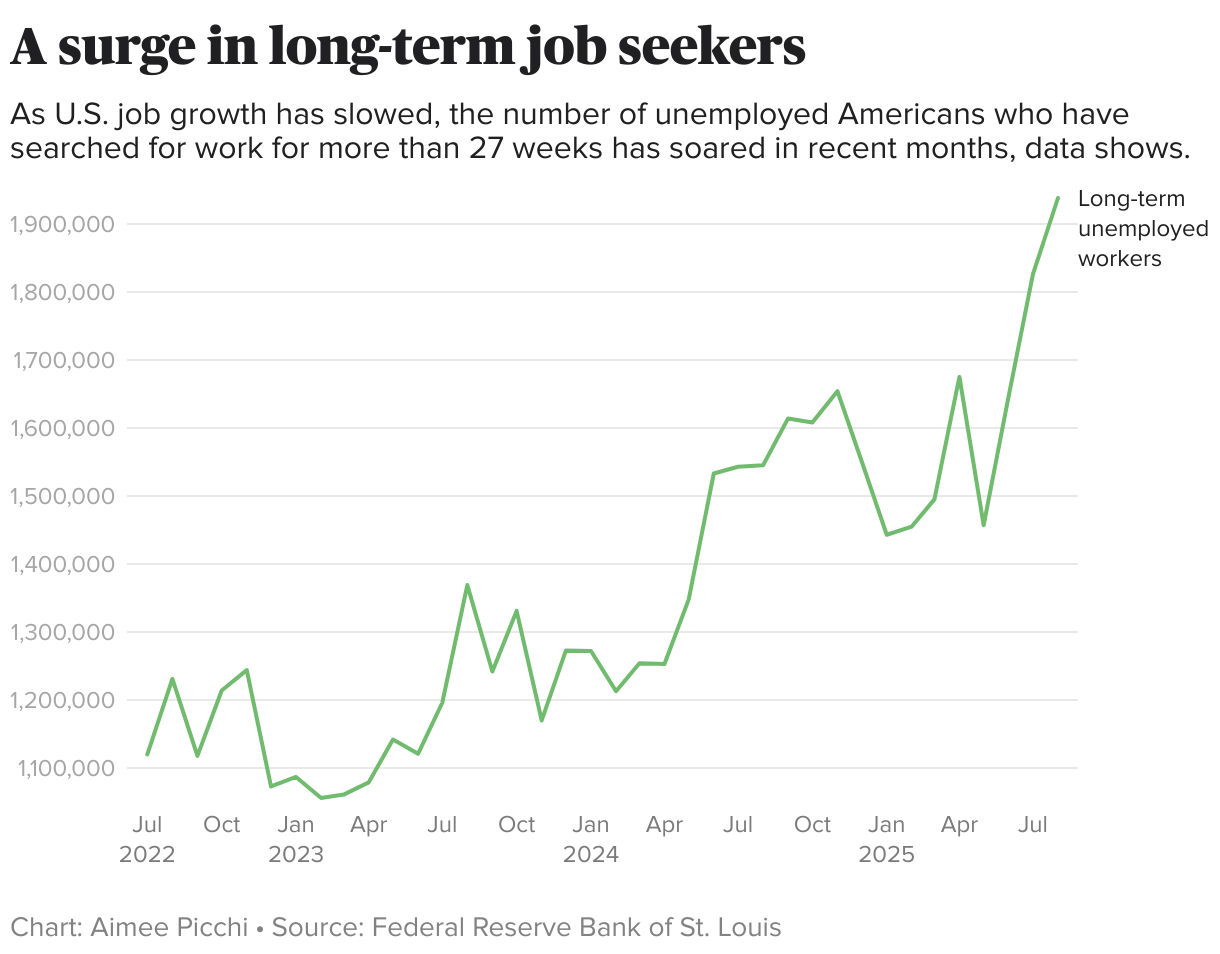
As hiring cools, meanwhile, the percentage of long-term job seekers — people unemployed for 27 weeks or longer — has risen to 26% of the total unemployed population, the highest in more than three years, labor data shows.
Layoffs are also climbing. Through September, employers this year have cut nearly 950,000 jobs, the largest number of layoffs since 2020, according to outplacement firm Challenger, Gray & Christmas.
Looking ahead, NABE expects the job market to remain fragile. Economists predict average monthly payroll gains of 60,000 for the rest the year, down from the 87,000 the group forecasted in June. From January to August, employers added an average of around 75,000 jobs per month, according to government data.
NABE projects that the nation’s unemployment rate, 4.3 % as of August, will rise to 4.5% in 2026.
Another lingering pain point for the economy is inflation, which remains above the Fed’s 2% annual target. NABE expects inflation as measured by the Personal Consumption Expenditure index — the Fed’s preferred measure of inflation — to rise at an annualized rate of 3% over the rest of 2025.
Nearly all of those surveyed — 95% — expect U.S. tariffs to drive up consumer prices over the rest of the year, according to NABE, although the group now expects stepped-up duties on imports to have less of an inflationary impact than it previously predicted. As a result, inflation is projected to cool to 2.5% by the end of 2026, according to the panel of economists.
A recession is unlikely, according to NABE. Most of the economists polled by the group put the odds of a slump in the next 12 months at between 20% and less than 40%.
