


After layoffs ripped through Doom developer id Software in July, lead services programmer Chris Hays has taken aim at Xbox: “They fundamentally don’t understand art.”
Hays, who is currently employed at the studio behind first-person shooter classics like Doom Eternal and has been with the team since 2010, unloaded on the recent decision to cut 136 staff during a recent conversation with Andre Peschke on Auf ein Bier. He didn’t mince words, to put it lightly.
“It’s hard to make a game that is AAA, that’s like we’ve done before, with half the people. And by hard, I mean impossible,” Hays said. “It’s hard to make a game when there are entire departments that are gutted that you need, entire disciplines that are gone.
“So, if they’ve got some kind of new plan for how this is going to work, that hasn’t been told; we don’t know what that is. The reassurances that we’re still the same id and we’re still going to do things, well, first of all, we’re not the same id. We’re half the same id. id was the people. What made us special was the people and the relationships we have.”
The “reassurances” Hays mentioned at least partially refer to some of the messages that have emerged in the fallout of last month’s layoffs. id issued a statement to IGN July 10 that thanked fans for their support, acknowledging that, while the studio had been “impacted,” the restructuring left it at “about the same size we were when making Doom 2016.” It added, “We still have the crew we need to build the games and tech we’re known for.”
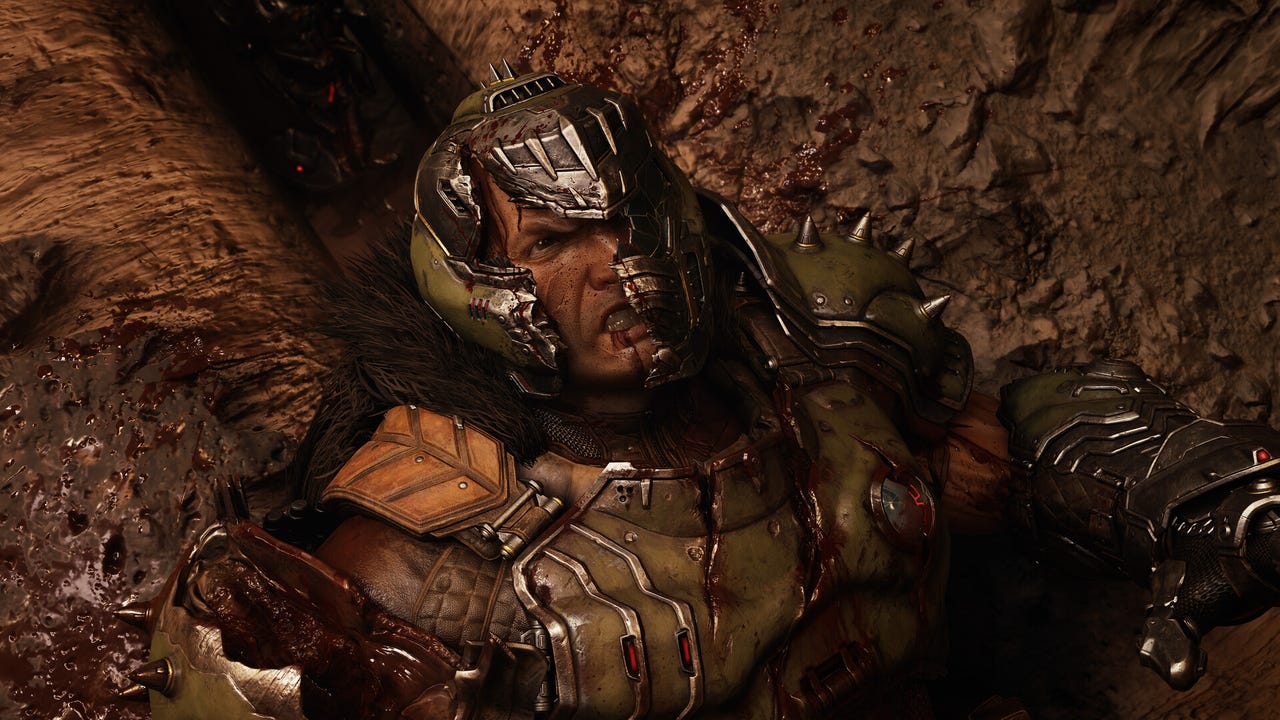
id reclaimed its title as a leading FPS studio with its 2016 Doom game and went on to keep its crown with 2020’s Doom Eternal and 2025’s Doom: The Dark Ages. Hays said id’s overseers at Microsoft and Xbox are trying to minimize the “unrest.”
“Studio management is given talking points on things that are allowed to be said and what is not allowed to be said,” he added. “It feels like it is, instead, more reassurances. They don’t want more people to jump ship and say, ‘Oh, there’s no more future in id, so we’re all going to leave,’ and then there’s no one left. They don’t want unrest. At the end of the day, most of it was just trying to tell us that, ‘Oh, no, everything is fine. Things will be OK.'”
Hays said the reality is that id now houses “less” than the number of staff that worked on Doom 2016. He noted that fans will certainly have their preferences in the series but added, “There is a lot more that went into each of the [Doom] games that went along. We made bigger and better games, but that’s with twice as many people as we had. So, we have fewer than we had before. So, are we going to make something equivalent to a single-player Xbox 360 game? Because that’s the size of the studio we have.”
id has a special place not only in gaming history but in the hearts of those who have continued to show up for the studio’s work in the decades since its inception. Doom has also stood the test of time – so why was id hit so hard?
That’s the question Peschke asked, but Hays said he has “no idea” why the layoffs were spread out like they were. One topic the question did lead to, however, was Game Pass.
“On the ground level, we don’t get to know what that is,” he said. “We can have guesses just like everyone else. I know that we have serious issues with how Game Pass is done. Whenever we see the [Microsoft] financial reports that say there were, you know, poor sales under Bethesda. What’s a sale if you have Game Pass? Are you saying that poor sales means poor number of games sold? Because, of course.
“You’re not doing a game-sold business model. They fundamentally don’t understand art. They don’t. They don’t understand art. They don’t understand games. They don’t understand that business model.”
While the layoffs at id seem to have shaken the Doom studio’s foundation, the employees lost represent a fraction of the total layoffs that swept through Xbox teams in July. It’s part of a “reset” that new CEO Asha Sharma called the “most significant restructure in Xbox history” at the time. It immediately impacted 1,600 staff the day of its announcement, with another 1,600 spread throughout the current financial year.
Hays said he would “love to try to hit the goals that are set for” id, but those goals aren’t evenly communicated. Instead, they are told to “just make the best game we can.”
“Under ZeniMax, before the acquisition, that was also how it worked for attributing success,” he added. “If we did well on a score for critical acclaim, and we had decently solid sales but they weren’t meeting expectations, then that is a problem for marketing and sales. If you scored low, you didn’t make a good game.
“They tried better to find that. That is obviously not how Microsoft is operating. It doesn’t make any sense.”
Asked to elaborate on why Xbox and Microsoft don’t understand art, Hays said, “If you cut half of a studio and don’t actually take in account how it’s made, you don’t understand that the cohesion between our teams was what was important. What made us successful.”
id launched Doom: The Dark Ages last year and went on to release its Revelations DLC last month. IGN called it “Amazing” in our 9/10 review. For more, you can read about why one of our writers believes Xbox is dismantling its future to rebuild a past it can never recapture.
Michael Cripe is a freelance writer with IGN. He’s best known for his work at sites like The Pitch, The Escapist, and OnlySP. Be sure to give him a follow on Bluesky (@mikecripe.bsky.social) and Twitter (@MikeCripe).
