


NEW YORK — NEW YORK (AP) — If the U.S. government’s latest shutdown can’t stop the stock market, what can?
Stock prices keep rising, even as the shutdown delays important economic reports that usually steer trading. The S&P 500 and Dow Jones Industrial Average set all-time highs Friday.
It’s not just Big Tech driving the market, which has often been the case in recent years. Sure, Nvidia and other darlings of the artificial-intelligence frenzy are still climbing, but almost everything on Wall Street is coming up a winner. The Russell 2000 index of smaller stocks has set a record after taking nearly four years to get back to its prior all-time high. Gold also hit a record in an unusual confluence, while the most popular U.S. bond fund is on track for its best year in at least five.
Past shutdowns have had minimal effect on the stock market or on the economy, and the bet on Wall Street is that something similar will happen again. Many professional investors expect the market to climb still more, even after a 35% surge from its low in April.
That’s not to say there aren’t risks. Much of the optimism is built on expectations for certain things to happen. If they don’t, the pretty picture on Wall Street could become much uglier. Among the potential concerns:
This is the easiest criticism to make about the stock market following its nearly relentless rally since April. Stock prices tend to follow the path of corporate profits over the long term, but stock prices have surged much faster than profits lately.
One measure popularized by Nobel-winning economist Robert Shiller, which looks at profits over the preceding 10 years, shows the S&P 500 near its most expensive level since the 2000 dot-com bubble. Some critics have made parallels between that bubble, which saw the S&P 500 eventually halve in value, and the recent AI bonanza.
It’s not just the big household names in the S&P 500 index raising concern. Ann Miletti, head of equity investments for Allspring Global Investments, has been struck by how much stock prices have shot up for speculative kinds of stocks, such as smaller, money-losing companies. They’ve done much better than their profitable counterparts in recent months.
She said she’s feeling relatively optimistic about conditions for stocks going into 2026, but “it’s these little bubbles that are concerning to me. When you see things like this, it’s generally not a good thing.”
To be sure, signals suggesting a too-expensive stock market are famously bad at predicting turning points in the market. Stocks can stay expensive for a while, as long as investors stay willing to pay the high prices.
For stocks to look more typical in valuation, either stock prices need to drop, or corporate profits need to rise. That’s raising stakes for the upcoming profit reporting season.
Companies are lining up to tell investors how much profit they made during the summer, with PepsiCo and Delta Air Lines scheduled to lead off on Thursday. JPMorgan Chase and other big banks will follow quickly afterward.
Analysts are looking for S&P 500 companies to report collective growth of 8% in earnings per share from a year earlier, according to FactSet. They’ll need not only to hit that target, but also to forecast continued growth for the rest of this year into next.
That’s even though companies are still trying to figure out how to deal with tariffs, stubbornly high inflation and other shifts in an uncertain economy.
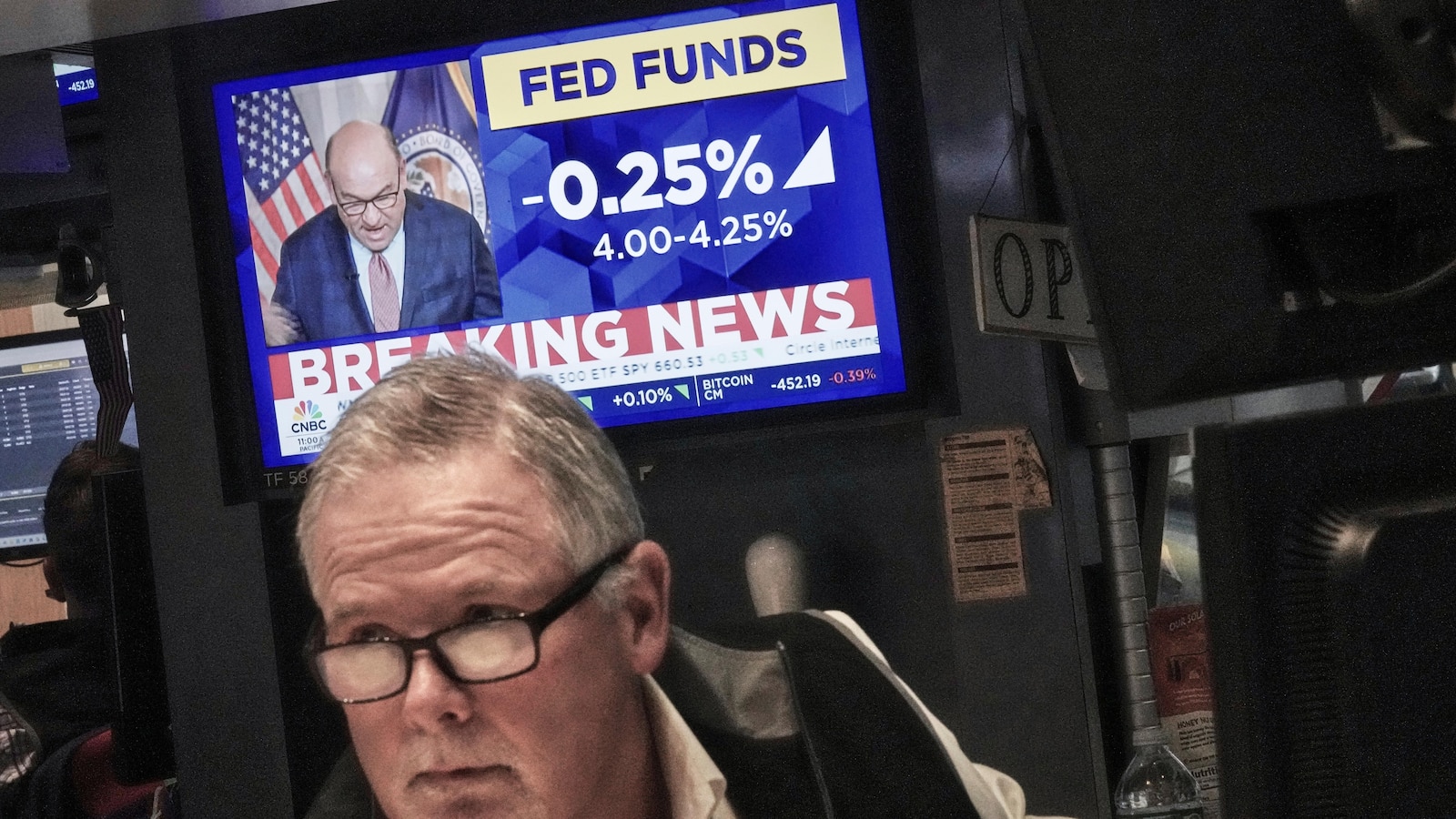
One of the main reasons the stock market has boomed is the expectation that the Fed will deliver a string of cuts to interest rates.
Lower rates give the economy a boost by making it cheaper for U.S. households and companies to borrow and spend. They can also make investors willing to pay higher prices for stocks, bonds and other investments.
Traders on Wall Street are largely expecting the Fed to cut interest rates at least three more times by the middle of next summer, according to data from CME Group. Fed officials themselves have indicated they’re likely to cut because the job market is slowing.
But Chair Jerome Powell has insisted they may have to change plans quickly. That’s because inflation has remained stubbornly above the Fed’s 2% target, and lower interest rates can give inflation more fuel.
“I feel like interest rates and expectations of what the Fed is going to do are driving everything right now,” Miletti said.
“If the Fed doesn’t cut as much as people are expecting, any of these areas that look a little speculative, because they’re not based on fundamentals, those areas will have some real problems.”
“This is the question of the decade,” said Yung-Yu Ma, chief investment strategist at PNC Asset Management Group.
Ma does not feel that AI-related stocks look too expensive, even after their big climbs, but that’s only as long as gangbusters growth and sales for the industry keep going.
Hopes for AI also seem to be helping to keep down longer-term interest rates and worries about inflation. AI will need to make the economy more productive in order to offset the upward pressure on inflation and interest rates that are coming from the huge mountains of debt that the U.S. and other governments worldwide are building.
“If we do achieve these benefits for companies and for people’s lives, everything can go well for years,” said Ma. “I think everyone is tying their fortunes to that ship, whether they realize it or not.”
