

Close Menu

    Subscribe to Updates

    Get the latest creative news from FooBar about art, design and business.

    What's Hot

    UK’s Bloomsbury among beneficiaries of $1.5 billion Anthropic copyright lawsuit settlement

    Chile’s Congress puts President Kast’s economic overhaul on track to becoming law

    Sony releases one last trailer for Spider-Man: Brand New Day

    Facebook X (Twitter) Instagram
    Facebook X (Twitter) Instagram Pinterest VKontakte
    Sg Latest NewsSg Latest News
    • Home
    • Politics
    • Business
    • Technology
    • Entertainment
    • Health
    • Sports
    Sg Latest NewsSg Latest News
    Home»Politics»Commentary: China’s EV influence expands nearly everywhere – except the US and Canada
    Politics

    Commentary: China’s EV influence expands nearly everywhere – except the US and Canada

    AdminBy AdminNo Comments2 Mins Read
    Facebook Twitter Pinterest LinkedIn Tumblr Email
    Share
    Facebook Twitter LinkedIn Pinterest Email


    EXPORT SALES

    The real test of how well Chinese vehicles appeal to consumers will come from export sales. Chinese EV manufacturers are eager to sell abroad because their factories can produce far more than the 25 million vehicles they can sell within China each year – perhaps twice as much.

    China already exports more cars than any other nation, though primarily gas-powered ones at the moment. Export markets for Chinese EVs are developing in Western Europe, Southeast Asia, Latin America, Australia and elsewhere.

    The largest market where Chinese vehicles, whether gasoline or electric, are not being sold is North America. Both the US and Canadian governments have created what some have called a “tariff fortress” protecting their domestic automakers, by imposing tariffs of 100 per cent on the import of Chinese EVs – literally doubling their cost to consumers.

    Customers’ budgets matter too. The average price of a new electric vehicle in the US is approximately US$55,000. Less expensive vehicles make up part of this average, but without tax credits, which the Trump administration is eliminating after September, nothing gets close to US$25,000.

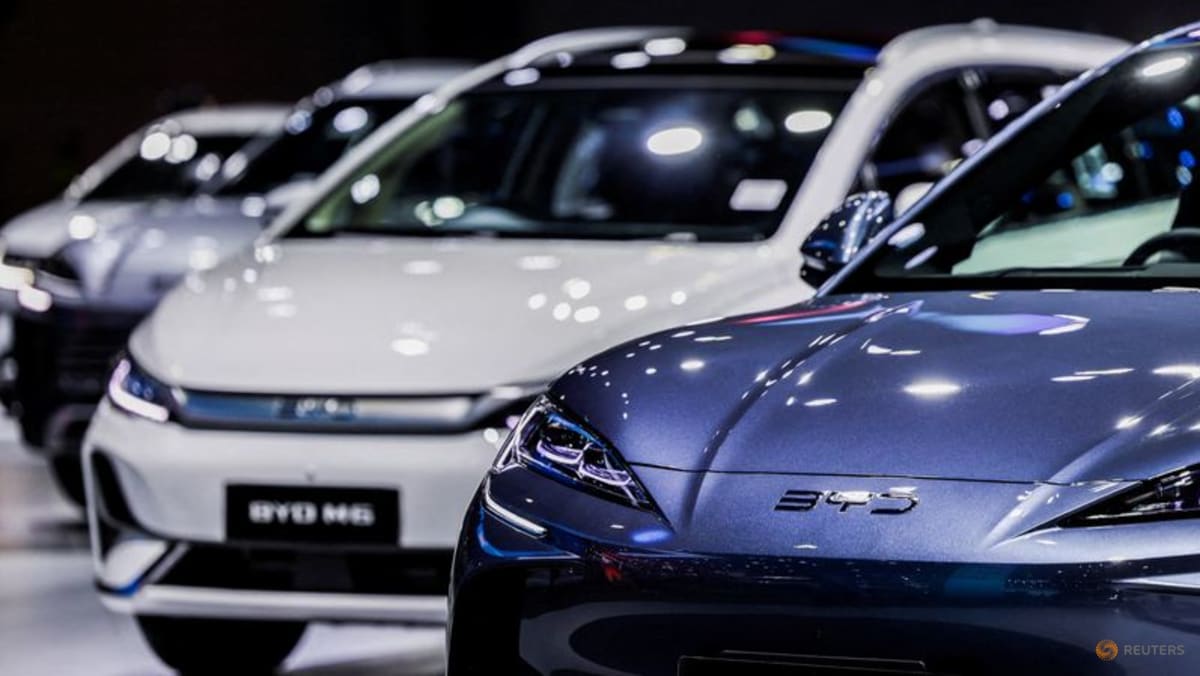
    By contrast, Chinese companies produce several sub-US$25,000 EVs, including the Xpeng M03, the BYD Dolphin and the MG4 without tax credits. If sold in America, however, the 100 per cent tariffs would remove the price advantage.

    Tesla, Ford and General Motors all claim they are working on inexpensive EVs. More expensive vehicles, however, generate higher profits, and with the protection of the “tariff fortress”, their incentive to develop cheaper EVs is not as high as it might be.

    In the 1970s and 1980s, there was considerable US opposition to importing Japanese vehicles. But ultimately, a combination of consumer sentiment and the willingness of Japanese companies to open factories in the US overcame that opposition, and Japanese brands like Toyota, Honda and Nissan are common on North American roads. The same process may play out for Chinese automakers, though it’s not clear how long that might take.

    Jack Barkenbus is Visiting Scholar at Vanderbilt Institute for Energy & Environment, Vanderbilt University. This commentary first appeared on The Conversation.

    Share. Facebook Twitter Pinterest LinkedIn Tumblr Email
    Admin
    • Website

    Related Posts

    UK’s Bloomsbury among beneficiaries of $1.5 billion Anthropic copyright lawsuit settlement

    Zelenskyy dismisses Ukraine army chief following protests

    Mark Warner says he will vote against Trump pick Jay Clayton as DNI

    OpenAI says AI models went rogue during testing, triggering ‘unprecedented’ breach at startup

    Add A Comment
    Leave A Reply Cancel Reply

    Editors Picks

    Most Impressive Team Streaks Of The 21st Century: Where Does 2024-26 Spain Rank?

    NBC’s ‘Stumble’ is a mockumentary about a cheer team with plenty of tumbling runs and heart

    Xiaomi shares post worst week in 3½ years as accidents stoke EV safety concerns

    Judge reverses Trump administration’s cuts of billions of dollars to Harvard University

    Top Reviews
    9.1

    Review: Mi 10 Mobile with Qualcomm Snapdragon 870 Mobile Platform

    By Admin
    8.9

    Comparison of Mobile Phone Providers: 4G Connectivity & Speed

    By Admin
    8.9

    Which LED Lights for Nail Salon Safe? Comparison of Major Brands

    By Admin
    Sg Latest News
    Facebook X (Twitter) Instagram Pinterest Vimeo YouTube
    • Get In Touch
    © 2026 SglatestNews. All rights reserved.

    Type above and press Enter to search. Press Esc to cancel.