


Published Tue, May 12, 2026 · 06:43 PM
CHINA’S industrial strategy threatens hundreds of billions of dollars worth of industrial output in the world’s most advanced economies, posing a danger of hollowing out their industrial capabilities, according to a release from the largest American business lobby.
Chinese policies are “becoming more systematic and pervasive,” according to the report, published on Monday (May 11) by the US Chamber of Commerce and prepared by the Rhodium Group research firm. “Beijing is actively reinforcing its control over value chains using regulations and economic coercion.”
Advanced economies face the risk of sustained erosion in manufacturing competitiveness because of a more expansive industrial policy by Beijing, and ought to coordinate better to meet the danger, the report said.
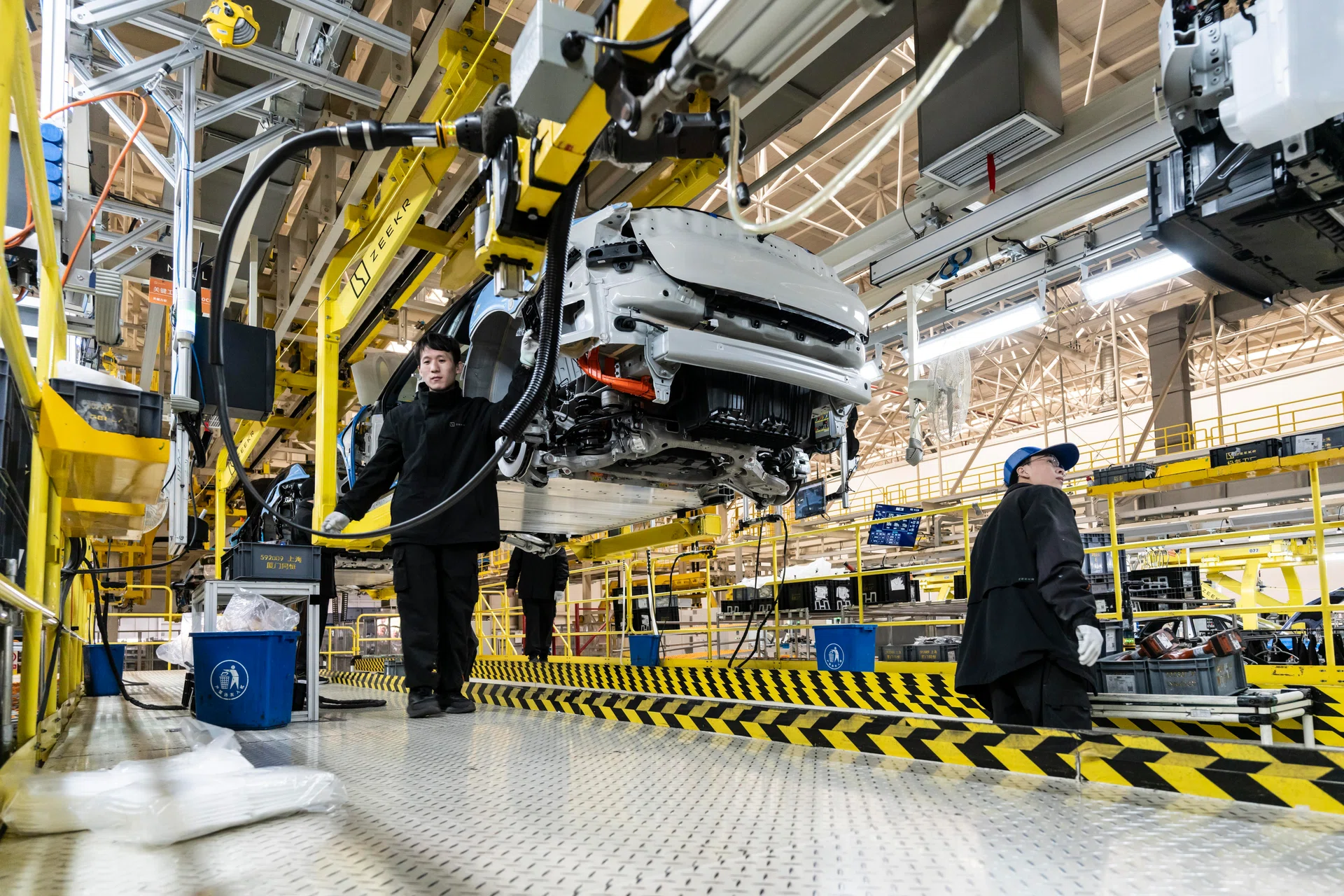
The automotive, machinery and chemicals sectors are among those in particular at risk from Chinese competitors, the report said.
“In aggregate, up to US$650 billion — equivalent to around 12 per cent of G-7 manufacturing exports — could be directly exposed to Chinese market-share gains by 2030 if they continue at the current pace,” according to the report, referring to the Group of Seven economies of Canada, France, Germany, Italy, Japan, the UK and US.
Beijing’s “Made in China 2025” campaign has seen China’s economy rise up to dominate some of the world’s most cutting-edge industries, while stoking tensions with the US and other trading partners.
Navigate Asia in
a new global order
Get the insights delivered to your inbox.
China has achieved a global leadership position in key technologies including solar panels, high-speed rail and lithium batteries, and is catching up fast in others such as pharmaceuticals and artificial intelligence.
Capacity loss
The business group called for developed nations to coordinate better to counter the threat from China.
“While many governments have begun to react through trade defence measures, industrial policy, and efforts to de-risk supply chains, responses remain fragmented and largely uncoordinated,” the report’s authors wrote.
“Without more coordinated action, China’s industrial policy is likely to continue reshaping global markets, entrenching dependencies, and eroding industrial competitiveness across both advanced and emerging economies,” they warned.
“Declining investment, weakened innovation ecosystems and the loss of industrial capabilities” are among the potential consequences in industrialised nations, they said. BLOOMBERG
Decoding Asia newsletter: your guide to navigating Asia in a new global order. Sign up here to get Decoding Asia newsletter. Delivered to your inbox. Free.
