


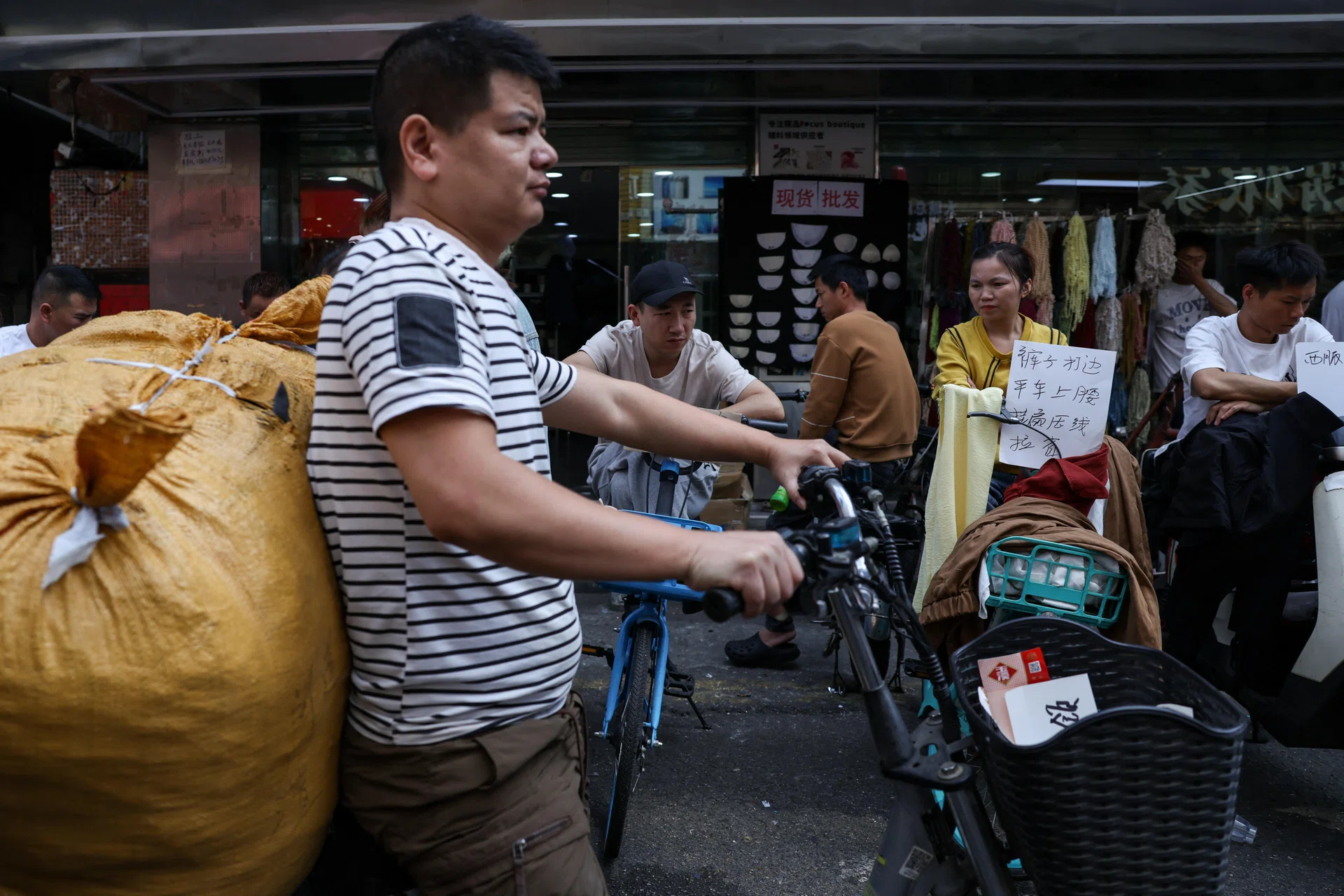
Migrant workers who hold rural hukou from their hometowns often struggle to access public services in cities where they live and work
Published Fri, May 22, 2026 · 08:24 PM
[BEIJING] China issued guidelines on Friday to expand coverage of basic public services to people who don’t have household registration in the cities where they work, a move that could help more migrant workers access urban public services.
The changes could provide a stronger social safety net for households and potentially bolster consumer demand in the export-reliant Chinese economy.
The guidelines call on government agencies and local authorities to provide public services, including education and basic medical care, based on people’s regular residence rather than their household registration, which is mainly determined by their place of birth.
The household registration, or hukou in Chinese, binds a person’s eligibility to public services mainly to their birthplace.
The system was adopted in the 1950s for limiting internal migration, especially from rural to urban areas. Migrant workers who hold rural hukou from their hometowns often struggle to access public services in the cities where they live and work. The government has tried for more than a decade to reform the system.
Guidelines ease access to schools and housing
Navigate Asia in
a new global order
Get the insights delivered to your inbox.
“Providing basic public services by the place of residence, gradually eliminating the link between basic public services and household registration, and promoting equal access to basic public services … are conducive to meeting people’s growing needs for a better life,” China’s State Council said in the guidelines.
The guidelines call on local governments to assist more migrant children – those who move to cities with their parents – to attend public schools and let eligible ones take school entrance exams in their place of residence.
More cities should expand public rental housing programmes to cover households with stable employment but no local hukou, and employees should be able to participate in the social insurance scheme in their places of work, the guidelines say.
SEE ALSO

The guidelines also call for relaxing hukou restrictions in sectors such as child care, elderly care and disability support, and encourage provincial-level governments to expand fiscal support for areas with population inflows to pay for public services. REUTERS
Decoding Asia newsletter: your guide to navigating Asia in a new global order. Sign up here to get Decoding Asia newsletter. Delivered to your inbox. Free.
