


Published Sat, Jul 18, 2026 · 09:51 AM
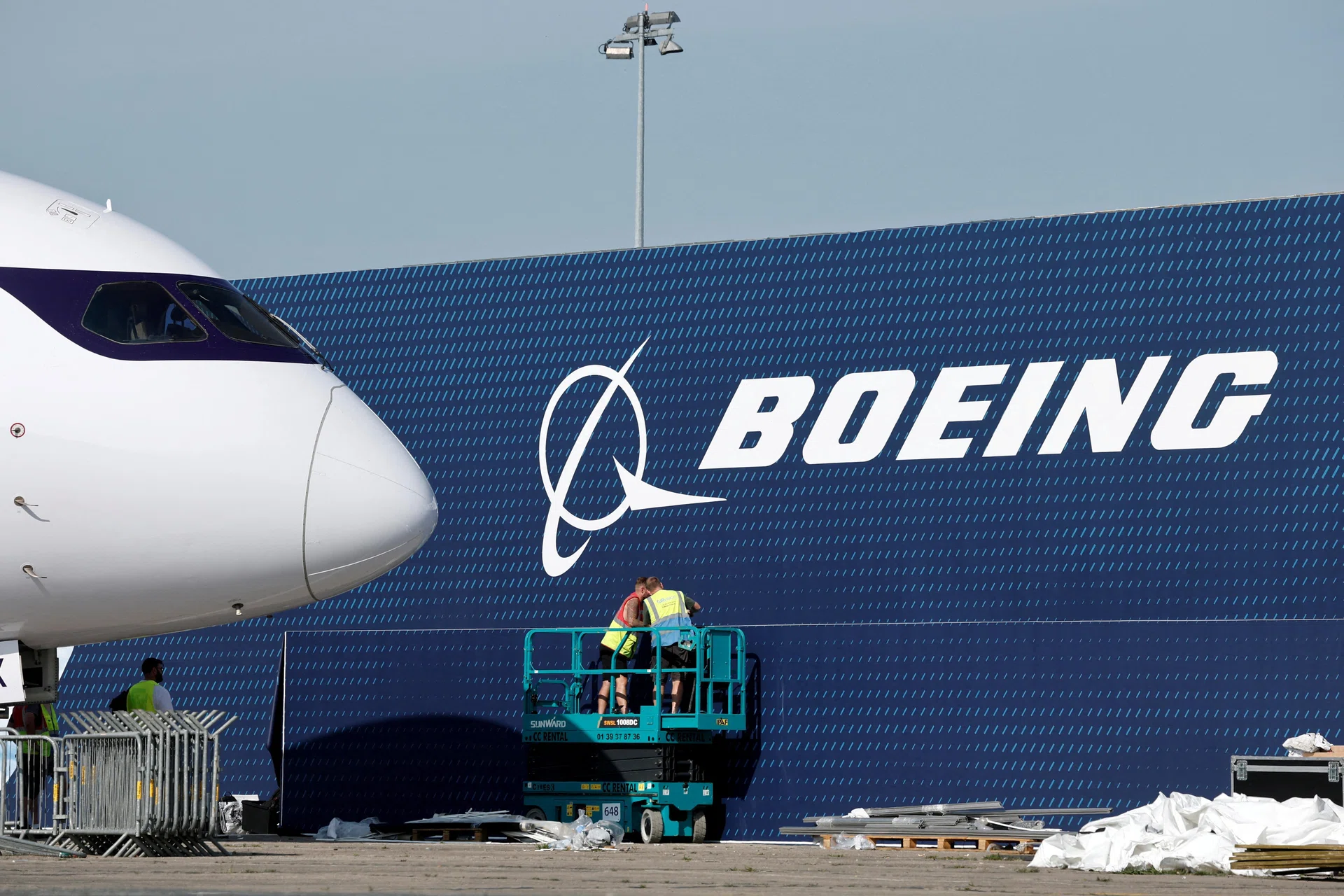
[FARNBOROUGH, England] Boeing maintained its forecast for strong global demand for new commercial aircraft over the next 20 years, according to the US planemaker’s market projection released in England on Saturday (Jul 18), ahead of the Farnborough Airshow.
The US planemaker’s forecast was almost identical to its 2025 outlook.
Boeing forecast industry-wide global deliveries of 43,625 new jetliners and freighters around the world from 2026 through 2045 – 33,545 single-aisle jets, 7,715 widebody aircraft, 930 factory-built freighters and 1,435 regional jets.
This month, Boeing’s European rival Airbus trimmed its projection by 1 per cent to 42,060 new aircraft, citing the Iran war and trade tensions.
Boeing expects air passenger traffic growth of about 2.3 per cent this year, less than half of last year’s growth rate of 5.3 per cent. It expects growth to rebound to 6 to 7 per cent in 2027 and 5 to 6 per cent in 2028.
“Our outlook is that passenger traffic globally will be where it would have been by the end of 2028,” Boeing commercial marketing vice-president Darren Hulst told reporters. He described the current slowdown as different from the multi-year demand shock caused by the Covid-19 pandemic.
Boeing expects passenger traffic to grow 4 per cent annually over the next 20 years, with cargo traffic rising 3.7 per cent, the jet fleet expanding 3 per cent and the world economy growing 2.5 per cent.
Demand for new aircraft continues to grow faster than planemakers can deliver new jets. Passenger traffic last year had rebounded to pre-pandemic levels, but deliveries of new jets remained below the 2018 output, Hulst said.
The company estimates an undersupply of close to 2,000 aircraft entering 2026, with the single-aisle shortfall unlikely to clear until around the end of the decade and widebody shortages likely to persist into the early 2030s.
SEE ALSO
The outlook assumes a roughly even split between replacement and growth demand. Boeing projects 21,475 deliveries will replace older jets and 22,150 will support fleet expansion. The global fleet is expected to rise from about 28,000 aircraft in 2025 to 50,000 by 2045, with new-generation aircraft growing from 32 per cent of the fleet to 92 per cent.
China is expected to account for 21 per cent of deliveries, followed by Eurasia at 20 per cent, North America and South/South-east Asia at 19 per cent each, the Middle East and Africa at 10 per cent, Latin America at 6 per cent and Oceania/Northeast Asia at 5 per cent.
Boeing’s forecast reflects a market recovering from repeated shocks but still constrained by manufacturing capacity and supply-chain fragility. Boeing also faces certification delays on key programs including the 737 MAX 7 and 10 and the 777-9.
Hulst said the long-term demand picture remains supported by trade, tourism, migration and airline network expansion.
“The reason why we travel and the reason why goods move isn’t changing,” he said. REUTERS
