
Besides the marquee race, a pipeline of mid-tier programmes aims for steady tourist dollars
[SINGAPORE] After days of matches at OCBC Arena, the 2026 World Table Tennis (WTT) Singapore Smash champions had victory photographs taken at the Singapore Oceanarium instead – in an example of how the Republic’s sporting events are broadening their tourism ambitions.
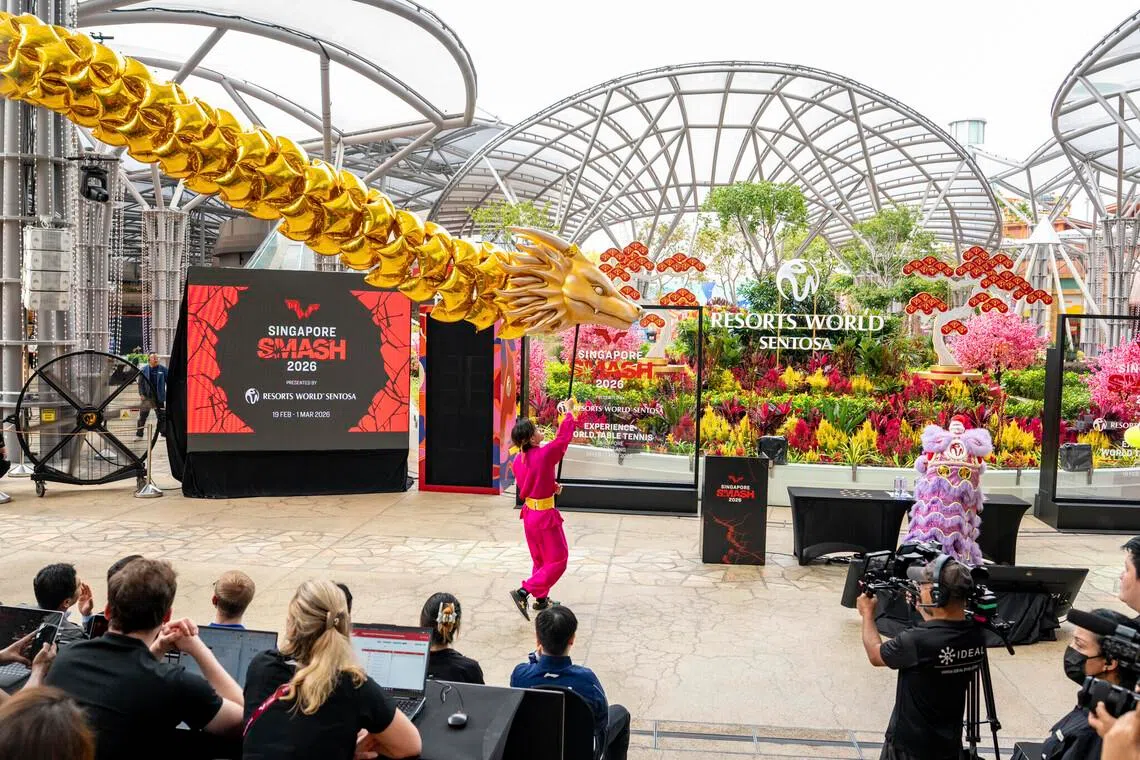
Held at Kallang since 2021, this year’s WTT brought in Resorts World Sentosa (RWS) as a presenting partner for the first time.


The tournament was embedded in the tourism economy via the sort of meet-and-greets, athlete stays, and fan hotel packages usually associated with marquee events such as the Formula One (F1) night race.
Beyond extravaganzas such as F1, Singapore is developing a calendar of recurring “tier-two” events, from table tennis, badminton and rugby tournaments to marathons with mass participation.
Such sporting events “strengthen Singapore’s destination appeal, generate global branding value, and contribute to a rich and varied events calendar that keeps Singapore relevant and exciting to diverse groups of visitors year-round,” says Singapore Tourism Board (STB) director of sports Lilian Chee.
While some are of smaller scale, they are collectively designed to keep the tourism engine running throughout the year.
Alexander Josiassen, professor of marketing at James Cook University Singapore, says: “A year-round sports portfolio gives Singapore repeat visibility, not just a short spike.”
“Mega-events can be powerful, but can also be more risky,” he adds. “A portfolio of recurring tier-two events helps build a more stable identity as a sports-and-lifestyle city, while also spreading demand across the calendar.”
The recurring nature of such events is important. Daryl Yeo, deputy chief executive officer for development at Sport Singapore (SportSG), says that these tournaments help build sustained engagement “by providing sport fans with something to look forward to every year”.
SEE ALSO



A S$165 million bet
Singapore’s sports tourism push is backed by the S$165 million Major Sports Events Fund (MSEF), launched in 2024 by SportSG to lock in long-term, multiyear contracts.
Available for an initial four years till 2028, the fund supports event “owners” which apply with proposals. If these are approved, SportSG works with the owners to bring the events to Singapore, with some amount of funding.
SportSG’s Yeo says: “We evaluate sporting events based on several criteria, including the popularity of the sport, the diverse interests of the community and the potential to inspire higher participation.”
“Every event that we bring in should generate meaningful benefits to the community – through sporting, social, or economic outcomes.”
Blockbuster events are not the only focus. STB’s Chee notes that niche and emerging sports events complement mainstream ones by drawing enthusiasts who travel just to attend.
She points, for instance, to the FIDE World Chess Championship 2024. Held in Singapore for the first time, it drew over 7,000 fans across 14 days, with 15 per cent from overseas.
Sports can be a draw for other groups of tourists too. The STB has seen more MICE (meetings, incentives, conferences and exhibitions) travellers incorporating sports and wellness in their itineraries, says Chee.
“Singapore, as a city in nature, is highly appealing with our wellness spots like Nowhere Baths at Dempsey for recovery, even fitness events such as Hyrox Singapore,” she says.
“These experiences will cater to the growing segment of travellers looking to build exercise and recovery into their trips.”
Singapore’s chief advantage, says Prof Josiassen, is consistency: it need not be the biggest sports destination in the world, but can serve as a reliable, premium and well-organised sports hub in Asia.
Bringing in the tourism dollars
Even as it supports a wide range of events, the STB remains focused on quality tourism.
This means bringing in the right kind of tourists: those who appreciate what Singapore has to offer, given that the Republic is not a “cheap” destination, said STB assistant chief executive Jean Ng.
She was speaking at the NBA Investor Conference during the NBA Rising Stars Invitational, a regional high-school basketball tournament held here in late June.
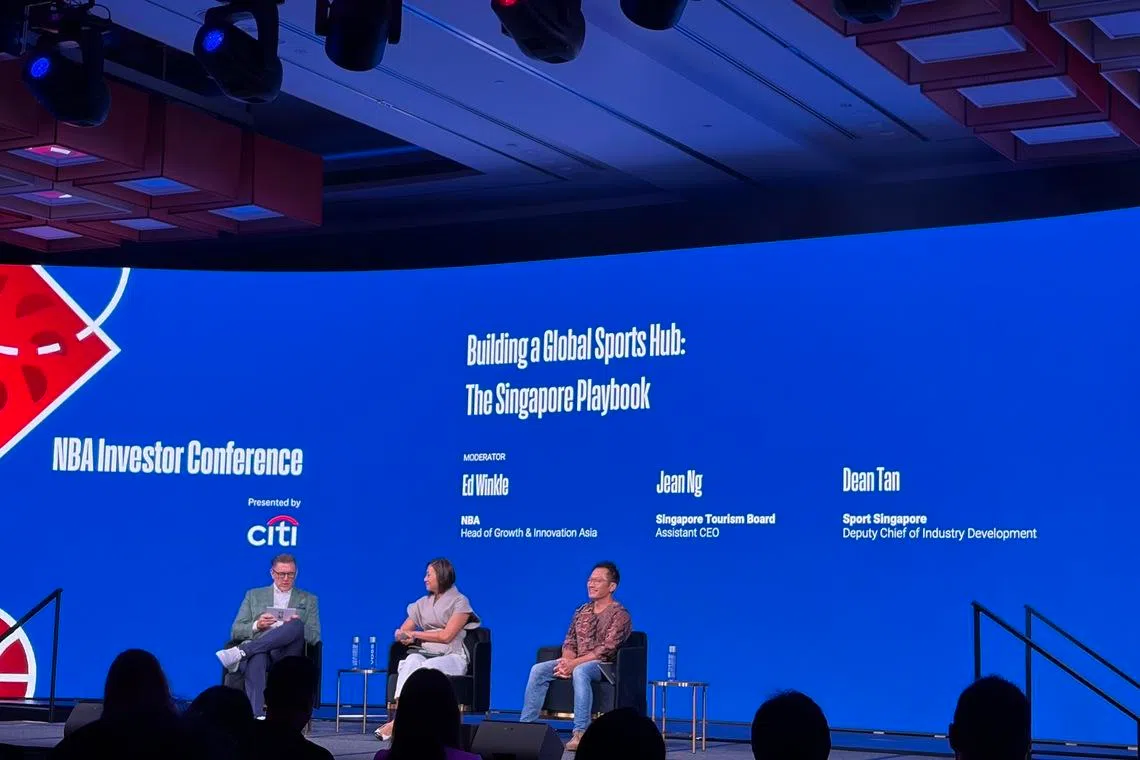
STB’s first consideration in evaluating a sports property, said Ng, is whether it commands attention in terms of viewership and fan base.
The second is whether fans will travel for it, and the third is whether tourists will come to participate themselves, she said, citing marathons as an example of the latter.
Sports tourism does support higher spending. STB’s Chee notes that international sportsmen – whether professional athletes or mass participants – typically arrive a few days before the event to acclimatise.
This translates into longer stays than the average visitor, and higher spending across lifestyle, hospitality, retail and dining.
International visitors typically constitute 25 to 30 per cent of STB-supported leisure events, including both performances and sports. The STB did not provide a separate figure for sports events.
In WTT’s survey of the Singapore Smash 2026 audience, about 46 per cent of respondents were from overseas.
WTT is one of the events supported by MSEF. Its project management agency and main delivery contractor is local company Kin Global, which recently listed on the Singapore Exchange.
Says Kin Global CEO Vincent Chai: “Fans who travel for the Singapore Smash are not coming for table tennis alone; they are buying into a broader Singapore experience.”
He notes that in 2024, spending per traveller was about 24.5 per cent higher than in 2019, driven by sightseeing, entertainment, gaming and dining. These are the very segments that sport-tourism partnerships – such as WTT’s tie-up with RWS – aim to capture.
Sports-led programming can go beyond the event itself, as seen in WTT, says Jenny Wang, acting senior vice-president of resort sales and marketing at RWS.
“Beyond ticket sales, the value comes from what happens around the event: athlete and delegation stays, meals, retail spending, attraction visits and fan activities across the resort.”
In conjunction with the WTT, RWS sold accommodation packages with hotel stays, admission tickets and fan engagement sessions with athletes.
The Draw Ceremony – at which the tournament bracket is determined – was also held at Sentosa, bringing visitors away from the match venue and to the leisure island.
Meanwhile, the BYD Singapore International Marathon is getting home-grown small and medium-sized enterprises (SMEs) involved. For instance, a local artist known as Jonny – founder of “creative running collective” LAST Running – was commissioned to design the race shirts.
“We want to showcase to (participants) that Singapore is not just a ‘sports event’ city, but a sports-inclusive city… when they see all these SMEs and multiple businesses being part of the marathon,” says Leon Lai, co-CEO of the event.
Such SMEs infuse the event with local flavour, down to bandung and sugarcane drinks being offered at hydration stations.
About a quarter of the runners in 2025 were from overseas, notes Lai, who is also founder of sports management, marketing and strategy firm Betterment Sports. “This also gives them a fantastic perception of what Singapore has to offer beyond the traditional sightseeing.”
Not just for tourists
Besides encouraging tourist spending, the MSEF aims to strengthen Singapore’s sports ecosystem, from local organisers to athletes.
Previously, major sporting events here were run almost entirely by international rights holders and foreign promoters.
Now, local operators are moving up the value chain, transforming from delivery contractors into organisers and owners of sports intellectual property (IP).
The Singapore International Marathon is one example. From 2016 to 2025, it was held by multinational operator Ironman Group. But with the expiry of that contract, SportSG held an open grant call for the next official promoter.
This was won by SG Marathon, a joint venture between Betterment Sports and Score Sports, a mass participation fitness events organiser.
As for athletes, these events give them the chance to compete against regional and international peers on home ground, says SportSG’s Yeo. In the KFF Singapore Badminton Open this May, Loh Kean Yew became the first Singaporean in 24 years to reach the finals.

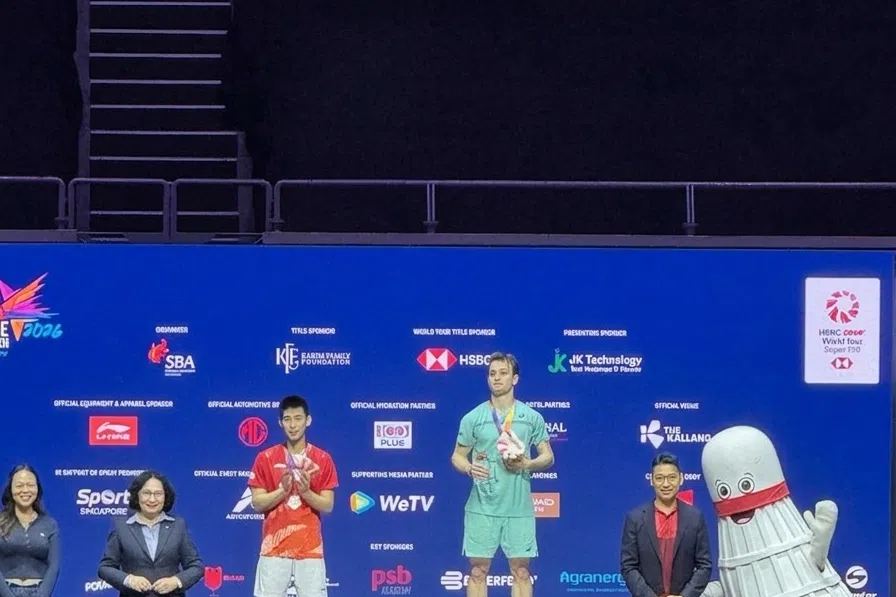
The broader goal is to lift spectatorship and participation, in support of SportSG’s mission to inspire a healthier nation, adds Yeo.
Major sporting events strengthen the local amateur community, says Yazed Osman, group head of events and placemaking at The Kallang Group.
The Kallang Group organises the HSBC SVNS Singapore rugby event, supported by SportSG, STB and the Singapore Rugby Union.
Schools, youth players and clubs are integrated into the HSBC SVNS experience through a series of rugby tournaments across various age groups taking place in the same week, notes Osman.
Hurdles and pitfalls
However, it has not been all smooth sailing for Singapore’s emerging organisers.
The Singapore Smash’s tourism boost was spread to RWS. But bridging both venues – which serve different purposes – was tough for Kin Global, which co-manages the event with WTT, the commercial and event arm of the International Table Tennis Federation.
The key challenge, says Chai, was “engineering a coherent, singular event experience across both venues that are geographically and conceptually distinct”.
Production standards – from branding to broadcast requirements – also had to be kept consistent across multiple stakeholders: WTT, RWS, SportSG, the Singapore Table Tennis Association and The Kallang.
Meanwhile, strict accreditation rules made it hard to bring local vendors inside the OCBC Arena itself. Instead, Kin Global opened a “fan zone” outside where local companies could offer food and beverage, merchandise, entertainment, and interactive experiences.
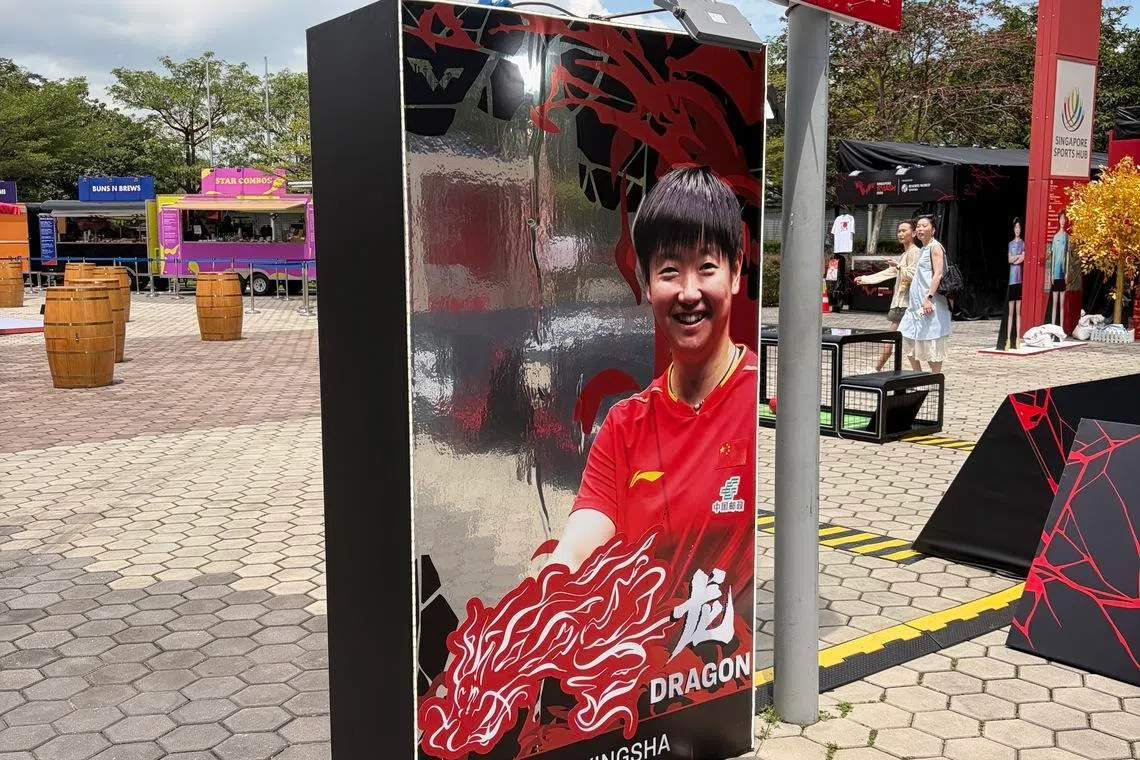
Still, Kin Global intends to keep owning and organising events, and wants to acquire sports IPs. Says Chai: “While there is financial risk, owning sports IP brings significant long-term upside that a pure delivery model cannot.”
The company is starting with events that have a clear commercial rationale and are likely to gain high traction, such as the inaugural Professional Pickleball Association Asia 500 Singapore Open this July.
Betterment Sports, meanwhile, is careful not to simply chase numbers. Rather than expanding, the organisers chose to cut participation to 52,000 runners for the 2026 race, from 57,000 in 2025.
However, the event has been lengthened to three days, up from two. Says Lai: “This is to make the route a lot more comfortable, ensuring that the experience is heightened.”
This is a pilot attempt, he adds. “Once we have people running different categories on different days, and we see that it is comfortable, next year we could maybe start pushing up the numbers.”
While the additional day means higher costs and more complex logistics, Lai sees it as a necessary investment for longer-term growth.
As for The Kallang Group, being both an organiser and venue owner means it is well-positioned to design “end-to-end experiences”, says Osman.
“This integrated capability allows us to move beyond hosting isolated events, towards curating cohesive, precinct-wide ‘sportainment’ experiences that bring together sport, lifestyle and tourism in a meaningful way,” he says.
Drawing some 40,000 attendees, the HSBC SVNS Singapore 2026 included fan zones, interactive play areas, and community fringe activities.

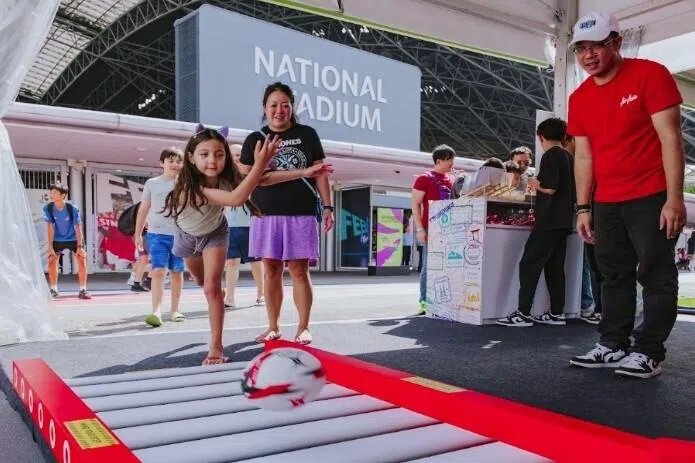
The WTT Singapore Smash and HSBC SVNS are among the events supported by the MSEF. But in the longer run, Singapore’s sport organising ecosystem may be able to lose the training wheels.
Says Prof Josiassen: “The hope would be that the public funding can be used as a bridge, and not a permanent operating model.”
“By 2028, events would have had time to build strong sponsorship, ticketing, broadcast or streaming value, hotel and airline partnerships and repeat visitor demand,” he adds.
The real test, he argued, is “portfolio value” – whether an event brings visitors, strengthens Singapore’s destination image, activates the Sports Hub, creates media visibility, and fits the broader tourism strategy.