






I
t’s hard to remember this now, but before the pandemic of 2020, Anthony Fauci was probably the most widely respected public health official in America. As an immunologist at the National Institutes of Health in the early 1980s, he was instrumental in mobilizing the government against the AIDS crisis — a role immortalized in Randy Shilts’ epic book And the Band Played On. Activists blamed Fauci for Washington’s sluggish response, but he persisted in reaching out to critics and eventually won their grudging respect. Twenty years later, during George W. Bush’s administration, Fauci was part of the small team that designed and pushed for PEPFAR — the government program to fight AIDS overseas, principally in sub-Saharan Africa. It was Bush’s signature foreign policy achievement, credited with saving millions of lives (before Donald Trump set about dismantling it last year). Had Fauci stopped there and called it a career, he would have gone down in history, quietly, as one of the most universally admired public servants of his time.
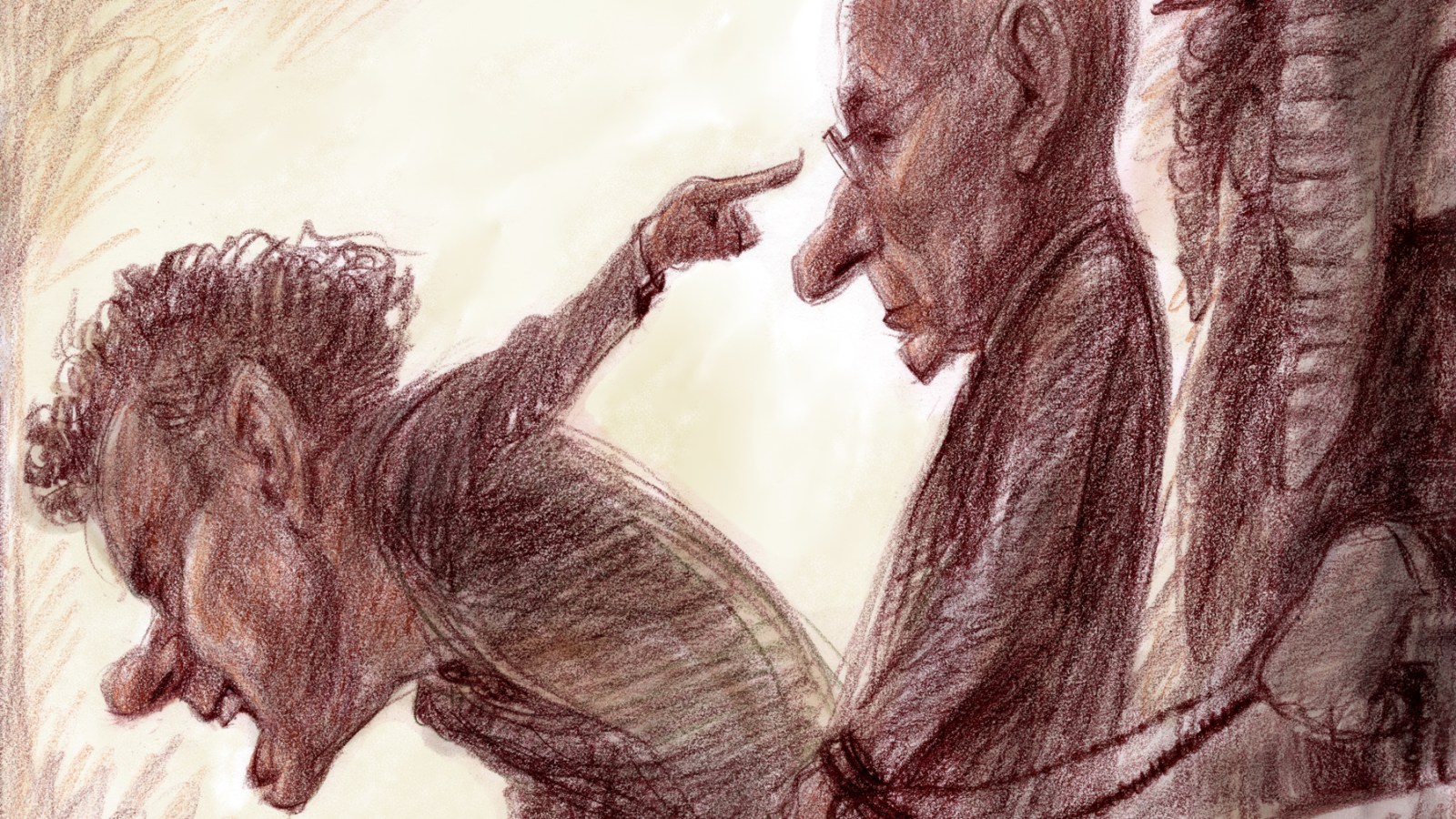
He didn’t, and now Fauci’s legacy will be more complicated. His Covid-era diaries, inexplicably maintained on a government computer and publicly released by Senator Rand Paul in a stunning display of malice last month, recast the slight, bespectacled scientist as a foolishly vain social climber, marveling at his sudden celebrity and all the A-list parties he was attending — Barbara Streisand wanted to talk to him! — even as he was warning the public about the grave dangers of socializing. None of this should have come as much of a surprise; you don’t get a Washington job as senior as Fauci’s, and hold onto it for almost 40 years, without knowing how to work the most powerful people in a room. But you’re supposed to keep that to yourself.
Then came the cringey image of Fauci, now 85, pleading the fifth in front of a Senate committee like he was Jimmy Hoffa, after which the panel decided to hold him in contempt. Conspiracists who for years had pilloried Fauci and basically accused him of helping to engineer the coronavirus and then covering it up — none more prominent or more vocal than Robert F. Kennedy Jr., now the nation’s highest ranking health official, who turned the diaries over to Paul in the first place — had finally gotten the result they wanted all along, which was less to nail Fauci for any actual crime than to rip him off his pedestal and humiliate him.
If some time-traveling historian from the distant future were to reassemble his atoms in my office right now and ask why it was that so many Americans remained fixated on Fauci, years after the pandemic, as the avatar of an evil government plot, I’d have to admit to being somewhat confounded myself. It was Fauci, after all, who helped lead the frantic effort to find a vaccine for the virus in less than a year — an astounding success for which Trump could have taken all the credit had he not been ideologically aligned with the paranoid anti-vax crowd. Even now, Fauci’s critics, Kennedy chief among them, insist on arguing that the vaccine he forced on everyone like a tyrant turned out to be a failure because it didn’t stop transmission of the virus — purposely overlooking the fact that, in the later stages of the pandemic, the only people filling up emergency rooms and morgues were those who refused to be vaccinated. Yes, the virus adapted and spread, but vaccinated people stopped dying, which seems like a relevant data point.
What the Fauci Fixation really gets to, I think, is that even now, six-plus years after the virus started its rampage through America, we continue to sift through the wreckage it left behind — lost loved ones and neighbors, of course, but also emotionally scarred children with lower reading and math skills, businesses shuttered and downtowns abandoned, jobs made part-time or redundant, social connections atrophied and never coming back. In my affluent neighborhood outside Washington, a former elementary school, abruptly abandoned during the pandemic with books and pencils still visible throughout the windows, remains a ghost building, crumbling and choked with weeds. Whenever I walk past, I think of the before and after — the world as we knew it pre-2020 and the long period of entropy we’re living through still. In much of the country, that entropy is exponentially worse. People are angry, and I don’t blame them.
I also have a lot of sympathy for some of the arguments that Fauci’s critics make. They’re clearly right when they insist that the “lab-leak theory” — the notion that Covid started in a Chinese lab near Wuhan, rather than in an open-air animal market through whatever the opposite of serendipity would be — was far too readily dismissed by government officials (and by my colleagues in the media). Experience as a reporter taught me long ago that there are very few shocking coincidences in the world; show me a new and lethal virus that just happens to sprout up near a lab that studies new and lethal viruses, and I’m inclined to think there’s a connection. In those early months of the pandemic, when Trump was casually blaming the Chinese for the virus, and when Asian Americans and immigrants were being randomly attacked on American streets, it was an understandable reflex, absent any proof, to reject that theory out of hand, for fear it would lead to more cruelty. But that was always more of an emotional response than an empirical one, and the scientific establishment became irrationally invested in it. You can see how that led to years of hardening mistrust.
Then there’s the lingering fury over the endless shutdowns, which, like the rejection of the lab theory, began with the right impulse but evolved into something senseless and destructive. All the experts agreed, in those early weeks, that the most critical barriers against the virus were isolation and masking; even Trump grudgingly accepted that protocol as the national economy came to a grinding halt. No one can fairly second-guess that intervention now, and there’s no telling how many more people might have died without it. But then the months passed, and the social and economic costs to families piled up, and while cops and firefighters assumed the risks of going back to work, unionized teachers and government workers would not. (I wrote at the time that if teachers wanted to be seen as the critical public servants they were, they ought to prove it by re-entering the classroom; from the response I got, you’d have thought I’d suggested they all get together and self-immolate.)
Eventually, like all things in America now, the pandemic became a test of tribal loyalty, the medical mask a dividing line between rightist rage and leftist elitism. Among the most educated class, even after the vaccine was found and the risks severely curtailed, the permanent posture of crisis had morphed into a morality play and could not be dislodged. We see now its aftereffects — empty office buildings and sagging test scores, ubiquitous sterilizer dispensers and the occasional, irritating mask as political statement. The country has only tentatively recovered.
All that said, it’s never been entirely clear why Anthony Fauci, of all people, should have become the object of so much revulsion. Perhaps it’s just because it seemed like somebody had to be. Pearl Harbor had its Emperor Tojo, the Kennedy assassination its Oswald, 9/11 its bin Laden. If you think about it, the pandemic may be the first calamity to define an era of American life that did not immediately attach itself to a culprit. For the right, in particular, a half century of anti-government vitriol led to the obvious conclusion that the architect of all this pain and overreach had to reside somewhere in Washington. And there on the TV was Fauci, the government’s chief expert, with his Washington pedigree and suspicious Brooklyn accent, arguing for endless shutdowns and social distancing. Maybe he wanted all this to continue indefinitely. Maybe, under that octogenarian Clark Kent exterior, the social climbing immunologist just wanted to control our lives for as long as he could.
A LOT OF OUR most sinister suspicions about government could be allayed by a better understanding of basic civics, which is something we seem to have lost (along with math and reading). In the case of Fauci, the fury stems from the notion that his job somehow gave him czar-like authority to padlock schools, forcibly vaccinate children, and freeze-ray the economy. That’s not actually how this works. The job of a public health official, in the case of a deadly global pandemic, is to figure out how to reduce the risk of exposure to its lowest possible point. We do not say to the country’s chief immunologist: “Tell us how to protect a lot of people, but you know, maybe not everybody, if it’s gonna cause too many headaches.” We don’t ask him in that moment to make value judgments about how many deaths are tolerable. No — we ask him for the best possible scientific response, period.
J. Robert Oppenheimer never professed to be certain that the atomic bomb should be used against the Japanese, nor was he certain afterward. His job was to design and build the bomb; how and when to use it was a question for policymakers. I’m not equating Fauci to Oppenheimer, and I’m certainly not suggesting that Fauci had anything to do with the development of the virus, which seems like the plot of a bad movie. The point is that Fauci is a scientist, not a macroeconomist or an educator or a child psychologist, and certainly not a politician. His job was to recommend a regimen that could protect every last American, old or young, from the virus. It was the job of a president to weigh all the costs of that plan and try to navigate the narrow passage between public health, on one hand, and a functioning society on the other. The nation asked Fauci for his medical opinion; from the presidents he served, we asked for wisdom.
We didn’t get a ton of it. Trump’s leadership, if you want to call it that, was characteristically reckless and inconstant. After initially dismissing the threat (he predicted that 60,000 people might die, at worst), he largely deferred to Fauci on the response, while also whining about shutdowns and refusing to wear a mask himself. (Even when Trump became seriously ill with the virus, he had no problem exposing others.) Caught in the Gravitron of those confusing mixed messages, Americans got the worst of both worlds: a soaring death count, reaching more than 400,000 by the time Trump left office, along with social and economic unraveling.
Joe Biden certainly did better, rolling out the new vaccine swiftly and bringing the worst phase of the virus to a close. But Biden had his own left-leaning constituencies — teachers and professors, health care workers, governors who had come to see their draconian measures as badges of virtue — and he pushed only tentatively for a return to normal. The federal government itself didn’t come back to the office for the entirety of Biden’s term.
You can choose to see Fauci as the dark instigator of all this, like some on the right do — the man who unleashed the virus and then manipulated hapless presidents into stomping on our rights. Or, like some on the left, you can treat him like a saint who was right about everything and is now being persecuted for it. All of it misses the point. What the pandemic demanded of our political system, more than anything else, was balance — the ability to acknowledge competing interests and agonizing choices, and then to carefully calibrate a policy that would mitigate the worst effects of the virus without plunging the country into a semi-permanent state of inertia. Unfortunately, that’s exactly the kind of pragmatism our system can’t deliver anymore, because we’ve allowed it to turn every issue — even where it involves life and death — into a self-affirming holy war. In the end, we lost about twice as many Americans to the virus as we did in Vietnam, while our kids got dumber and more disconnected, our communities more divided, our cities more hollow. That’s not Anthony Fauci’s failure. It’s ours.


