


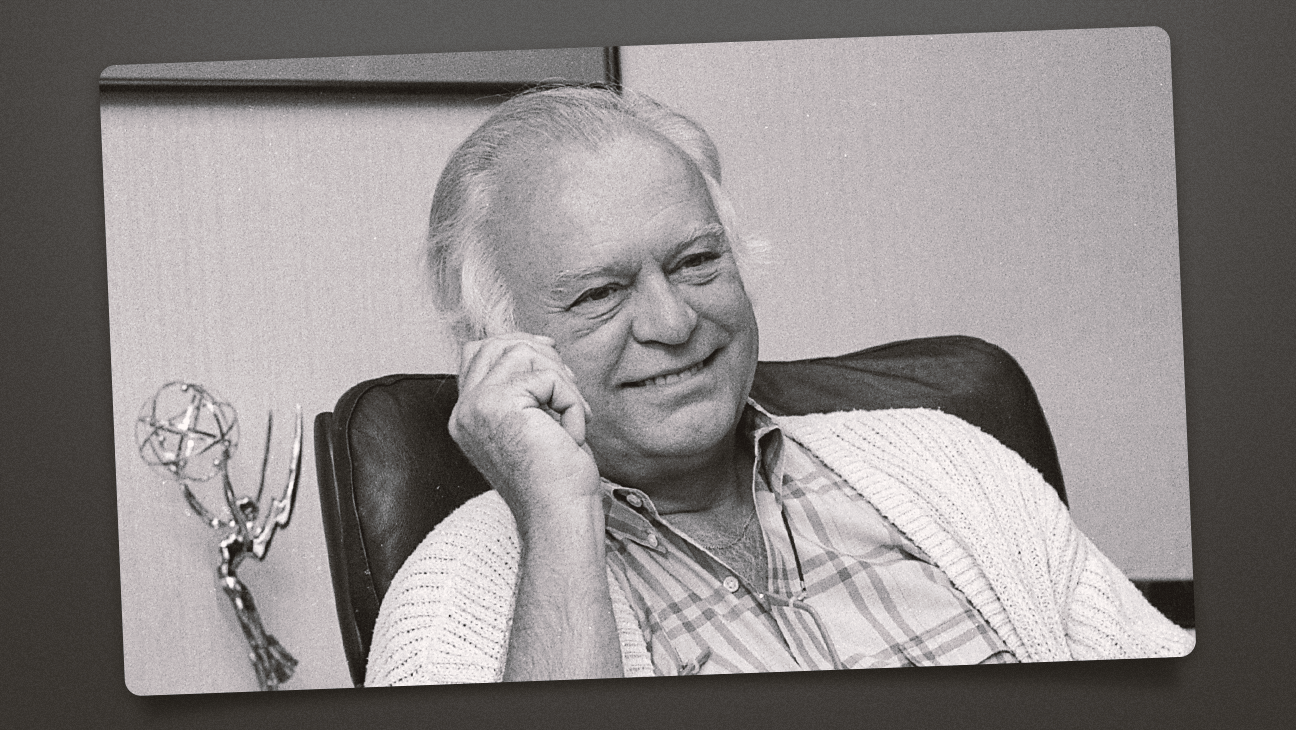
Bill Jersey, the Bay Area documentarian who wrote, directed, shot, edited and produced films for more than a half-century, collecting two Oscar nominations and three Emmy noms along the way, has died. He was 99.
Jersey died July 24 of congestive heart failure at his home in Lambertville, New Jersey, his wife, Shirley Kessler, told the San Francisco Chronicle.
Jersey earned his feature documentary Oscar noms for A Time for Burning (1967), about a white Lutheran minister’s unsuccessful attempt to connect to Black folks in Omaha, Nebraska, and Super Chief: The Life and Legacy of Earl Warren (1990), a profile of the Supreme Court justice that was narrated by Gregory Peck.
(As a “culturally, historically or aesthetically significant” work, A Time for Burning was inducted into the Library of Congress’ National Film Registry in 2005.)
He also received an International Documentary Association prize and two Emmy noms for his work on the landmark 2002 PBS miniseries The Rise and Fall of Jim Crow, narrated by Richard Roundtree, and created docs about the making of One Flew Over the Cuckoo’s Nest and Amadeus.
Jersey made most of his films for Quest Productions, which he launched in 1960 in New York City before relocating in 1981 to Emeryville, California. Starting in 1985, he ran the company out of the Zaentz Media Center in Berkeley, California (the complex also was home to the Fantasy recording studio used by Creedence Clearwater Revival).
Several filmmakers, including Gary Meyer, co-founder of the Landmark Theatres chain, had offices there, and Jersey served as a mentor to all for some 40 years.
“If a filmmaker wanted feedback, Bill was always there to help them, at all stages of production. If they wanted an honest opinion, they asked Bill,” Meyer told the Chronicle. “Bill helped shape many projects into finished films.”
The San Francisco International Film Festival paid tribute to Jersey by screening a selection of his documentaries in 1990.
William Clifford Jersey Jr. was born in Queens on June 9, 1927, and raised on Long Island in Port Washington. His father, Clifford, was a bank teller, and his mother, Alice, was a cook in a high school cafeteria.
After graduating from Northport Union School in 1945, Jersey served in the U.S. Navy, then attended Houghton College in New York, Wheaton College in Illinois and the USC School of Cinematic Arts, earning his master’s degree in 1957.
His first screen credits came as an art director on films including Manhunt in the Jungle and the Steve McQueen-starring The Blob, both released in 1958.
After moving back east, Jersey launched Quest and wrote, directed and produced for the anthology series The DuPont Show of the Week, where one 1963 episode, “Manhattan Battleground,” about a Quaker social worker in New York’s Spanish Harlem, got him his first Emmy nom.
His credits included Faces of the Enemy (1987), about the psychology of dehumanizing a military adversary; Naked to the Bone (1997), about MRI imaging; Eames: The Architect & the Painter (2011), about the modernist designers Charles and Ray Eames (that doc won a Peabody Award); and American Reds: The Rise and Fall of the American Communist Party (2016).
His work tackled such other subjects as Abraham Lincoln, the conflict between creationists and evolutionists, Maya Angelou, organized crime, U.S.‑Soviet relations, the Italian Renaissance and the search for an AIDS vaccine. He also taught at San Francisco State.
When he wasn’t making documentaries, Jersey was a landscape painter. After spending his last 18 years on the East Coast, he died in his studio surrounded by his art, his wife said.
In addition to Kessler, whom he married in 1985, survivors include his children, Beth, Todd, Brian, Colin and Josh.
“If I could use one word to describe my dad, it is ‘big,’” Beth told the Chronicle. “He was larger than life because he would go off and make these amazing films and win all these awards. And he never had a script.”
