


Artificial intelligence has already helped the Nuclear Regulatory Commission shave years off its typical licensing review process, an agency official said on Thursday. Now, the NRC is looking at how it can safely adopt other emerging capabilities to further speed up its review processes.
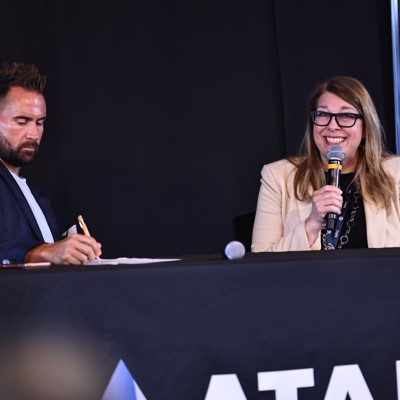
Speaking at the ATARC AI for impact summit in Virginia, NRC Chief Data Officer and Deputy Chief AI Officer Basia Sall said uses of AI have built upon recent regulatory changes and federal guidance to turbocharge the once drawn-out procedure for granting licenses for nuclear facilities.
“I’m happy to report we’ve already reduced the amount of time it takes for licensing,” Sall said. “For example, one type of licensing would take four years. We said we’re going to get it down to 18 months. We just finished that first round of that licensing in nine months.”
Not all of this is strictly due to AI. President Donald Trump issued an executive order in May 2025 to reform the NRC, which included setting an 18-month deadline on licensing reviews. But AI has helped the agency further shorten those licensing timelines, and Sall said internal personnel believe they can use the technologies to make the process even more efficient.
“I think some of our AI gurus at our agency were like, ‘Oh, yeah, we can do it better,’” she said.
NRC is also using AI to help with drafting documents “to make sure we look at the precedent” of previous decisions, Sall added.
Engaging with industry partners who are developing their own AI tools has also helped NRC conduct faster regulatory reviews. Sall said the agency has allowed some of these actors “to take our NRC public data and curate those data sets” for their own relevant applications.
“What that means is we receive a much better application than we have in the past,” she said. “We don’t have as many questions. It’s clear once we get it into our hands, we start our process, we accept it and then we start to do our review process.”
Using GSA’s AI offerings
NRC has also been leveraging some of the software and products made available through the General Services Administration’s OneGov initiative, which launched in April 2025 and provides agencies with significant discounts on select private sector technologies by treating the entire government as one customer. More than 20 companies have reached deals so far with GSA to offer their services at discounted rates.
Through OneGov’s offerings, Sall said NRC has already been testing AI tools like Anthropic’s Claude, Azure OpenAI and Google Gemini “for limited use cases with public data” and added that “we’re finding some good success with that.”
GSA said in May that agencies have placed more than 120 orders for AI offerings through the strategy, which has made these technologies available for use to around 3.4 million federal employees.
NRC is also just beginning to take advantage of GSA’s USAi platform, which launched last August and serves as a testing ground for agencies to experiment with AI tools. A GSA official said earlier this month that “over 25 different agencies” were already using USAi, with an additional 16 others expected to begin using the platform before the end of 2026.
“We’re looking at various tools about what makes sense,” Sall said, adding that “it’s going to be a menu” when it comes to testing out the various models on the platform.
Beyond experimenting with additional AI use cases, Sall said NRC has also been developing its own services. She cited the agency’s internally-built tool, known as SimplifAI, as something “which we’re really proud of,” adding that it was built off Azure OpenAI and “we are finding that we’re using that for our regulatory documents.” NRC recently moved to a 2.0 version after the initial model became deprecated.
NRC’s most recent AI use case inventory says the text retrieval and generation tool enhances the agency’s “efficiency and consistency in licensing, oversight, and other regulatory activities.”
Sall said some employees have also been training SimplifAI to help them write speeches.
“We’re really proud that tool continues to develop,” she said, adding that “having those tools — a menu of tools — is going to be key, we think, moving forward.”
