


Roughly 440 days after President Donald Trump spurred a mid-decade redrawing of congressional maps, the voting districts for the consequential midterm elections finally are settled in all U.S. states.
A U.S. Supreme Court decision late last week put to rest a long-running legal battle in Missouri over which U.S. House map to use. The conclusion: Missouri must use the same map it did in the 2024 elections, not a new one backed by Trump.
The Republican president took to social media Sunday to express his displeasure with the decision. But Trump’s redistricting push did succeed in several other states.
Here’s a look, by the numbers, at the redistricting battle waged in states:
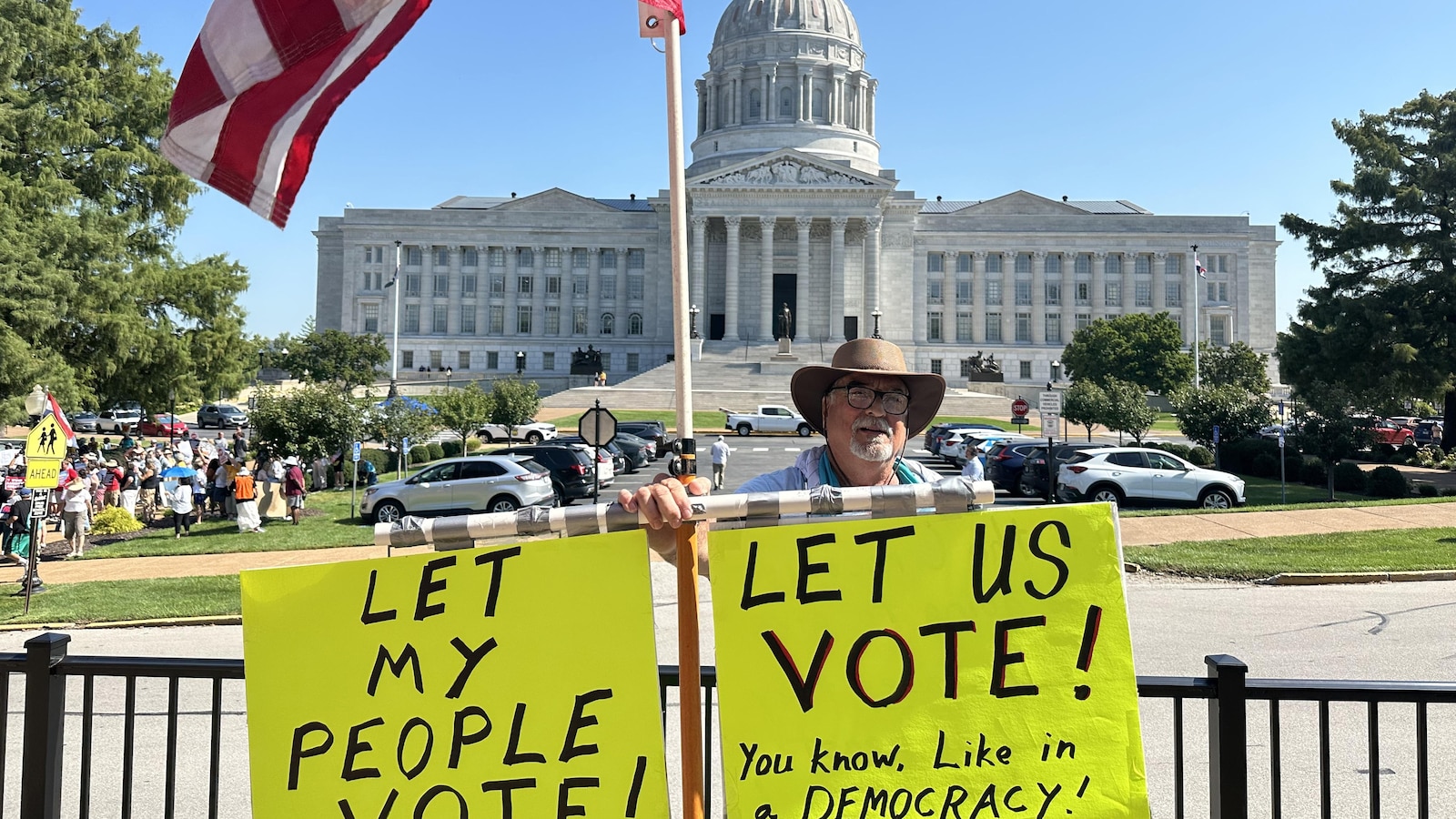
The U.S. Supreme Court said `no’ three times to attempts to use a new Republican-drawn Missouri congressional map in the November election. The new map was used in the August primary. But the Missouri Supreme Court said it could not be used again unless approved by voters in a November referendum. Federal lower court judges, however, ruled it violated the U.S. Constitution to switch districts after a primary. The conflicting rulings caused confusion and frustration for voters.
The U.S. Supreme Court ultimately upheld the position of the Missouri high court, with a final emphatic ruling coming Friday.
Texas was the first state to adopt new U.S. House districts after Trump urged Republicans to do so in July 2025. Democratic-led California responded with new districts intended to offset the potential GOP gains in Texas. Then more Republican-led states redistricted. Several Southern states joined the redistricting fray after a U.S. Supreme Court ruling in April weakened federal Voting Rights Act protections for districts with large minority populations.
All told, new congressional districts are being used this year in Alabama, California, Florida, Louisiana, North Carolina, Ohio, Tennessee, Texas and Utah. All favor Republicans except in California and Utah, where the new boundaries could help Democrats. If the districts all played out as designed, Republicans could net up to nine additional seats, but a good year for Democrats could reduce that tally.
As a result of redistricting, about one in 10 potential voters nationwide are in different congressional districts for the November election than they were in the 2024 elections, according to an Associated Press estimate. That includes more than 6.9 million potential voters in Texas, over 6.3 million in California and more than 4.5 million in Florida. About 69% of Utah’s potential voters have new district numbers as a result of a state court decision.
The redistricting carried ripple effects in many states. In Tennessee, Republicans targeted the Democratic-held 9th Congressional District in Memphis for big changes. But that resulted in even bigger population shifts for the 5th Congressional District, which previously was based in central Tennessee. Seven of the state’s nine U.S. House districts ended up with new boundaries.
The redistricting battles aren’t over. November ballot issues in Maryland and Missouri could pave the way for new U.S. House districts ahead of the next presidential election. Lawmakers in Mississippi and New York already are taking steps toward redistricting. The potential for new congressional maps could be back on the agenda in several states that tried but failed this year, including Georgia, Indiana, South Carolina and Virginia. And the outcome of state legislative and gubernatorial elections in November could create new possibilities for partisan gerrymandering in more states, including Minnesota, Pennsylvania and Wisconsin.
___
Associated Press journalist Hannah Recht in Washington contributed.
