


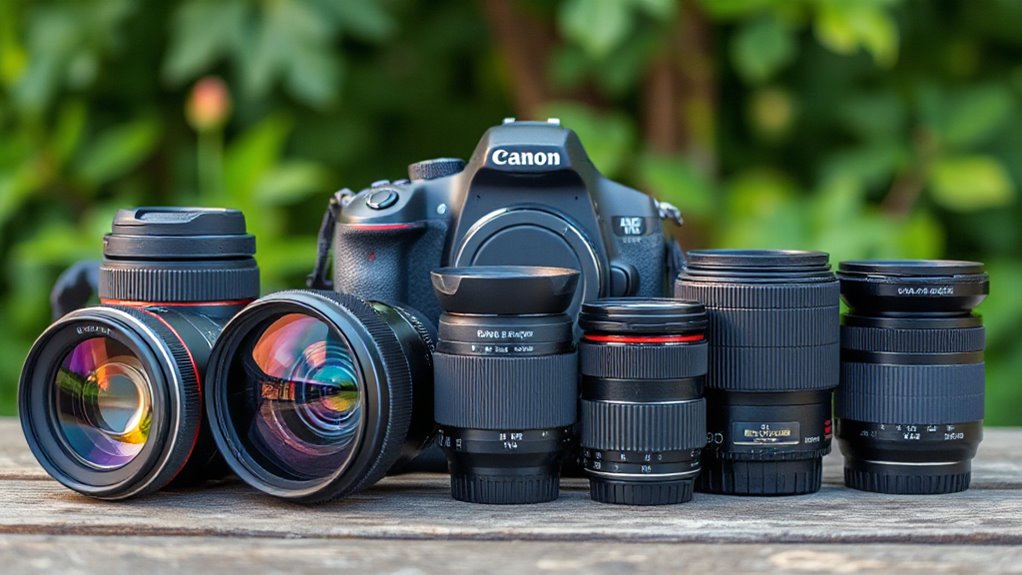
If you’re new to photography, choosing the right camera lens can feel overwhelming. The best lenses for beginners balance ease of use, affordability, and versatility, helping you grow your skills without frustration. The Canon EF 50mm f/1.8 STM stands out as the top overall pick for its affordability and quality, while the Canon EF-S 18-55mm f/3.5-5.6 IS II offers a great starter zoom. On the other hand, some lenses may be too limited or advanced for absolute beginners, leading to wasted investment or frustration. Continue reading for a detailed breakdown of each option to find your perfect match.
Which camera lenses for beginner should you buy?
Pros & cons at a glance
✓ Versatile focal length suitable for landscapes, portraits, and general photography
✗ Aperture range limits performance in low-light conditions
✓ High-resolution 24.1MP sensor captures detailed images
✗ APS-C sensor limits low-light performance compared to full-frame cameras
Complete the kit
Key Takeaways
- The best lenses for beginners prioritize affordability and ease of use, often favoring small, lightweight primes or versatile zooms.
- A good beginner lens should offer a broad focal range or a bright aperture to allow creative flexibility without complexity.
- Entry-level zoom lenses like the 18-55mm are ideal for general photography but can sometimes lack sharpness or speed compared to primes.
- Prime lenses such as the 50mm f/1.8 provide excellent image quality and low-light performance but have fixed focal lengths, limiting framing options.
- Choosing a kit lens often offers the best value for newcomers, combining multiple focal lengths with a reasonable price point.
More Details on Our Top Picks
-
Canon EF 75-300mm f/4-5.6 III Telephoto Zoom Lens
This lens stands out for offering an accessible introduction to telephoto photography, especially when compared with the more specialized Canon EF 75-300mm f/4-5.6 III for Canon SLR Cameras. It provides a versatile zoom range suitable for capturing distant subjects without overwhelming beginners with complex features. The lens’s 13-element construction delivers decent optical quality at a budget-friendly price, making it a good entry point. However, its variable aperture and basic build quality mean it may struggle in low-light situations or rough handling. Compared to higher-end telephotos, this lens is more forgiving for newcomers but sacrifices some performance and durability. Best for hobbyists starting with telephoto shots who want an affordable, straightforward option, but not for those needing professional-grade durability or low-light capability.
Pros:- Affordable entry-level telephoto zoom lens
- Good optical construction with 13 elements
- Fast focus adjustment with Micromotor
Cons:- Variable maximum aperture limits low-light performance
- Basic build quality may impact durability
- Focus can be slower in dim conditions
Best for: Beginners interested in exploring distant or wildlife photography on a budget
Not ideal for: Photographers who require fast apertures for low-light or professional work, or rugged construction
- Focal Length:75-300mm
- Maximum Aperture:f/4-5.6
- Lens Construction:13 elements in 9 groups
- Closest Focusing Distance:1.5m / 4.9 ft
- Focus Adjustment:Front group rotating extension system with Micromotor
- Diagonal Angle of View:32° 11′ – 8° 15′
Our verdict
“This lens is ideal for beginners wanting an affordable telephoto option, but it balances cost against optical and build limitations.”
-
Canon EF 75-300mm f/4-5.6 III Telephoto Zoom Lens for Canon SLR Cameras
This version offers a similar focal range as the other 75-300mm options but emphasizes portability, making it better suited for casual outdoor photography. Its smooth zoom mechanism and lightweight 16.8-ounce design make it easier for beginners to handle over extended shooting sessions, especially when compared to bulkier lenses. Yet, the absence of image stabilization and the slow, variable aperture limit its effectiveness in challenging lighting conditions, unlike some higher-end telephotos with stabilization features. It’s a solid choice for learners who prioritize ease of use and portability but should be avoided by those needing sharp low-light shots or rugged durability. Ideal for hobbyists wanting a lightweight, simple telephoto lens who don’t mind the lack of stabilization or faster apertures.
Pros:- Good zoom range for capturing distant subjects
- Smooth zoom mechanism enhances handling
- Lightweight and compact design for portability
Cons:- No image stabilization, risking blurry images in low light
- Variable aperture limits low-light performance
- Limited to Canon SLR cameras
Best for: Beginners seeking an easy-to-carry telephoto lens for casual outdoor photography
Not ideal for: Those shooting in low light or needing stabilized images, or expecting highly rugged equipment
- Focal Length:75-300mm
- Maximum Aperture:f/4-5.6
- Diameter:2.8 inches
- Length:4.8 inches
- Weight:16.8 ounces
- Closest Focusing Distance:4.9 feet
- Image Stabilization:No
Our verdict
“This lens is well-suited for beginners needing a lightweight, simple telephoto lens for casual use, but it’s less effective in low-light scenarios.”
-
Canon EF 75-300mm f/4-5.6 III Telephoto Zoom Lens for Canon SLR Cameras

Best Lightweight and Smooth-Handling Telephoto for Beginners
View on Amazon
This lens shares its core specs with the other 75-300mm options but emphasizes a smooth zoom experience and lightweight design, making it more appealing for beginners who value handling ease. The 16.8-ounce weight and 58mm filter thread make it portable and straightforward to attach filters or accessories. However, similar to the other models, the limited aperture range and plastic build can hinder low-light shooting and durability. Compared to the version with no stabilization, this model’s focus on smooth handling makes it better suited for casual, daytime photography. It’s a good starter lens for outdoor or hobbyist use but not for situations demanding ruggedness or speed. Best for beginners wanting a lightweight, easy-to-handle telephoto lens who prioritize comfort over advanced features.
Pros:- Smooth zoom mechanism improves handling
- Lightweight and portable design
- Good zoom range for distant subjects
Cons:- Limited aperture range affects low-light shots
- Plastic build may impact durability
- No image stabilization
Best for: Casual photographers and hobbyists wanting a lightweight telephoto lens for daytime shooting
Not ideal for: Photographers needing ruggedness or optimal low-light performance
- Focal Length:75-300mm
- Maximum Aperture:f/4-5.6
- Diameter:2.8 inches
- Length:4.8 inches
- Weight:16.8 ounces
- Closest Focusing Distance:4.9 feet
- Image Stabilization:No
Our verdict
“This lens suits beginners who prioritize handling and portability over low-light capabilities or ruggedness.”
-
Canon EF 50mm f/1.8 STM Lens for Canon EOS DSLR Cameras
This prime lens offers a bright f/1.8 aperture, making it excellent for low-light and portrait photography, unlike the zoom telephotos which struggle in dim conditions. Its compact, lightweight design complements beginner DSLR setups, and the near-silent STM autofocus enhances video capabilities. Compared with zoom lenses like the 75-300mm options, this 50mm prime provides sharper images and smoother bokeh, ideal for artistic shots. The fixed focal length, however, limits framing flexibility for dynamic scenes. Its basic build is suitable for beginners, but more advanced users seeking zoom versatility should look elsewhere. Best for beginners focusing on portraits, low-light, or artistic photography who want excellent image quality in a simple package.
Pros:- Excellent low-light performance with f/1.8 aperture
- Near-silent STM autofocus ideal for video
- Compact and lightweight for easy carry
Cons:- Fixed focal length limits versatility
- Build quality is basic compared to higher-tier lenses
- Not suitable for fast-action or wide-angle shots
Best for: Beginners eager to learn portrait and low-light photography with a versatile prime lens
Not ideal for: Photographers needing zoom flexibility or shooting fast-paced scenes
- Focal Length:50mm
- Maximum Aperture:f/1.8
- Minimum Focus Distance:1.15 feet (0.35 meter)
- Magnification:0.21x
- Lens Construction:6 elements in 5 groups
- Angle of View:40º horizontal, 27º vertical, 46º diagonal
Our verdict
“This lens is perfect for beginners wanting high-quality portraits and low-light shots, but it lacks zoom flexibility.”
-
EF 85mm f/1.8 Portrait Lens for Canon DSLR Cameras – Manual Focus
This fully manual 85mm lens offers a different experience compared to the autofocus zooms, emphasizing artistic control and high-quality optics. Its high f/1.8 aperture creates stunning bokeh, making it a favorite for portrait enthusiasts. The manual focus aspect, however, requires patience and some skill, especially for beginners unfamiliar with manual operation. Compared to the autofocus 50mm, this lens provides a longer focal length for more flattering portraits but at the cost of ease of use. The high-quality UMC coating ensures clear images, but the absence of autofocus makes it less suitable for fast-paced or casual shooting. Best for artistic beginners interested in learning manual focus and portraiture who don’t mind the learning curve.
Pros:- Beautiful bokeh with high-quality optics
- Precise manual focus control for artistic projects
- Wide aperture for low-light and shallow depth of field
Cons:- No autofocus, requiring manual operation
- Learning curve for users unfamiliar with manual focus
- Requires camera set to full manual mode
Best for: Beginners willing to master manual focus for portrait and artistic photography
Not ideal for: Those needing autofocus for fast or spontaneous shots, or who prefer point-and-shoot convenience
- Focal Length:85mm
- Maximum Aperture:f/1.8
- Mount Type:EF/EF-S
- Focus Type:Manual
- Lens Elements:Hybrid aspherical lens (H-ASP)
- Coating:Ultra multi-coating (UMC)
Our verdict
“This lens is ideal for beginners eager to develop manual focusing skills and create artistic portraits, despite its learning curve.”
-
Canon EF-S 18-55mm f/3.5-5.6 IS II SLR Lens
This lens stands out for its adaptable focal length range, making it ideal for beginners exploring different photography styles without investing in multiple lenses. Compared with the Canon EOS Rebel T7 kit, it offers a dedicated lens optimized for everyday shooting, though it doesn’t include the camera itself. Its high-quality construction with UD-glass and aspherical elements delivers sharp images, and the built-in image stabilization helps counteract handshake. However, the aperture range of f/3.5-5.6 limits low-light performance, which can be noticeable indoors or during evening shoots. While not suitable for professionals needing prime lenses or superior low-light results, this lens provides a reliable foundation for learning the fundamentals of photography.
Pros:- Versatile focal length suitable for landscapes, portraits, and general photography
- High-quality lens construction with UD-glass and aspherical elements for sharpness
- Includes image stabilization to produce sharper images in handheld shooting
Cons:- Aperture range limits performance in low-light conditions
- Basic design may not satisfy those seeking professional-grade optics or faster apertures
Best for: Beginners who want a single, versatile lens for everyday use and learning the basics of composition and framing
Not ideal for: Advanced hobbyists or photographers needing superior low-light capabilities or specialized lenses for portrait or macro work
- Focal Length:18-55mm
- Maximum Aperture:f/3.5-5.6
- Lens Construction:16 elements in 12 groups
- Focus Adjustment:Gear-driven
- Included in Box:White box (new)
Our verdict
“This lens is a solid choice for beginners seeking a flexible, all-around lens without the complexity or cost of more advanced options.”
-
Canon EOS Rebel T7 DSLR Camera Double Zoom Lens Kit with EF-S 18-55mm and EF 75-300mm Lenses, 24.1MP CMOS Sensor, Full HD Video, Wi-Fi, for Beginners
This kit makes a compelling case for beginners ready to step up from compact cameras or smartphones, thanks to its high-resolution 24.1MP APS-C sensor and included two zoom lenses. Compared with the standalone Canon EF-S 18-55mm lens, this kit offers more flexibility with the addition of the 75-300mm telephoto lens, perfect for capturing distant subjects like wildlife or sports. Its user-friendly auto modes and built-in Wi-Fi simplify sharing images, which is ideal for newcomers eager to show their work. The main tradeoff is the APS-C sensor, which, while excellent for most beginner needs, does not match the low-light performance or depth of field control of full-frame models. Additionally, the maximum aperture of f/3.5-5.6 across both lenses can hinder low-light shooting and background blur effects.
Pros:- High-resolution 24.1MP sensor captures detailed images
- Includes two versatile zoom lenses for wide and telephoto shooting
- Built-in Wi-Fi and NFC facilitate quick sharing and remote control
- Scene intelligent auto mode simplifies shooting for beginners
Cons:- APS-C sensor limits low-light performance compared to full-frame cameras
- Maximum aperture of f/3.5-5.6 may struggle in dim environments
- No 4K video recording, limiting video quality options
Best for: Beginners seeking a complete, easy-to-use DSLR kit to explore various photography styles and improve their skills
Not ideal for: Photographers interested in professional-level low-light performance or those wanting 4K video capabilities
- Sensor Type:CMOS
- Sensor Size:APS-C
- Megapixels:24.1 MP
- Included Lenses:EF-S 18-55mm, EF 75-300mm
- Maximum Aperture:f/3.5-5.6
- Connectivity:Wi-Fi, NFC
Our verdict
“This kit offers a well-rounded entry point for beginners eager to experiment with different subjects and develop their shooting skills.”
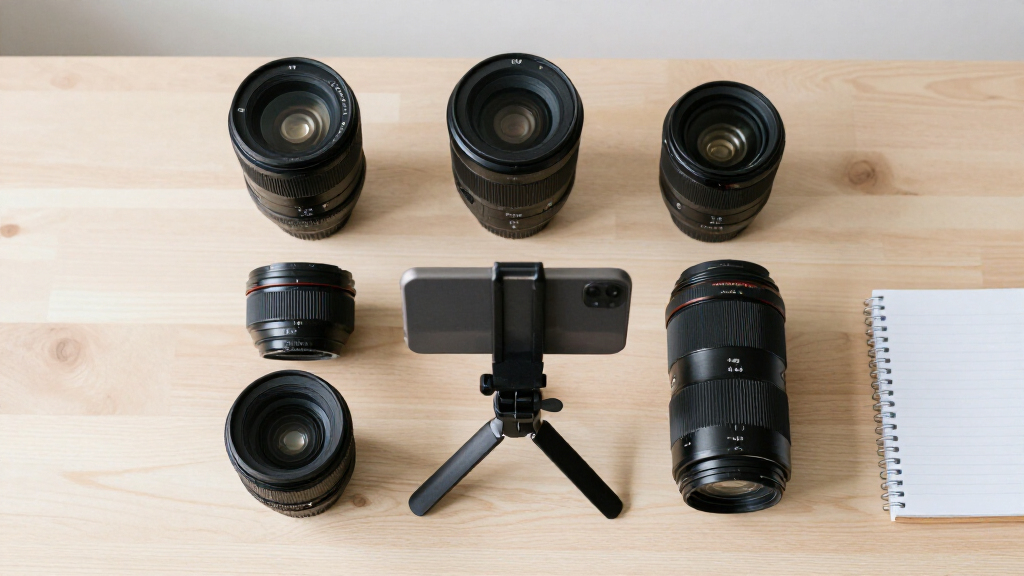
What makes a great camera lenses for beginner
1
Focal Length and Versatility
Focal length determines how much of the scene you capture and influences your shooting style.
2
Aperture Size
The maximum aperture affects how much light enters the lens, impacting low-light shooting and background blur.
3
Ease of Use and Size
Beginners benefit from lightweight, straightforward lenses that don’t intimidate or tire them during extended shoots.
4
Compatibility and Future Proofing
Not all lenses fit every camera.
How to choose your camera lenses for beginner
1
How we picked
These lenses were selected based on a combination of factors that matter most to beginners: ease of use, affordability,
2
Focal Length and Versatility
Focal length determines how much of the scene you capture and influences your shooting style.
3
Aperture Size
The maximum aperture affects how much light enters the lens, impacting low-light shooting and background blur.
4
Ease of Use and Size
Beginners benefit from lightweight, straightforward lenses that don’t intimidate or tire them during extended shoots.
5
Compatibility and Future Proofing
Not all lenses fit every camera.
Vetted camera lenses for beginners ·
The best camera lenses for beginners, compared
7compared
3maximum apertures
How We Picked
These lenses were selected based on a combination of factors that matter most to beginners: ease of use, affordability, versatility, and image quality. We prioritized lenses that are compatible with popular entry-level DSLR and mirrorless cameras, ensuring they provide good value for novice photographers. Additionally, the ranking considers user reviews, build quality, and the potential for growth—meaning lenses that can serve beginners as they improve. We also weighed tradeoffs like aperture size, weight, and whether a lens is a dedicated prime or a versatile zoom, helping readers balance different needs effectively.
Everyday → specialist
Everyday & valuePremium & specialist
Which camera lenses for beginner fits you?
The everyday user
All-round, reliable
The enthusiast
Premium & high-performance
The gift-giver
Looks & craftsmanship
Factors to Consider When Choosing Camera Lenses For Beginners
Choosing the right lens as a beginner involves more than just price. Understanding key factors can help you avoid common mistakes and make a purchase that supports your growth in photography. Below are the most important considerations when selecting a lens, ensuring you get the best fit for your camera and your style.
Focal Length and Versatility
Focal length determines how much of the scene you capture and influences your shooting style. A versatile zoom lens like the 18-55mm covers a wide range, making it ideal for various subjects from landscapes to portraits. However, prime lenses with fixed focal lengths, like the 50mm, often deliver sharper images and better low-light performance, but at the cost of flexibility. Beginners should consider whether they want a single all-in-one lens or prefer to learn with a prime for specific types of photography.
Aperture Size
The maximum aperture affects how much light enters the lens, impacting low-light shooting and background blur. Lenses with a wide aperture (f/1.8 or f/2.8) are excellent for indoor or evening photography and can create a pleasing background separation. However, these lenses tend to cost more and are sometimes heavier. For beginners, an aperture around f/3.5-5.6 is more affordable and lighter but may require better lighting conditions or higher ISO settings.
Ease of Use and Size
Beginners benefit from lightweight, straightforward lenses that don’t intimidate or tire them during extended shoots. Compact lenses are easier to carry and handle, especially for those just learning basic composition. Larger or more complex lenses might offer better optical qualities but can feel cumbersome or confusing for new users. Balancing size and quality is key to making a satisfying first investment.
Compatibility and Future Proofing
Not all lenses fit every camera. Ensuring compatibility with your camera system—whether Canon, Nikon, Sony, or others—is essential. Additionally, consider whether the lens can grow with you; some beginner lenses are compatible with more advanced bodies, extending their usefulness. Investing in a versatile lens now can save money later, but buying the wrong mount or incompatible features limits your options.
Cost and Value
Budget constraints are real, but extremely cheap lenses often sacrifice quality, leading to frustration. Conversely, overspending on high-end lenses may be unnecessary at the start. Look for lenses that strike a good balance—affordable, reliable, and capable of producing quality images. Kits that bundle multiple lenses often provide the best overall value for beginners unsure of their preferred style.
Frequently Asked Questions
Should I start with a prime or zoom lens?
Choosing between a prime and zoom lens depends on your learning goals. Prime lenses like the 50mm f/1.8 are simpler and often produce sharper images, making them ideal for portraits or low-light conditions. Zoom lenses, such as the 18-55mm, offer flexibility to frame different scenes without changing lenses, which is helpful for varied shooting situations. Beginners might prefer a zoom to explore different compositions easily, but learning with a prime can improve your understanding of framing and focus.
Is an f/1.8 lens worth the extra cost for beginners?
Yes, an f/1.8 lens provides significantly better low-light performance and creates a pleasing background blur, which can elevate your photos early on. Although it may cost more and be slightly heavier, the improvement in image quality and creative options makes it a worthwhile investment for beginners who want to experiment with depth of field and indoor shooting. However, if budget is tight, a more affordable lens with a smaller aperture still offers good results for most beginner needs.
Can I use kit lenses for professional work later?
While kit lenses are designed for beginners and casual shooting, they typically lack the sharpness and speed needed for professional work. They are excellent for learning and everyday photography, but if you plan to pursue photography seriously, investing in higher-quality primes or professional-grade zooms is advisable. Kit lenses are great stepping stones, but they should be viewed as a starting point rather than a long-term solution for professional projects.
How important is image stabilization for a beginner lens?
Image stabilization can be a real help for beginners, especially when shooting handheld in lower light or at longer focal lengths. While not essential, it reduces camera shake and makes capturing sharp images easier. Many affordable beginner lenses now include stabilization, which adds to their value. However, learning proper technique remains important, so stabilization is a helpful bonus rather than a substitute for good habits.
Should I buy a lens kit or pick individual lenses?
Buying a kit often provides the best initial value, giving you multiple focal lengths suited for different situations without high upfront costs. Kits also simplify compatibility concerns and help you understand what types of photography excite you most. However, individual lenses tailored to specific needs—like a fast prime for portraits or a wide-angle for landscapes—can be more satisfying in the long run. Starting with a kit is generally recommended for beginners, with the option to add specialized lenses later.
Conclusion
For new photographers, the Canon EF 50mm f/1.8 STM stands out as the best overall choice, thanks to its combination of affordability, image quality, and low-light performance. If you want a flexible all-in-one solution, the Canon EOS Rebel T7 Double Zoom Kit offers excellent value, especially for complete beginners. Those seeking a premium experience should consider lenses with wider apertures or better build quality, though at a higher cost. Beginners focused on portrait photography might prefer the EF 85mm f/1.8, while those wanting general versatility will find the EF-S 18-55mm a perfect starting point. Your choice depends on your budget, goals, and preferred style—each of these options can serve as a foundation for your photography journey.
