






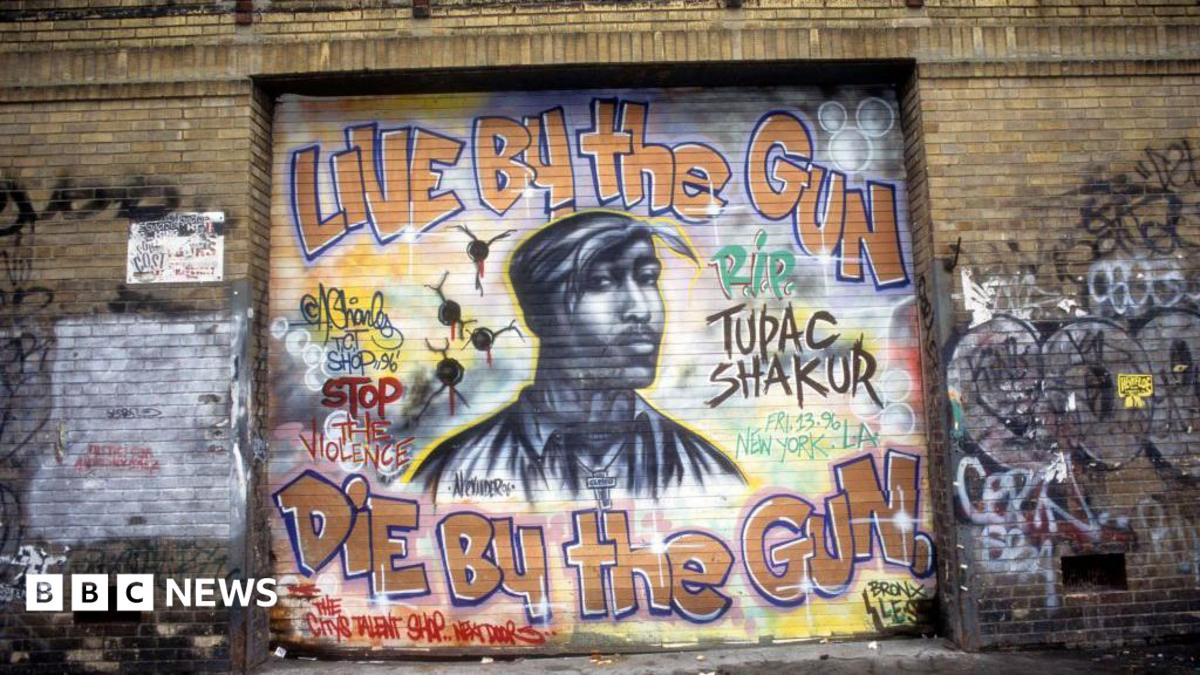
To understand how the case became so mythologised, you have to go back to rivalries that grew larger than the men at its centre.
In the Los Angeles gang landscape of the 1990s, there was a vicious turf war between the Bloods, often represented by the color red, and Crips, who often wore blue. But that territorial dispute spread through the airwaves as part of a bigger national rivalry – East Coast vs West Coast rap. The genre dispute was represented by two rival record companies that defined 1990s hip-hop: Knight’s Death Row Records and Sean “Diddy” Combs’ Bad Boy Records.
“The funny thing about it is Tupac is actually an East Coast rapper,” said Jeff Pearlman, author of Only God Can Judge Me: The Many Lives of Tupac Shakur.
Born in New York City, Tupac moved to northern California as a teenager. He became known as a Southern California rapper after signing with Death Row Records, which included acts like Snoop Dogg and Dr Dre.
Santi Elijah Holley, author of An Amerikan Family: The Shakurs and the Nation They Created, says the Death Row persona never told the whole story.
Tupac’s mother Afeni was a Black Panther and he grew up around the Black liberation movement. Holley says his music became his politics: “His activism was his art, his lyrics.”
He acted in a number of Hollywood movies, and released hip-hop’s first double album, All Eyez on Me, which sold over 5,000,000 copies. That album, which debuted months before his death, cemented his place in the cannon of gangsta rap, a genre that celebrated the violent life of street criminals and drug dealers.
After he was shot in Las Vegas on 7 September 1996, he became immortalised as a kind of martyr for the lifestyle he helped make famous.


